


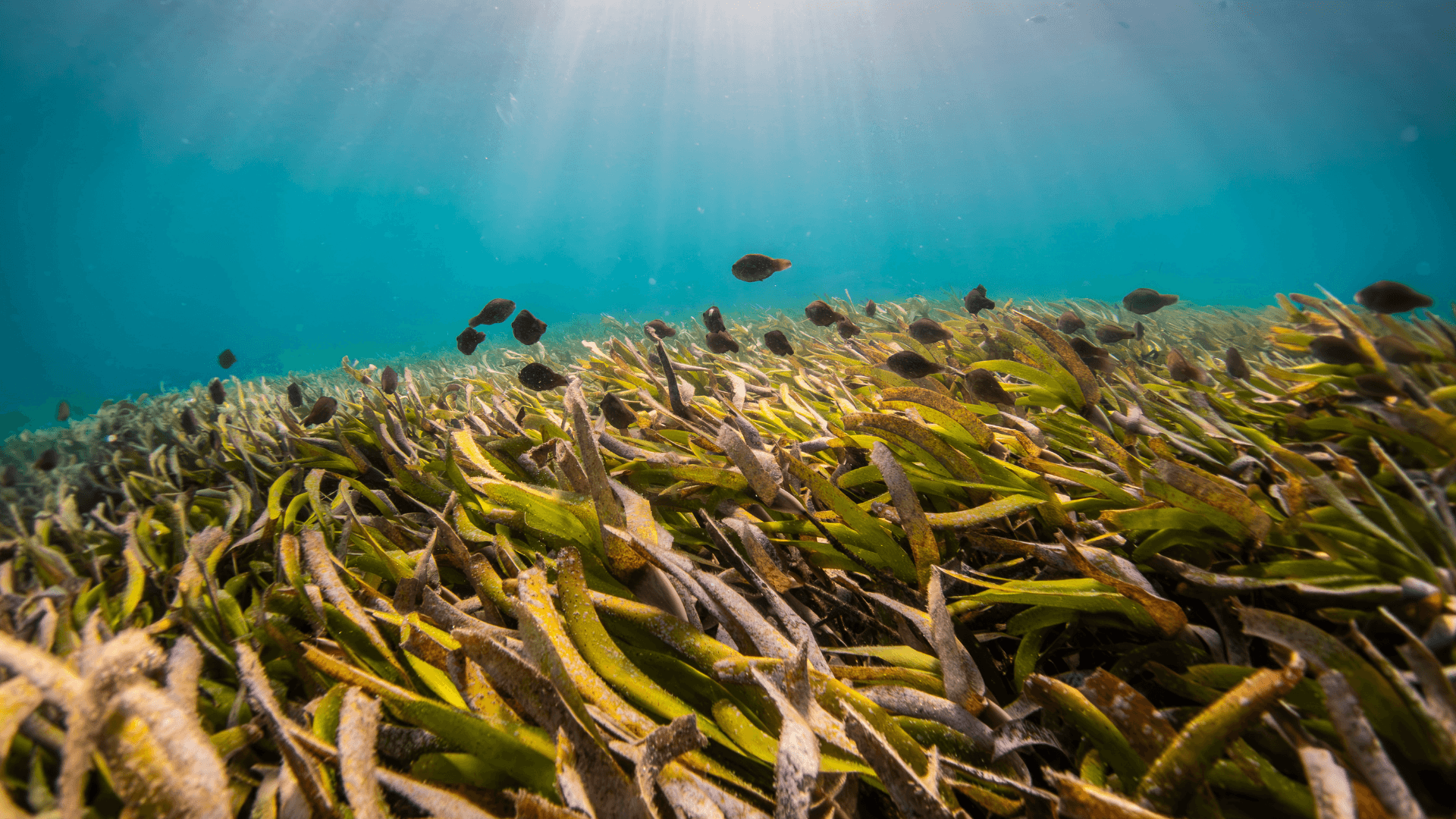
- When considering fish as a nutrition source for humans, fish communities living in seagrass meadows may provide a richer mix of nutrients that those found in coral reefs, a study suggests.
- Pollution and climate change threaten seagrass meadows, highlighting the need to integrate public health and food security into conservation policies.
- More than 3.5 million people living in poverty in Kenya, Tanzania, and Mozambique, where the study was carried out, depend on seagrass fisheries that can benefit from this new lens of marine conservation.
- “We’re not saying that coral reefs are less important. But our findings highlight how different habitats contribute to food security in complementary ways,” said lead author Benjamin Jones.
Researchers surveyed 40 sites along the East African coastline from Kenya to Mozambique, studying seagrass and coral reef ecosystems. They found that when it comes to benefits for coastal communities, seagrasses bring something important to the plate.
In a paper published in Cell Reports Sustainability, they write that while reefs support “greater fish biomass, abundance, and richness overall,” fish communities living in seagrass meadows may provide a richer mix of nutrients when seen from the perspective of human sustenance.
These marine habitats have gained prominence in recent years not only as fish nurseries but as carbon sinks and acting as the first line of defense against floods and storms.
“Protecting seagrass meadows should therefore be seen not only as biodiversity conservation but also as a public health and food security priority,” the study authors write.
Lead author Benjamin Jones, a Ph.D. student at Stockholm University at the time of the research, said the study isn’t about comparing ecosystems, but rather about applying a new lens to marine conservation. Often, a marine ecosystem’s value is determined by fish production. But for vulnerable coastal communities, “the reliability of catching nutritious fish can be just as important as the total number of fish in the sea,” said Jones, who’s now the chief conservation officer at Project Seagrass, a U.K.-based environmental charity.
Accounting for fish biomass and depth, the seagrass meadows studied were “1.6 times more nutritionally multifunctional” than coral reefs, according to the study, which took into account six essential nutrients: calcium, iron, zinc, selenium, vitamin A, and omega-3 fatty acids. Fishing communities associated with seagrass meadows have greater potential to supply these nutrients, the research suggested.
In the study, the researchers noted that “an abundance-weighted average fish caught in seagrass could provide approximately 5% of daily iron requirements, 70% of selenium requirements, and 21% of zinc requirements.”
“Most strikingly, when we focused on three particularly important food-fish species” — including rabbitfish (Siganus sutor) and parrotfish (Leptoscarus vaigiensis) — “micronutrient support was more than eight times higher in seagrass meadows,” Jones said.
Tim McClanahan, a coral reef ecosystem ecologist with the Wildlife Conservation Society, who wasn’t involved in the study, called the finding “interesting and provocative,” but added that it “needs further investigation.”
McClanahan said his reservations about the findings stemmed mostly from methodological factors. He questioned whether differences in sampling depth, habitat characteristics, and fish size could have affected the comparison. McClanahan also noted that fishing pressures on these systems would influence the results, something the study authors didn’t directly account for.

“In coral reefs, they sampled shallow water. That’s not a typical coral reef. That’s more likely coral rubble … you know, intertidal coral,” McClanahan said. “They sampled very small fish. The average size of a fish was 10 cm [4 inches]. So, they were sampling juvenile fishes.”
He noted that methodological changes, and a bit of scrutiny, would not reverse the findings but might “make the differences less pronounced.”
Jones acknowledged the limitation and added that the study shows that “within comparable shallow-water environments, where people often fish using nets and traps, seagrass supports fish communities with considerable nutritional value that has largely gone unrecognized.”
Another limitation of the work was its exclusion of invertebrates such as octopuses, crabs and mollusks, which can contribute substantially to coastal diets. Jones said their inclusion could change the estimates of nutritional benefits.
More importantly, while the study measures nutritional potential, it doesn’t establish whether consuming fish from different habitats affects malnutrition levels in coastal populations.
Jones’s latest paper, published this September in Nature Sustainability, examined the link between “seagrass-associated fishing and household poverty.” In the paper, Jones and colleagues determined that approximately 18 million of the world’s poorest people are dependent on seagrass ecosystems across the Indo-Pacific. Conservative estimates suggest more than 3.5 million people living in poverty depend on seagrass-associated fishing across Kenya, Tanzania, and Mozambique.

Fisheries based on these ecosystems could be important because of their ability to provide essential micronutrients, not just protein and calories, particularly during childhood.
Jones said East African countries should think about “incorporating nutritional benefits into fisheries management, recognizing seagrass in food and development policies, and tackling the pressures driving habitat loss.”
Human activities, including destructive or unregulated fishing, coastal development and dredging, along with climate change, have contributed to the loss of seagrass meadows around the world. Jones said many of the pressures on marine ecosystems originate on land, including sewage pollution and agricultural runoff.
Many scientists have noted that seagrass meadows aren’t as closely studied as coral reef habitats. For McClanahan, seagrass and coral reefs should be managed as an interconnected system. He added that policies often aim to “protect the rare and interesting system” and “promote tourism income.” He said this needs to change by making nutrition a priority.
“We’re not saying that coral reefs are less important,” Jones said. “But our findings highlight how different habitats contribute to food security in complementary ways.”
Banner image : Parrotfish in a seagrass meadow in Zanzibar, Tanzania. Image courtesy of Benjamin Jones.
Jones, B. L. H., Lefcheck, J. S., Skoglund, S., Thunell, V., Bandeira, S. O., Jiddawi, N. S., … Eklöf, J. S. (2026). Seagrass meadows sustain fish communities vital for human nutrition. Cell Reports Sustainability, 3(7), 100757. doi:10.1016/j.crsus.2026.100757
Duffy, J. E., Appeltans, W., Benson, A., Connolly, R. M., De la Torre-Castro, M., Dierssen, H. M., … Unsworth, R. K. (2025). Measuring and reporting on seagrass as an essential ocean variable for science and management. BioScience, 76(4), 359-374. doi:10.1093/biosci/biaf199
Krause, J. R., Cameron, C., Arias-Ortiz, A., Cifuentes-Jara, M., Crooks, S., Dahl, M., … Fourqurean, J. W. (2025). Global seagrass carbon stock variability and emissions from seagrass loss. Nature Communications, 16(1). doi:10.1038/s41467-025-59204-4
Jones, B. L. H., Unsworth, R. K., Ambo-Rappe, R., Carli, F., Coals, L., Digdo, A. A., … Cullen-Unsworth, L. C. (2026). Seagrass fisheries expose the poverty dimensions of marine conservation. Nature Sustainability. doi:10.1038/s41893-026-01932-6
Mwikamba, E. M., Githaiga, M. N., Huxham, M., & Briers, R. A. (2024). Understanding the drivers of seagrass loss in Kenya: Evidence for the impacts of population and fishing. Aquatic Conservation: Marine and Freshwater Ecosystems, 34(7). doi:10.1002/aqc.4229
Feedback: Use this form to send a message to the author of this post. If you want to post a public comment, you can do that at the bottom of the page.
Cite this article
Rajeev Tyagi (2026). Seagrass meadows may offer coastal communities a more nutritious catch than reefs. Mongabay Conservation news. DOI: https://doi.org/10.66709/news-332718

