


After Donald Trump began his second term as president of the U.S. in 2025, his administration moved to dramatically cut federal funding for agencies including the National Oceanic and Atmospheric Administration (NOAA), which administers grants for community-based projects that often focus on climate resilience. The nonprofit Grant Witness has created a database of those awards and found that as of Sept. 2, NOAA awarded just 229 grants this year, a 74% drop compared to an average of 891 by that date in an average year.
NOAA also terminated at least 26 existing grants including $1.2 million for the nonprofit New Orleans Community Support Foundation. The grant was intended to support climate-resilient water management, particularly for Black and Indigenous communities in New Orleans, a flood-prone city chronically facing extreme weather events and sea level rise.
The grant would have supported “planning around infrastructure to prevent flooding and other types of challenges associated with living on the coast,” Scott Delaney, a co-founder of Grant Witness, told Mongabay in a video call.
NOAA also terminated more than $2.5 million in funding for the University of Washington’s Northwest Climate Resilience Collaborative. In a statement, organizers said the termination was “a major blow to climate adaptation and community-based resilience in the Northwest.”
The grant supported ongoing projects with rural and tribal communities in the region to build resilience to extreme heat, drought and sea level rise associated with climate change.
“I believe that inclusion of terms like ‘indigenous,’ ‘resilience,’ and ‘climate change’ in the grant document were called out as red flags by some AI-based algorithms used, early in this Administration to target grants for cancellation,” Rick Spinrad, former administrator of NOAA, told Mongabay in an email. “There are many other examples in this database that suffer from similar prejudice.” Spinrad was administrator of NOAA when many of the grants were awarded.
The Northwest grant was ultimately reinstated alongside three others following litigation or congressional pressure, Grant Witness said in a press release. But such funding interruptions can leave critical gaps in data, cost jobs, hurt local economies and drive experienced government scientists to other work, Delaney said.
“The damage from these cuts isn’t just to this fiscal year,” he said. “It will last for well beyond this administration and then on some level for a generation or more.”
The NOAA cuts were part of a larger push from the Trump administration to reduce “wasteful spending.”
But Delaney said, “cutting programming now to save money is actually counterproductive, because it’s going to end up costing more down the line.”
Infrastructure projects like seawalls, for example, will still be necessary but much more expensive or even impossible for some areas in the future, Delaney said.
The cuts are “stunningly short-sighted and quite disturbing,” Spinrad added.
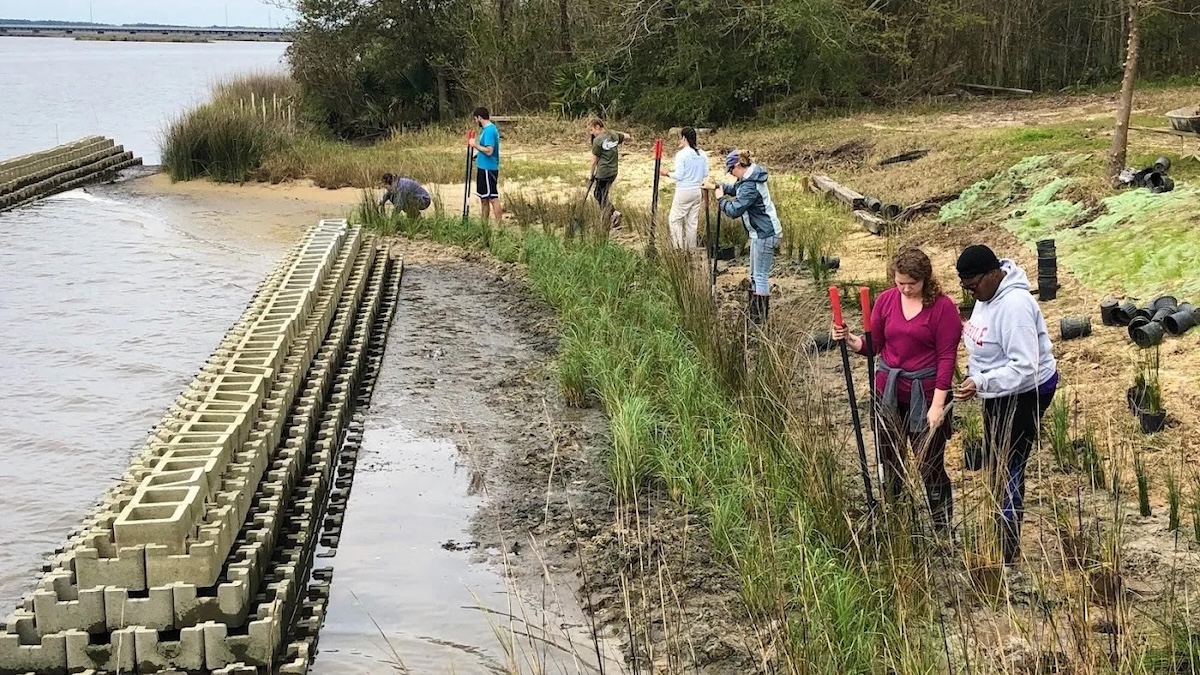
Banner image: Volunteers plant grasses to reduce coastal erosion in Biloxi, Mississippi, U.S., in 2022. Image courtesy of Mississippi-Alabama Sea Grant via NOAA.
