


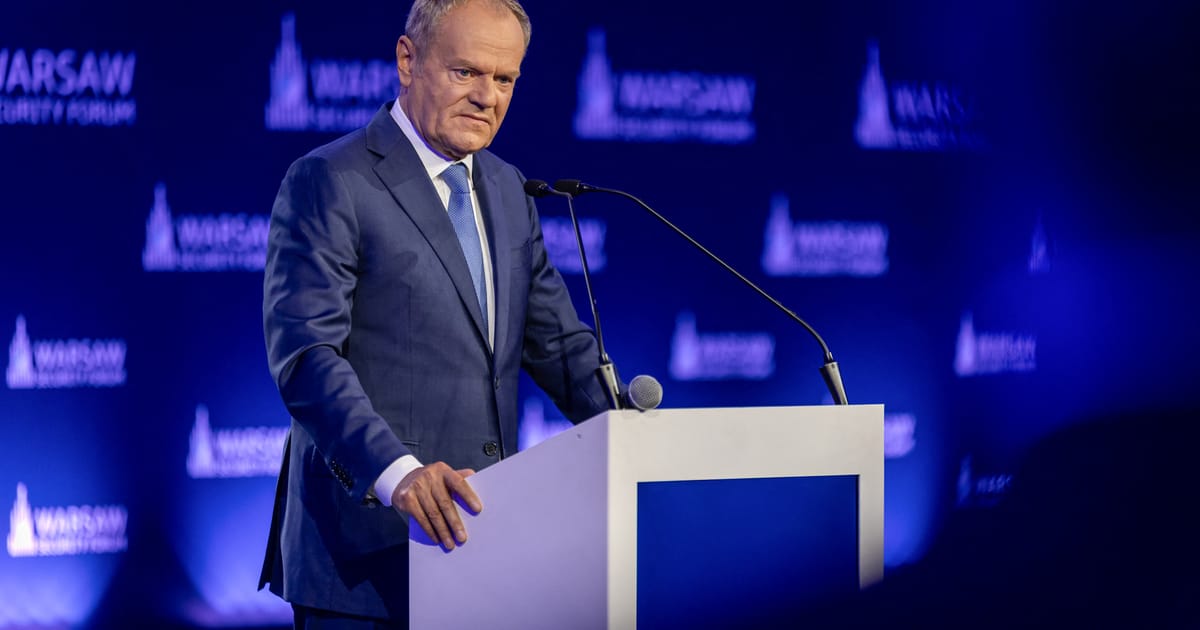
“Russia is not interested in deescalation, ceasing fire or peace,” Polish Prime Minister Donald Tusk told a security conference in Warsaw on Monday. “That is why I will go to Brussels to ask my partners to consider seriously increasing sanctions against Russia.”
German Chancellor Friedrich Merz also called for further restrictions, pointing to Moscow’s continued attacks on Ukraine’s energy infrastructure despite Trump’s announcement of a ceasefire.
“Russia will only negotiate in good faith under pressure,” Merz said Monday. “Following Moscow’s reckless attacks on Ukraine’s civilian energy supply, we must even tighten [sanctions] further.”
The push comes after EU foreign ministers on Monday approved the bloc’s largest-ever addition to its Russia sanctions list, targeting more than 1,600 individuals and entities. The European Commission is also preparing a 23rd package of sectoral sanctions, which Kyiv expects to be circulated to EU governments by the end of the year, according to a senior Ukrainian official who was, like others in this article, granted anonymity to speak frankly on the sensitive negotiations.
Other European countries are taking a similar position. Britain and Norway have also pledged to increase pressure on Moscow.
“It’s important to sanction Russia not to finance the war,” Norwegian Defense Minister Tore O. Sandvik told POLITICO, calling for loopholes in existing restrictions to be closed.
