


Residents with advanced dementia lined the day room, glazed stares or sleeping mouths agape, with that terrible human vacancy everyone most fears for their own end days.
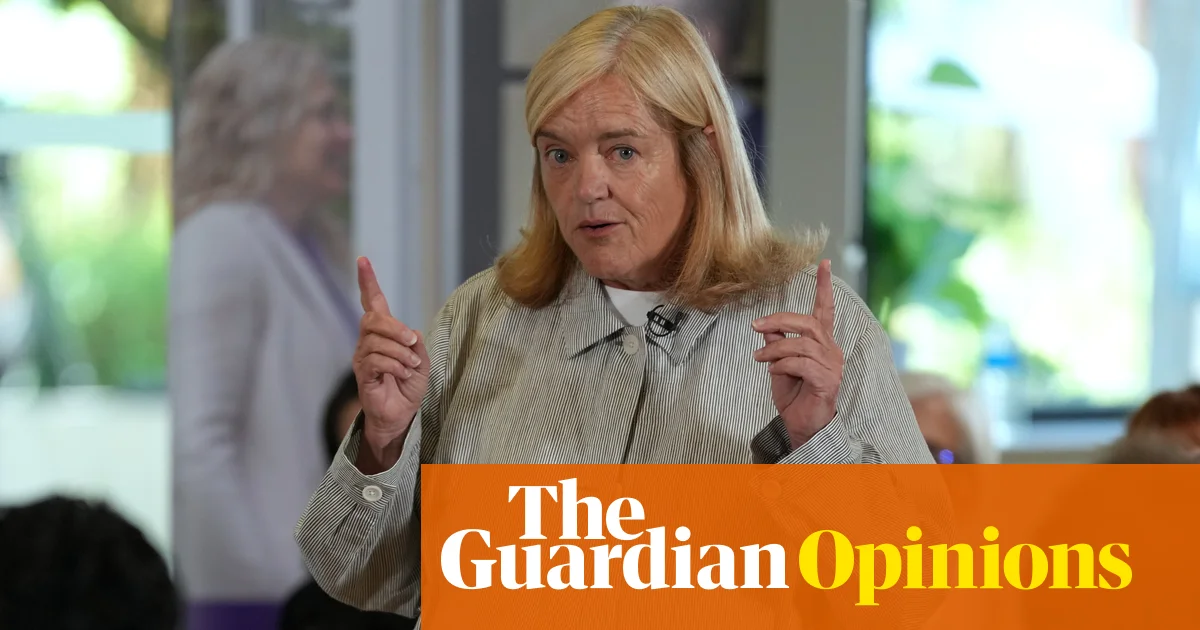
This was Millvina House in Anfield, Liverpool, which I visited with Louise Casey, who is heading the commission on social care in England, last week. Here is a snippet of what she saw: an angry man jolting into life, shooting out his arm at her and bellowing: “Out! Get out! Get out!” A young care assistant went to stroke his back and calm him down. It’s a hard job, and part of it is watching for warning signs of aggression, one of dementia’s dreadful symptoms. “People don’t want to know,” Casey said, “but if you are born, you will die. Chances are you will need care, and dementia is the biggest killer.”
In her travels she has been appalled by the standards of social care she has found in some places, with so many people getting far too little help. The evening before this visit, she had been out with care workers attending to people at home. She said she had come away “profoundly, deeply shocked”. She had photographed an elderly man with diabetes, swollen legs and a stroke affecting his left side, who was unable to open a bottle of water. He had no relatives nearby. “He couldn’t afford more care, so he’d just cut their visits by half.” Then there was a woman with early dementia and an untreated, infected stoma bag, which she said had looked “so sore”.
Casey’s shock at this “hidden misery” was matched by her admiration for care workers: “Only young girls, going into unknown homes, paid just £6.50 for a half-hour visit; it’s grim. But they are so patient.” She noted they were being paid about £4,000 a year less than if they had become healthcare assistants in the NHS. With better care, Casey thinks many more people should stay in their own homes – indeed, most would prefer to. “Even at four visits a day,” she said, it would be cheaper than residential homes such as Millvina House.
Millvina is a good symbol for the tangle of problems facing Casey. It is rated “requires improvement”, struggling out of a troubled “inadequate” past and hoping the results of its latest inspection will be better. The nursing home used to be privately run but was put into special measures after the Care Quality Commission (CQC) reported a lack of staff, shortage of medicines, unlawful restraint, dangerous neglect of residents with diabetes, incorrect doses of antibiotics and doubts on adequate feeding and hydration. After gaining interim control in July 2024, Liverpool city council officially took it over in September 2025, fearing its collapse would mean the loss of 60 much-needed beds – in the previous two years, 187 beds in Liverpool had already been lost. Its sister home, Brushwood, has also been insourced back to the council: here, the CQC found dirty baths and toilets, staff using disrespectful and dehumanising language, agency staff who didn’t know residents’ names and multiple safeguarding failures.
Casey urges insourcing to council or voluntary services: “If it’s public money, it should mainly be publicly run.” She wants to stop private-equity owners profiteering from care homes at one end, but at the other she sees services barely surviving unless better-off residents subsidise those on too-low state funding.
Now council-owned, Millvina costs a lot more to run at a better standard, the council leader tells me. Local authority staff are better paid – something private providers, contracted to cut costs, have little incentive to match. That was the logic behind Margaret Thatcher’s privatisation of social care, but perversely the state ended up with a far higher bill. To force councils to privatise, central government paid for those entering a private residential home, but not if they used domiciliary care or council-owned care. The result was an explosion of people entering private residential care instead of staying in their own homes. The state’s bill for nursing homes and residential care shot up from £20m in 1979 to £459m in 1986. That misguided privatisation is likely to feature in Casey’s imminent report outlining the sector’s history. Expect a brutal description of its current state.
Soon comes Casey’s first of several reports, this one on finance, which will lift the lid on where wealth resides. Overwhelmingly it is older people who have most wealth, a foundational fact underpinning whatever Casey’s final plans will be for a national care service. The people needing the care are better able to pay for it than working-age taxpayers. Expect that generational truth to shape her conclusions.
Lest some misunderstood Andy Burnham’s promise of universal free care at the point of use, it is unlikely that better-off people will be significantly freed from their current residential payments, which amount to £14bn. That contribution can’t be magicked away into general taxation, though liabilities could be capped.
Creating a fair system for elderly people may be easier than solving the inadequate state of care for working-age adults in need of support, which absorbs nearly half of councils’ care costs (Casey is writing separate reports about this). But political heat focuses on older people using family inheritances on care, a situation unresolved as nearly 30 years of forgotten social care commissions, white papers and select committee inquiries gather dust.
“Everything is on the table,” Casey says. Does that include Burnham’s own 2010 plan, in which everyone with capital would pay in a lump sum on retirement (or a lien on their home) and thereafter get free care? “Everything.” She and the government are examining a care plan by Steve Webb, a former Liberal Democrat pensions minister, for auto-enrolment of 1p in the pound on income tax for over-40s, politically saleable as people can opt out.
What of the clash with Burnham’s devolution plans? Some councils with similar profiles of deprivation, disability prevalence and median income provide up to twice the care of others, reports the King’s Fund. Voters want power devolved to councils – yet they hate an unfair postcode lottery between localities.
after newsletter promotion
Look at the conflicts Casey faces: public v privately run services, taxpayer funds v family payments, the NHS v council funding for different disabilities, and local v national standards.
Her report will also collide with Tory inheritance tax promises to the rich. The right to pass on property to family is at the heart of passionate feelings about people being obliged to sell homes (that they will no longer use) to pay for residential care. Should young working people, many unable to afford a home themselves, pay more taxes so others can pass theirs to their children? A third of first-time buyers rely on the help of family. The wealth gap is worsening, as the Institute for Fiscal Studies reports a “growing importance of inherited wealth” for some, while others will get next to nothing.
Casey wants to set off an alarm on the miserable quality of care she finds, but her fiercest fight may be over inheritance and generational justice. How will she cut through these political knots? It’s easy to believe her when she replies: “I will do what’s right, however controversial. That’s it.”
