

Close Menu
NCIJ Network NCIJ Network
    What's Hot

    Alibaba Qwen Introduces QwenGyre: Elastic Reinforcement Learning RL for XLong-Horizon Agents

    October 12, 2026

    Prominent Ransomware Negotiator Faces Extortion Charges

    October 12, 2026

    Bitcoin Extends Slide — Can ‘Uptober’ 2026 Beat Last Year’s?

    October 12, 2026
    Facebook X (Twitter) Instagram
    Trending
    • Alibaba Qwen Introduces QwenGyre: Elastic Reinforcement Learning RL for XLong-Horizon Agents
    • Prominent Ransomware Negotiator Faces Extortion Charges
    • Bitcoin Extends Slide — Can ‘Uptober’ 2026 Beat Last Year’s?
    • When climate change brings the heat, what happens to a mighty redwood?
    • Chinook salmon return to historical habitat following removal of four US dams
    • Remember the disabled adults who need social care | Social care
    • DR Congo’s former president Joseph Kabila to lead new movement with M23 rebels
    • Government expands police support to political figures who are not MPs
    • About
      • Our Team
      • Editorial Policy
      • Editorial Independence
      • International Support
    • Trust & Standards
      • AI Usage Policy
      • Conflict of Interest Policy
      • Corrections Policy
      • Ethics Policy
      • Fact-Checking Policy
      • Source Protection
    • Get Involved
      • Guide for Sources
      • Support Independent Journalism
    • Legal
      • Cookie Policy
      • Privacy Policy
      • Terms of Use
    Facebook X (Twitter) Instagram
    NCIJ Network NCIJ Network
    Monday, October 12
    • Home
    • World
    • Ai
    • Business
    • Politics
    • Health
    • Crypto
    • Science
    • Technology
    • Cybersecurity
    • Defense & Security
    • Economy
    • Energy
    • Europe
    • More
      • Fact Check
      • Investigations
      • Opinion & Analysis
      • Environment
    NCIJ Network NCIJ Network
    Home»Science

    NASA’s SpaceX CRS-35 Mission to Launch Health Research

    NCIJ NETWNCIJ NETWORKBy NCIJ NETWNCIJ NETWORKOctober 12, 2026 Science No Comments3 Mins Read
    Share
    Facebook Twitter LinkedIn Pinterest Email

    NASA experiments focused on human and plant health and drug-resistant organisms will travel to the International Space Station aboard SpaceX’s 35th Commercial Resupply Services mission for the agency from Cape Canaveral Space Force Station in Florida, advancing research that benefits life on Earth and future exploration.

    This research supports astronaut health during long-duration missions through four investigations from the agency’s Biological and Physical Sciences division, including 3D models of the human brain, a crop disease study, a faster way to assess astronaut health, and an analysis of antibiotic-resistant bacteria aboard the space station.

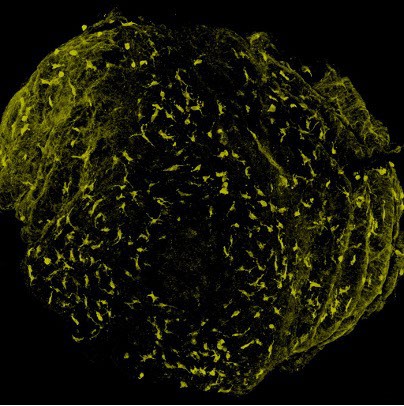
    Tiny brain models, big questions

    A new precision health investigation helps address a key question: What happens to the human brain in space?

    The experiment sends small, lab-grown models of the human brain to the orbiting laboratory for five weeks. Researchers compare tissue models that traveled to space with identical ones kept on Earth to determine how a short spaceflight affects the human brain at the cellular level.

    The effort could deepen our understanding of how the human brain responds to stress and help lay the groundwork for methods that counter risks to brain health that astronauts may face on future missions to the Moon and beyond.

    Disease-resistant crops for space

    A space crops investigation tests whether crop diseases develop faster and more severely in microgravity.

    The experiment compares molecular and structural changes between Earth-grown and space station-grown plants infected with a disease-causing fungus. The findings could guide plant breeding on Earth to produce disease-resistant crops and help minimize yield losses in future space agriculture systems.

    Space crops provide nutrition, increase dietary variety, and offer psychological benefits for astronauts during extended missions. They also absorb carbon dioxide, produce oxygen, and recycle water, which will become increasingly important as human missions extend farther from Earth.

    Analysis helps astronauts thrive

    The spacecraft also carries the first test of a compact microplate reader that arrived aboard the space station earlier this year.

    The Commercially Enabled Rapid Space Science initiative experiment tests the device’s ability to detect and measure certain biomarkers such as antibodies, antigens, and proteins.

    Use of the plate reader would allow scientists to analyze samples aboard the space station and obtain data quickly, rather than wait for the samples to return to Earth for analysis.

    Ultimately, the research aims to support the timely detection of infections and other health issues in astronauts while expanding science capabilities in remote exploration locations where resupply will be more difficult.

    Tracking antibiotic-resistant bacteria

    A precision health investigation returns for its fourth and final planned stay aboard the space station to study how antibiotic-resistant bacteria survive and evolve in microgravity.

    As part of the investigation, astronauts repeatedly sample surfaces throughout the space station to monitor for drug-resistant organisms.

    The work could help develop ways to protect astronauts against bacterial infections during long-duration missions. On Earth, the findings could provide insight into how superbugs develop from the overuse of antibiotics.

    To learn more about NASA’s biological and physical research in space, visit: https://science.nasa.gov/biological-physical/

    CRS35 health launch Mission NASAs research SpaceX
    NCIJ NETWNCIJ NETWORK
    • Website

    Keep Reading

    When climate change brings the heat, what happens to a mighty redwood?

    Scientists discover why a 100-year-old mushroom disease won’t go away

    Just 10 minutes of daily exercise could unlock deeper sleep

    Scarred blood vessels may be one clue to APOE4’s Alzheimer’s risk

    Scientists discover vanilla’s hidden healing potential

    Scientists discover a hidden factor that can make or break chemical reactions

    Add A Comment
    Leave A Reply Cancel Reply

    Editors Picks

    Alibaba Qwen Introduces QwenGyre: Elastic Reinforcement Learning RL for XLong-Horizon Agents

    October 12, 2026

    Prominent Ransomware Negotiator Faces Extortion Charges

    October 12, 2026

    Bitcoin Extends Slide — Can ‘Uptober’ 2026 Beat Last Year’s?

    October 12, 2026

    When climate change brings the heat, what happens to a mighty redwood?

    October 12, 2026
    Latest Posts

    This blazing-fast, super-private browser delivers a brand new beta – try it for free

    August 11, 2026

    U.S. Says It Revoked More Than 175,000 Visas Under Trump

    August 11, 2026

    Burnham ‘confident’ early release of PC Harper’s killers can be halted

    August 11, 2026

    Subscribe to News

    Get the latest sports news from NewsSite about world, sports and politics.

    NCIJ Network is an independent digital news platform delivering trusted investigative journalism, European and global news, in-depth analysis, and fact-based reporting with accuracy, transparency, and integrity.

    Facebook X (Twitter) Instagram Pinterest YouTube

    Alibaba Qwen Introduces QwenGyre: Elastic Reinforcement Learning RL for XLong-Horizon Agents

    October 12, 2026

    Prominent Ransomware Negotiator Faces Extortion Charges

    October 12, 2026

    Bitcoin Extends Slide — Can ‘Uptober’ 2026 Beat Last Year’s?

    October 12, 2026

    Subscribe to Updates

    Get the latest creative news from FooBar about art, design and business.

    Type above and press Enter to search. Press Esc to cancel.