


To tourists or casual observers, Italy might appear to be one giant museum—brimming with beautiful art but somewhat stuck in the past—that plays only a marginal role in global affairs. A new book by Jason Horowitz, an American journalist who spent much of the last quarter century in Italy, paints a different picture: of a nation that has served as a laboratory for political trends that spread across Europe and the United States.
After learning the ropes of journalism in Rome working for a variety of news outlets, Horowitz married the daughter of an Italian diplomat, then later spent nearly a decade as the New York Times’ Rome bureau chief (when he finally went “native,” as he puts it, becoming an Italian citizen). His memoir, The Italian Job, reads both as a reflection on his personal and professional experiences in the country and on its recent political history.
To tourists or casual observers, Italy might appear to be one giant museum—brimming with beautiful art but somewhat stuck in the past—that plays only a marginal role in global affairs. A new book by Jason Horowitz, an American journalist who spent much of the last quarter century in Italy, paints a different picture: of a nation that has served as a laboratory for political trends that spread across Europe and the United States.
The Italian Job: A Memoir of an American Reporter in Rome, Jason Horowitz, Celadon, 352 pp., $29.99, October 2026
After learning the ropes of journalism in Rome working for a variety of news outlets, Horowitz married the daughter of an Italian diplomat, then later spent nearly a decade as the New York Times’ Rome bureau chief (when he finally went “native,” as he puts it, becoming an Italian citizen). His memoir, The Italian Job, reads both as a reflection on his personal and professional experiences in the country and on its recent political history.
The book is infused with an evident love for Italy and Italians, yet one of its central arguments is that the country has paved the way for the rise of the modern far right.
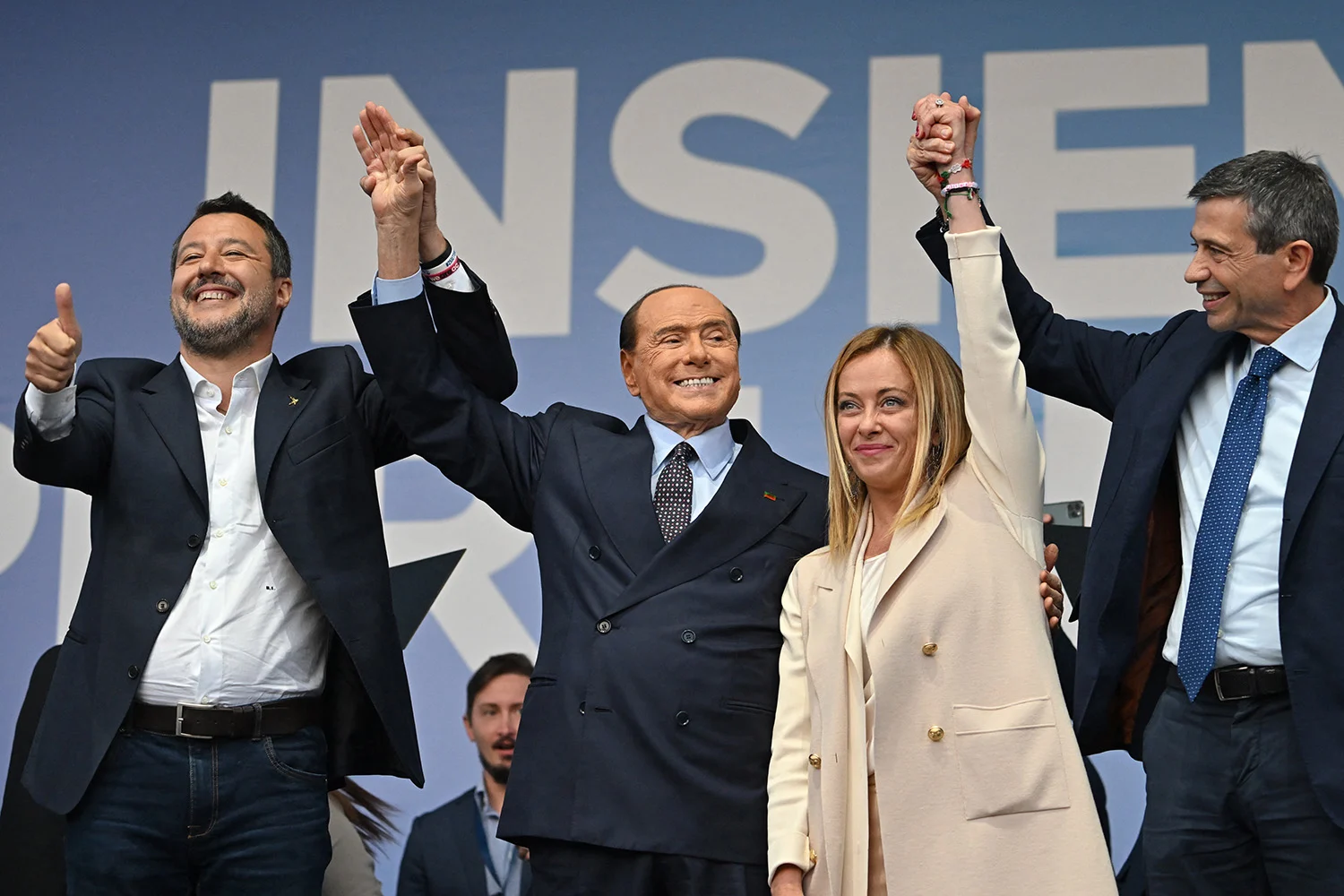
A sizable share of the book is devoted to Silvio Berlusconi, a media tycoon who first became prime minister in the mid-1990s and, as the leader of the center-right Forza Italia party, dominated Italy’s political life for 20 years. Berlusconi, who died in 2023, resigned in ignominy in 2011 amid an acute financial crisis that threatened to send the eurozone’s third-largest economy into default—and after facing a scandal stemming from his infamous “bunga bunga” parties.
Horowitz dwells on how Berlusconi served as a model for future U.S. President Donald Trump, and he is hardly the first to draw comparisons between the two leaders—both wealthy businessmen with a penchant for norm-busting behavior. But as an American journalist with experience covering the political scenes of both Rome and Washington, Horowitz is particularly perceptive.
“Berlusconi set the mold for Trump, the Italian original before the American knockoff,” Horowitz writes. He “showed that a weakened political mainstream was vulnerable to takeover by a brand-name businessman with a messianic complex—Italy was broken and only he could fix it—unlimited access to screen time, and a charisma that moved the masses.”

Berlusconi, then Italy’s prime minister, poses in Villa Madama in Rome on Feb. 20, 2002. GABRIEL BOUYS/AFP via Getty Images
The two leaders both faced a long list of legal troubles and responded to them in similar ways: Trump’s tirades about “witch hunts” seem to come out of Berlusconi’s playbook, Horowitz notes. Unsurprisingly, Trump has long been interested in Berlusconi’s political adventure. “Who is this guy?” Trump reportedly asked an associate whom he had dispatched to Italy in 2011, according to the book. “What’s he doing? How’s he doing?”
On top of inspiring the future U.S. president, Berlusconi left another long-lasting mark in Italy and beyond, Horowitz argues: By breaking the firewall around Italy’s far right and repeatedly bringing it into coalition governments, he helped pave the way for its rise, which culminated in Giorgia Meloni’s election as prime minister four years ago and contributed to a broader trend across much of Europe.
According to Horowitz, Berlusconi believed—to some extent correctly—that opening the gates of government to the post-fascist Italian Social Movement, a predecessor of Meloni’s Brothers of Italy party, would accelerate its transformation into a more mainstream conservative force.
While Meloni has pursued a staunchly conservative agenda, curtailing abortion rights, banning surrogacy, and strengthening police powers, most Italians I speak to agree that she does not represent a threat to democratic freedoms. But what Berlusconi failed to foresee, Horowitz writes, was that his coalition partners would eventually take center stage and sideline Forza Italia.

Berlusconi wipes the forehead of Salvini during a joint press conference at the Temple of Hadrian in Rome on March 1, 2018. ALBERTO PIZZOLI/AFP via Getty Images
In 2018, Matteo Salvini—the leader of another far-right party, the League—became interior minister in a coalition government with the anti-establishment Five Star Movement. Italy came to represent a beacon for international right-wing populists, including former White House strategist Steve Bannon, who visited Italy frequently at that time as part of his efforts to build a broad anti-globalist alliance. As Horowitz puts it, Italy was “the place to be for the most eager arsonists of the existing world order.”
After two more coalitions quickly rotated in and out of government, Meloni skyrocketed in the polls and won the 2022 general election, becoming the first far-right head of government in western Europe since the end of World War II—exactly a century after the march on Rome brought Benito Mussolini’s National Fascist Party to power in Italy.
Horowitz suggests the Italian far right’s escape from its cave is being replicated by similar parties across Europe. The Italian Job doesn’t delve deep into other countries’ politics, but it’s worth noting that Italy set a trend: In recent years, populist nationalist parties have backed or become part of governments in Sweden and the Netherlands. In France, National Rally leader Marine Le Pen is the frontrunner in next spring’s presidential election. The Reform U.K. party has topped national polls for much of the last year. Last month, the Alternative for Germany party gained significant ground over the conservative Christian Democrats in several state elections.

Alice Weidel, a co-leader of the Alternative for Germany (AfD) party, speaks to supporters at an AfD election campaign rally ahead of state elections, in Neubrandenburg, Germany, on Sept. 18.Sean Gallup/Getty Images
As to whether the far right is destined to grow tamer as it nears power, Horowitz leaves the question open. Italians, he writes, may be tempted by populism, but they are ultimately a nation of moderates with little sympathy for authoritarianism. The Italian political system, with its inherent fragmentation and a strong judiciary, was built from the ashes of World War II with the goal of providing strong checks and balances.
In other political cultures with fewer constitutional ramparts, Horowitz notes, the story may be different. I’d point to the much greater power concentrated in the hands of the executive in France, where President Emmanuel Macron pushed through an extremely controversial pension reform in 2023 that the legislature wasn’t allowed to vote on.
Horowitz’s book is about more than Italian politics. The Vatican, for one, clearly had an outsized place in his life in Rome, as it appears abundantly in The Italian Job. (The author is not alone: A decade later, when I interned in the same Associated Press bureau where Horowitz took his first professional steps, the job was about 50 percent covering the pope and 50 percent covering Berlusconi.) Horowitz guides readers through three conclaves, which elected the popes Benedict XVI, Francis, and Leo XIV, respectively; describes the power struggles between conservatives and reformists within the church; and takes readers behind the scenes of the many papal trips he covered as part of the Vatican press corps.

Cardinals attend Pope Francis’s inauguration Mass at St. Peter’s Square in Vatican City on March 19, 2013.GABRIEL BOUYSGABRIEL BOUYS/AFP via Getty Images
Prime ministers and popes aside, Horowitz does a good job of capturing Italy’s collective psyche. The book contains an obligatory dose of Italian color, with reckless driving, elaborate swearing, and enthusiasm for food illustrated in its pages. But Horowitz isn’t peddling stereotypes. Even when tackling some of the most Italian cliches, he brings real depth to his observations about what defines the country and its people.
When addressing Italians’ insistence to follow traditional recipes to the letter, for example, Horowitz argues that it may reflect a broader reluctance to embrace change and innovation. I had never thought about it that way, but he may well be right.
In some respects, Horowitz’s experience in the country was hardly comparable to that of the average Italian. As he mentions in the book, his in-laws are connected to some of the most exclusive social circles in Rome. Yet he is lucid when describing the challenges Italians face—not from an academic perspective, but after he and his family were confronted with some of those problems in their everyday lives. The lack of good job opportunities and the low salaries, which prompt large numbers of talented graduates to emigrate, are recurring themes in The Italian Job (at one point, Horowitz’s wife is offered a salary so low that she thought there had been a mistake), as is the aging population, which is putting Italy’s welfare state and family-based model of elder care under strain.
Horowitz’s takes are also influenced by his own political views. The book betrays a certain sympathy for liberal reformers such as former Prime Ministers Matteo Renzi and Mario Draghi, while the Five Star Movement comes across as a bunch of lunatics with a penchant for conspiracy theories—an assessment that overlooks its gradual transition from anti-establishment movement to a more mainstream, moderate, and left-leaning party in recent years.
But no description of a divided country full of contradictions like Italy can be entirely objective, much less one as wide-ranging and personal as this one. If anything, a little bias here and there is proof that Horowitz has truly succeeded in going native.
