


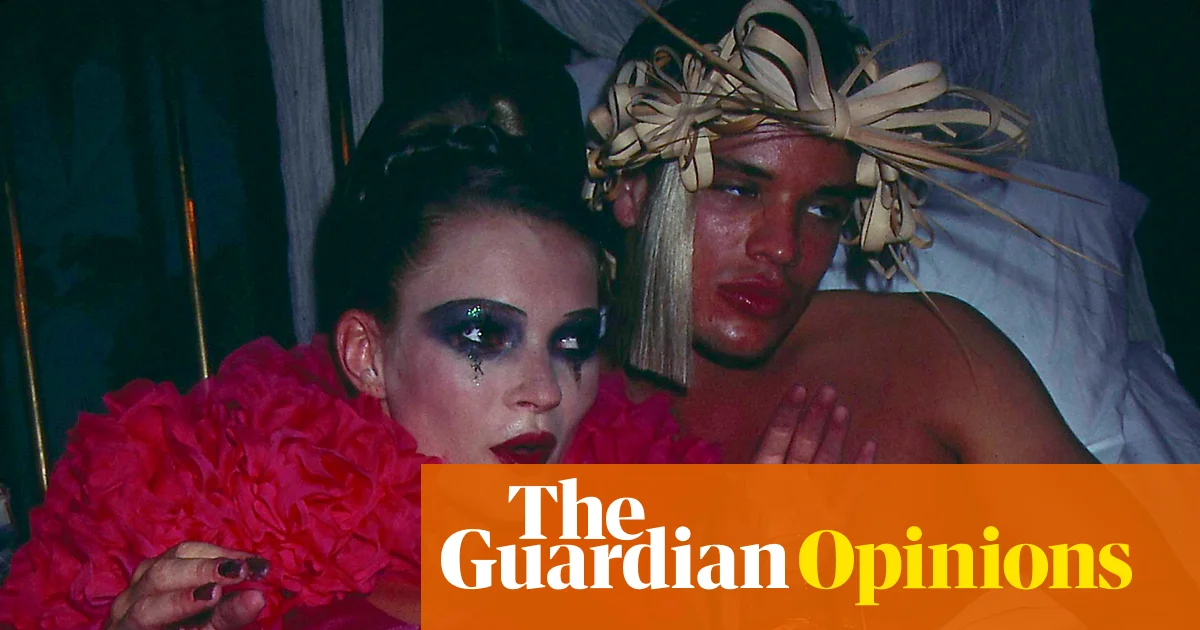
Each generation imagines itself to be cooler than the one that went before it, and weirder than the one that comes after it, to update George Orwell. Gen X is no exception. “It felt like something was happening,” Pulp’s Jarvis Cocker writes in the catalogue for The 90s: Art and Fashion, which opened at Tate Britain this week. “Something good. It felt like the weirdos were taking over.”
The exhibition, curated by the former editor of British Vogue, Edward Enninful, is part of a wider 90s cultural revival. Oasis’s Wonderwall was the UK’s unofficial World Cup anthem this summer, after last year’s sellout reunion tour. Pulp have also just completed a world tour. The 1993 novel Trainspotting has become a musical; less surprisingly, so has 90s-set romance One Day, which found a new audience with 2024’s Netflix series. Love Story, which fictionalises the doomed relationship between John F Kennedy Jr and Carolyn Bessette, broke streaming records. Cult drama This Life is now on iPlayer. Vogue has described the era as “fashion’s most revisited decade”.
And there’s more in the pipeline. The National Theatre’s 2027 season will include two new plays celebrating the “optimism” of the 1990s: James Graham’s dramatisation of John Major’s rise to No 10 and Moira Buffini’s imagining of the lead-up to the 1998 Good Friday agreement.
This sense of optimism is surely behind the resurgence. Between the fall of the Berlin Wall and of the twin towers in New York, democracy, economics and creativity thrived, at least for some. The Young British Artists and Britpop put the UK on the contemporary cultural map. The common people could become pop stars, fashion designers and prize-winning artists. Magazine photoshoots were elevated to art. Kate Moss was the face of the era. Daring, youthful and “real” – this was Cool Britannia. No wonder the New Labour government was quick to get in on the act after its 1997 victory.
Nineties grunge is seen as a reaction against the excesses of the Thatcherite 80s. Yet, as last year’s exhibitions showcasing Leigh Bowery and The Face magazine showed, a youth counter-culture had emerged. In the 90s it became mainstream.
In hindsight Cool Britannia looks more than a little London-centric and elitist. And life wasn’t glossy for everyone. Racism, Aids and sexism form the backdrop to the Tate exhibition. Many of the images explore what it meant to be a young woman at a time when “girl power” was an empty slogan in the creative industries. One of the era’s greatest cultural legacies is that these female artists now command solo exhibitions, such as Tracey Emin’s blockbuster retrospective at Tate Modern this spring.
This 30-year renaissance cannot just be put down to the “nostalgia pendulum”, whereby influential figures like Enninful are able to curate their own past. The 1990s was the last decade of the analogue age. This nostalgia speaks to a longing for a time without smartphones, social media, selfies and streaming. People watched TV, listened to music and danced together. It was a period of freedom, possibility and fun for young people. It’s not hard to see why it appeals to Gen Z. Like the magazines set up to capture the zeitgeist, that world has gone for ever. We don’t look back in anger, but in sorrow.
