


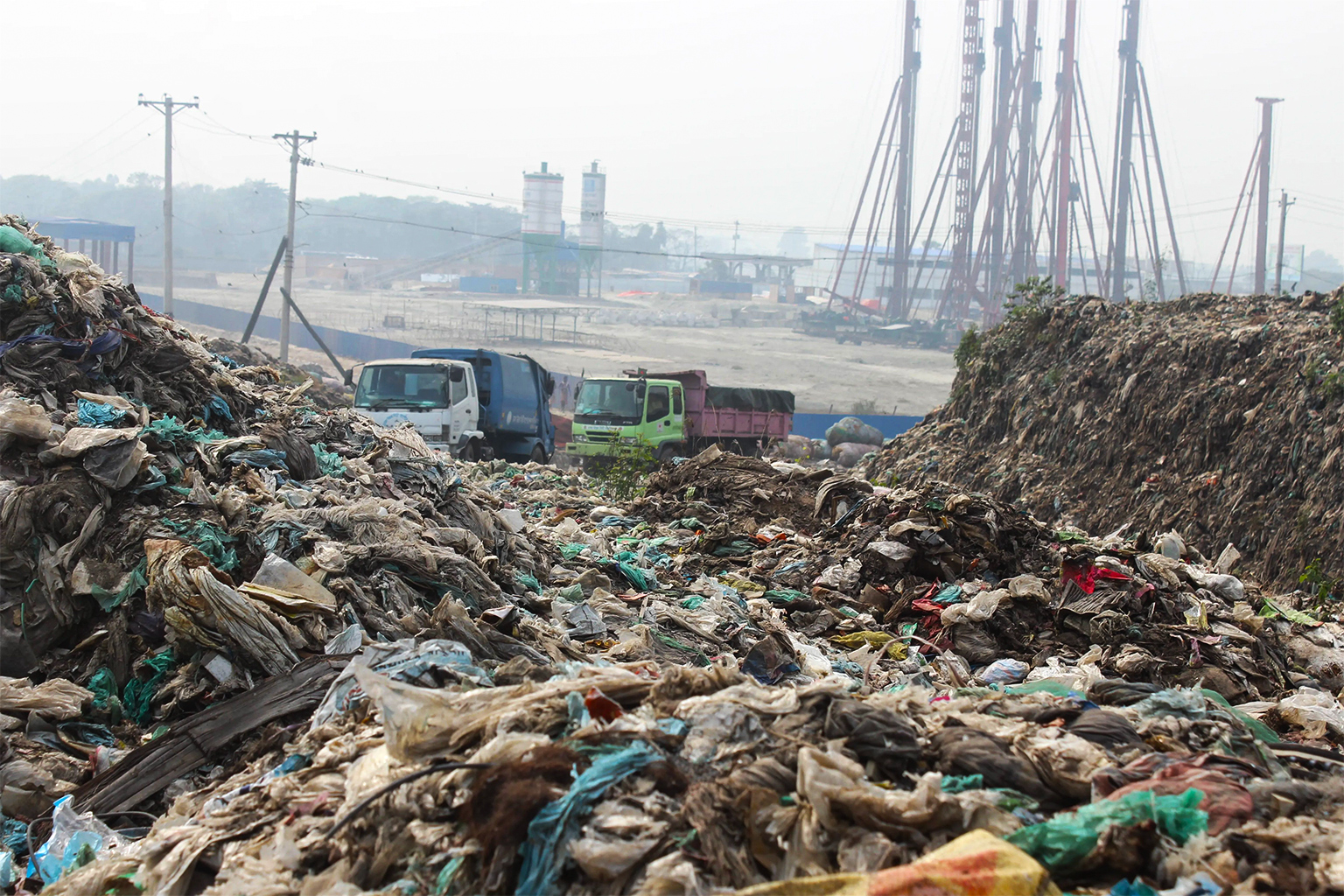
Construction of a power plant that will burn waste to generate electricity at a landfill near Bangladesh’s capital faces strong opposition from nearby communities, who say they fear severe health risks posed by toxic air pollution, reports contributor Eyamin Sajid for Mongabay.
The $467 million project is being overseen by the municipal authority Dhaka North City Corporation, and is owned by the China Machinery Engineering Corporation (CMEC), backed by Chinese-headquartered multilateral lenders. It’s designed to incinerate up to 3,000 metric tons of municipal waste daily, tackling the capital’s escalating garbage crisis while also generating up to 42.5 megawatts of electricity. The project is slated for completion in December 2028.
Densely populated communities, including several schools, sit less than a mile from the location of the power plant. Local farmers told Mongabay that unmanaged trash fires at the dumpsite already disrupt their work and well-being.
“We can’t breathe when waste is burned in the dumping station,” said Md Naim, who grows rice and vegetables nearby. “Our nose closes with ashes, and we feel a headache from the smoke while working on the field.”
According to the environmental impact assessment for the project, the incinerator will produce 74.8 metric tons of fly ash daily, enough to get airborne. An analysis by environmental groups indicates the plant will generate 73,576 metric tons of solid waste annually, along with 39.56 metric tons of toxic substances, including dioxins, furans, and heavy metals.
“If the power plant is built and run regularly, local residents, especially children and elderly people, will face more respiratory and lunch-related problems, eye irritation, fatigue, and long-term health issues due to chronic exposure to air pollution,” said Hasan Mehedi, secretary of the Bangladesh Working Group on Ecology and Development (BWGED).
Residents and the BWGED have demanded the project be cancelled, but officials maintain the facility is indispensable.
Mir Shahe Alam, state minister for local government, rural development and co-operatives, said during a July 1 site visit: “The municipal waste has now become a chokepoint of Dhaka city. At any cost, we need to ensure waste management, whether it is through waste-to-energy, bio-compost fertilizer or chemical production; we need to use this huge pile of waste.”
To facilitate operations, the Department of Environment amended Bangladesh’s Air Pollution Control Rules 2022, cutting the minimum incineration temperature, reportedly to lower the plant’s operating cost.
However, environmental activists argue that a lower burning temperature would generate more fly ash, leading to more pollution.
Shaikh Faridul Islam, state minister for environment, forest and climate change, told Mongabay that lower temperatures remain sufficient because the facility will rely on household organic waste rather than electronic or clinical refuse. “If e-waste and medical waste are not burned, there will be no harm,” Islam said.
Read the full story by Eyamin Sajid here.
Banner image: Mountains of solid waste rise at the Aminbazar landfill in Savar, Dhaka district, next to which a waste-to-energy plant is planned. Image by Md Jahidul Islam.
