


If the past is another country, and there is nothing so poignant as the innocence of recent history, then there is a third category of engagement with the era directly preceding our own, encapsulated by the line “that didn’t age well”.
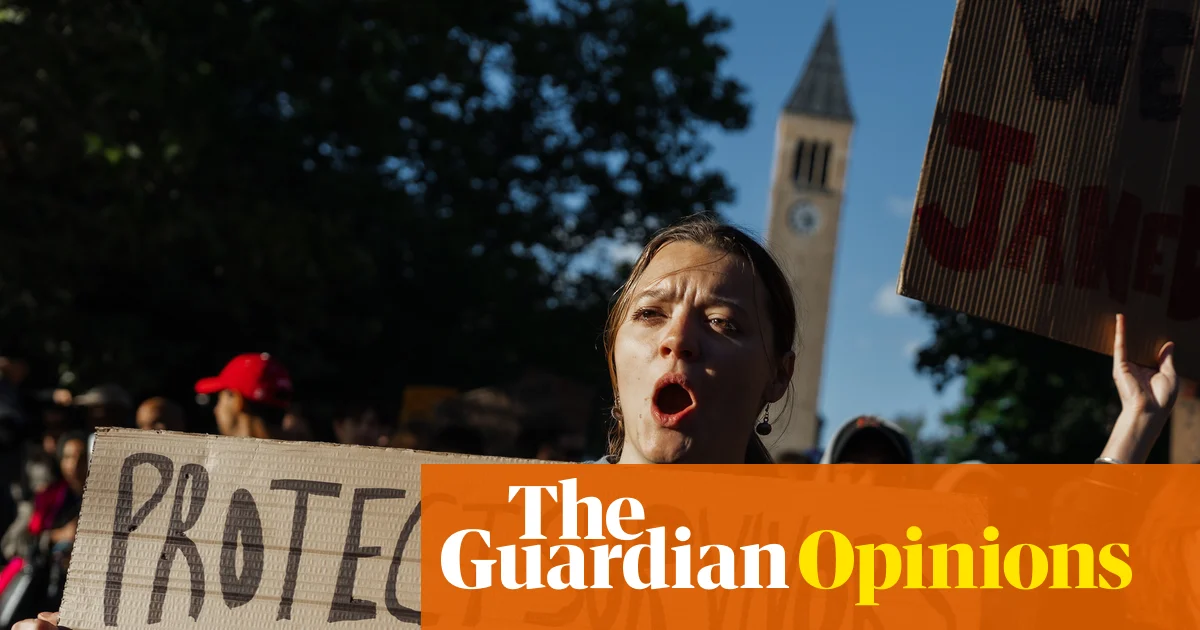
I found myself thinking about this in relation to news of the seven male students accused of gang-raping a 20-year-old woman two years ago in their fraternity house at Cornell University, and now facing a civil suit brought by their alleged victim. Apparent failures by Cornell and the local district attorney to act appropriately at the time have triggered another round of commentary about the “death of #MeToo”, not least with the looming anniversary on 15 October, the date in 2017 when the hashtag first went viral. But the period I find myself thinking about predates even that, when it seemed as if these questions of consent had been largely resolved.
“Campus rape” – a category of sex crime historically taken even less seriously by the criminal justice system than regular rape – has always flushed out complacencies among those who otherwise consider themselves liberal.
So it was in 2015, when it seemed to many liberal observers as if, after almost eight solid years of President Barack Obama in the White House, a crucial line had been crossed; conservatism had lost, liberalism had won, and the biggest threat to female students on campus was the temptation to overpunish men for minor transgressions, thanks to the sheer force of the pendulum swing to their side.
This was the notion of “liberal overreach”, in which a popular president and a comfortably dominant political order allowed for what, in hindsight, looks like a load of decadently counterintuitive takes, accusing the left of going too far.
Two things pertinent to the Cornell case happened that year: Valerie Jarrett, the Obama adviser tasked with co-chairing a White House panel on women and girls, came up with the idea of using civil rights legislation known as Title IX to prosecute sexual assault cases on campus. And, in January that year, a 22-year-old woman was sexually assaulted at a frat party at Stanford University in what would become known as the “Stanford swimmer case”. As with the Jane Doe at the centre of the Cornell rape allegations, Emily Doe had been drunk when the sexual assault occurred and much of the debate would centre on her ability to consent.
The reason for bringing this up is twofold. First, Stanford’s Title IX process had yet to be introduced when Emily Doe was assaulted in 2015, but her experience foreshadowed just how inadequate the new internal complaint system would become for handling serious felonies on campus.
Second, the conversation around Emily Doe’s own culpability was a stark reminder that the Obama era had ushered in neither a brave new dawn of understanding around consent, nor a period in which innocent male students were at risk of persecution. Instead, the details of the case ran along age-old lines in which a man, Brock Turner, after being discovered assaulting an unconscious Emily Doe by the bins at the back of the fraternity house, was found guilty of felony sexual assault and sentenced to six months in jail, of which he served three.
While the assailant was spoken of glowingly by the judge as a champion swimmer, his victim was dragged through the mud, a narrative that only changed when Chanel Miller, who would later dispense with her anonymity, read out her victim impact statement in court. “You don’t know me,” she said, addressing Turner directly, “but you’ve been inside me, and that’s why we’re here today.”
If looking back at this case brings on a dismal sense that nothing changes, it also allows us to celebrate a little progress. After an initial flurry of whataboutery, it seems to me the Jane Doe in the Cornell case has been subject to considerably less public scepticism than Miller was a decade ago. The problem remains the utter pointlessness of Title IX as a mechanism for punishing serious sexual assault – two of Jane Doe’s alleged assailants were expelled from Cornell, two were suspended, one defendant was issued a persona non grata, and two were barred from campus – and some lingering fallacies about the role played by alcohol.
after newsletter promotion
Espousing a popular view, in his 2019 book Talking to Strangers, Malcolm Gladwell, over an entire chapter, presented the crime against Miller as a tragic misunderstanding between two people – a “transparency failure on steroids” – which wouldn’t have happened had alcohol not been present. This is true.
Also true, but omitted from Gladwell’s analysis, is that it wouldn’t have happened if Brock Turner hadn’t been male; if parents didn’t raise their darling boys differently to how they raise their girls; if the criminal justice system prosecuted sexual assault with the enthusiasm it brings to, say, motoring offences; if “campus rape” was taken seriously as a category of crime; if two-thirds of the rapes and sexual assaults that occur in the US didn’t go unreported; if the conviction rate for those that are reported was higher than about 8%.
It would seem to me that the pivotal disinhibiting agent in the sexual assault of Chanel Miller, and in the alleged assault of the latest Jane Doe, wasn’t drugs or alcohol, but entitlement, misogyny and a well-founded assumption on the part of the men accused that they would never be held to serious account.
