


That Indonesian President Prabowo Subianto skipped the annual inaugural proceedings of the U.N. General Assembly (UNGA) this year is not so unusual—after all, so did the leaders of China, Germany, India, Mexico, South Africa, and a host of other nations. Nonetheless, Prabowo’s absence has prompted speculation that he intended to send a message by avoiding a visit to the United States. Although Jakarta officially cited Prabowo’s need to address domestic priorities, some Indonesian experts see his absence as reflecting growing frustration with Washington following Jakarta’s attempts to align with Trump administration priorities.
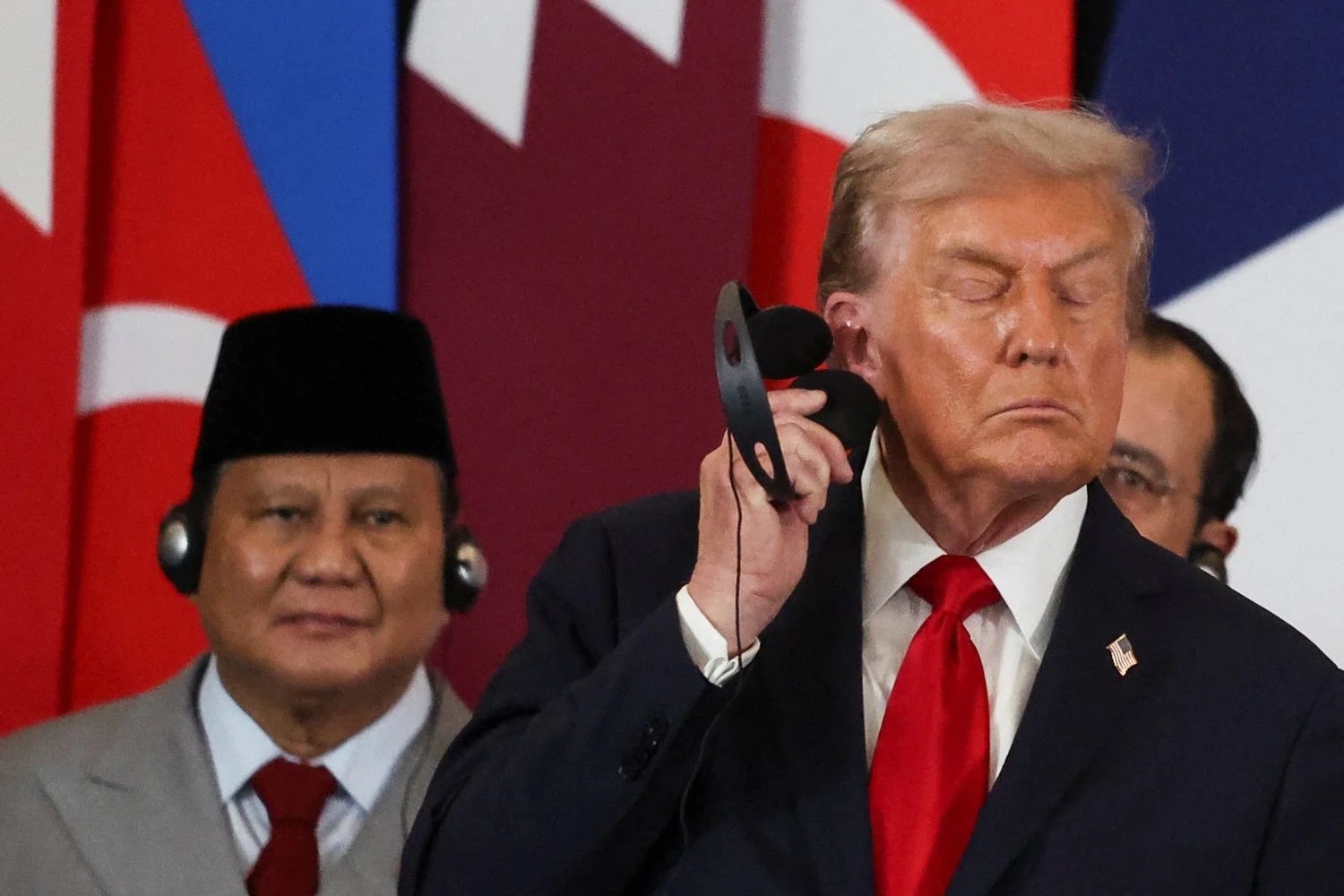
At last year’s UNGA, Prabowo publicly offered considerable Indonesian resources in support of a Gaza settlement, pledging a financial contribution and potentially “20,000 or even more” peacekeepers in the territory. He also took the notable step of promising Indonesian recognition of Israel once Israel recognized a Palestinian state. In February, Prabowo participated in President Donald Trump’s inaugural Board of Peace meeting and linked Indonesia’s troops commitment to a U.S.-led stabilization force for Gaza. During the meeting, Prabowo declared that Indonesia “completely agree[d]” with and was “fully committed” to Trump’s 20-point plan, praised Trump’s leadership, and expressed optimism that the plan could achieve “real peace.”
That Indonesian President Prabowo Subianto skipped the annual inaugural proceedings of the U.N. General Assembly (UNGA) this year is not so unusual—after all, so did the leaders of China, Germany, India, Mexico, South Africa, and a host of other nations. Nonetheless, Prabowo’s absence has prompted speculation that he intended to send a message by avoiding a visit to the United States. Although Jakarta officially cited Prabowo’s need to address domestic priorities, some Indonesian experts see his absence as reflecting growing frustration with Washington following Jakarta’s attempts to align with Trump administration priorities.
At last year’s UNGA, Prabowo publicly offered considerable Indonesian resources in support of a Gaza settlement, pledging a financial contribution and potentially “20,000 or even more” peacekeepers in the territory. He also took the notable step of promising Indonesian recognition of Israel once Israel recognized a Palestinian state. In February, Prabowo participated in President Donald Trump’s inaugural Board of Peace meeting and linked Indonesia’s troops commitment to a U.S.-led stabilization force for Gaza. During the meeting, Prabowo declared that Indonesia “completely agree[d]” with and was “fully committed” to Trump’s 20-point plan, praised Trump’s leadership, and expressed optimism that the plan could achieve “real peace.”
At home, Prabowo’s support for Washington’s Gaza initiative was hardly cost-free. His willingness to contemplate recognizing Israel had already generated controversy in overwhelmingly pro-Palestinian Indonesia, but opposition intensified after Jakarta joined Trump’s Board of Peace and committed to deploy troops. Indonesian Muslim organizations and civil society groups questioned whether the initiative would genuinely advance Palestinian statehood or only subordinate Indonesian foreign policy to the United States and Israel. Public opinion was similarly skeptical. For example, a March 2026 survey found that 50.9 percent of respondents opposed Indonesia’s membership in the Board of Peace, while 44.9 percent opposed deploying Indonesian troops in Gaza, compared with just 33.8 percent who supported the deployment. The controversy eventually reached Prabowo’s own governing coalition as several politicians called for Indonesia to reconsider its involvement.
The Iran war has significantly worsened Prabowo’s domestic headaches over supporting Washington in the Middle East. His government suddenly found itself uncomfortably associated with a warmongering United States targeting another Muslim-majority state. In response, Prabowo froze Indonesia’s Board of Peace engagement and suspended its planned troop deployment to Gaza. Prabowo also placed explicit conditions on any reinstatement of Indonesia’s troop commitment, stressing that Indonesian forces would not disarm Hamas and would participate only with the explicit consent of Palestinian leaders—presumably including Hamas—and key Muslim-majority states, including Egypt, Pakistan, Saudi Arabia, and Turkey. In response to reports that Indonesia could contribute $1 billion to the Board of Peace, he said that he never committed any money to the body—in contrast to his earlier U.N. pledge to help finance peace in Gaza. Jakarta’s retreat complicates the White House’s portrayal of the Board of Peace as an international success story. To make matters worse for Prabowo, the war has driven up energy costs, creating additional concerns for Indonesia’s economy and consumers.
Coincidentally, on the same day Prabowo attended the Board of Peace meeting in February, his country also signed a new tariff agreement with the United States. Jakarta was shocked when Trump slapped U.S. imports from Indonesia with an extremely high 32 percent tariff in April 2025. The two sides eventually negotiated the rate down to 19 percent, but Indonesia made enormous concessions that arguably compromised its sovereignty; Jakarta had to agree to restrictions in its economic relations with its other major partner, China. The deal requires, for example, that Indonesia aligns with U.S. export controls on sensitive technologies and avoids entering trade agreements with other nations that could compromise “essential U.S. interests.” Nevertheless, Prabowo attempted to spin the deal to his population, arguing: “We finally reached a mutually beneficial agreement based on mutual respect. I think the outcome is good.”
Prabowo would have rather moved on from the issue, but just one day later—on Feb. 20—the U.S. Supreme Court ruled Trump’s tariffs illegal, unleashing a torrent of criticism that Indonesia should have just waited before signing a negotiated deal. A commentary published by the Jakarta Post called the timing “disastrous,” arguing that Prabowo’s team should have anticipated the ruling and postponed the signing.
Compounding the situation further, the Trump administration opened a Section 301 investigation into alleged Indonesian manufacturing overcapacity just three weeks later, followed the next day by another investigation into Indonesian imports of products allegedly made with forced labor. Jakarta responded to the latter by introducing a new prohibition on imports produced with forced labor, but Washington nevertheless slapped Indonesian goods with a 10 percent tariff in July. Meanwhile, the U.S. investigation into excess capacity continues to hang over the relationship.
As if these bilateral irritants weren’t enough, another emerged in April when it was revealed that Prabowo had approved a new agreement to give the U.S. military precleared access to Indonesia’s sovereign airspace for crisis responses and other contingencies. The Indonesian Defense Ministry later denied that a binding commitment had been made, suggesting that Prabowo was forced to backtrack. Defense Minister Sjafrie Sjamsoeddin nevertheless acknowledged that he had signed a letter of intent with his U.S. counterpart, Pete Hegseth, while Indonesia’s Ministry of Foreign Affairs warned that blanket U.S. access risked entangling the country in a South China Sea conflict. Once again, Prabowo’s effort to move closer to Trump had created political backlash at home. And once again, his government was forced into defending itself against accusations that it was compromising Indonesian sovereignty.
Despite these troubles, the U.S.-Indonesia partnership has continued to progress in several key areas. The annual Super Garuda Shield military exercise—organized by the Indonesian and U.S. militaries and involving various partner countries—has expanded in both the number of participating countries and the depth of cooperation. U.S.-Indonesian critical minerals cooperation is also growing, and the two countries have announced tens of billions of dollars in new commercial deals.
Yet some of the biggest advances in the relationship, whether on security or trade, have produced new and unintended political consequences for Prabowo at home and abroad. Still, he has invested heavily in both his personal relationship with Trump and the broader U.S.-Indonesia partnership, suggesting that he is unlikely to reverse course quickly. Instead, Prabowo is more likely to make some marginal adjustments—this week, for example, he appointed an experienced diplomat, Arrmanatha Nasir, as his new foreign minister, who may scrutinize Indonesia’s international commitments more heavily before they are signed. So far, at least, Prabowo hasn’t absorbed enough blowback to conclude that closer ties with Washington are more trouble than they are worth.
This post is part of FP’s ongoing coverage of the Trump administration. Follow along here.
