

Close Menu
NCIJ Network NCIJ Network
    What's Hot

    Art exhibit does not show Ann Widdecombe’s dead body – Full Fact

    July 24, 2026

    Trump’s new tariffs ‘a sales tax that will make life harder for Americans’, say Democrats – US politics live | Trump tariffs

    July 24, 2026

    World chess chief steps aside after EU sanctions – POLITICO

    July 24, 2026
    Facebook X (Twitter) Instagram
    Trending
    • Art exhibit does not show Ann Widdecombe’s dead body – Full Fact
    • Trump’s new tariffs ‘a sales tax that will make life harder for Americans’, say Democrats – US politics live | Trump tariffs
    • World chess chief steps aside after EU sanctions – POLITICO
    • Faisal Islam: The UK’s Trump trade deal no longer looks world-beating
    • Carmakers are the rare example of tariffs as the least bad option
    • Tesla’s car door defect could lead to tougher rules for everyone
    • OpenAI pushes ChatGPT into patient health records
    • Chick-fil-A data breach affects more than 13,000 customers
    • About
      • Our Team
      • Editorial Policy
      • Editorial Independence
      • International Support
    • Trust & Standards
      • AI Usage Policy
      • Conflict of Interest Policy
      • Corrections Policy
      • Ethics Policy
      • Fact-Checking Policy
      • Source Protection
    • Get Involved
      • Guide for Sources
      • Support Independent Journalism
    • Legal
      • Cookie Policy
      • Privacy Policy
      • Terms of Use
    Facebook X (Twitter) Instagram
    NCIJ Network NCIJ Network
    Friday, July 24
    • Home
    • World
    • Ai
    • Business
    • Politics
    • Health
    • Crypto
    • Science
    • Technology
    • Cybersecurity
    • Defense & Security
    • Economy
    • Energy
    • Europe
    • More
      • Fact Check
      • Investigations
      • Opinion & Analysis
      • Environment
    NCIJ Network NCIJ Network
    Home»Science

    Deep-sea snails ride surface currents to reach distant hydrothermal vents

    NCIJ NETWNCIJ NETWORKBy NCIJ NETWNCIJ NETWORKJuly 21, 2026 Science No Comments3 Mins Read
    Share
    Facebook Twitter LinkedIn Pinterest Email

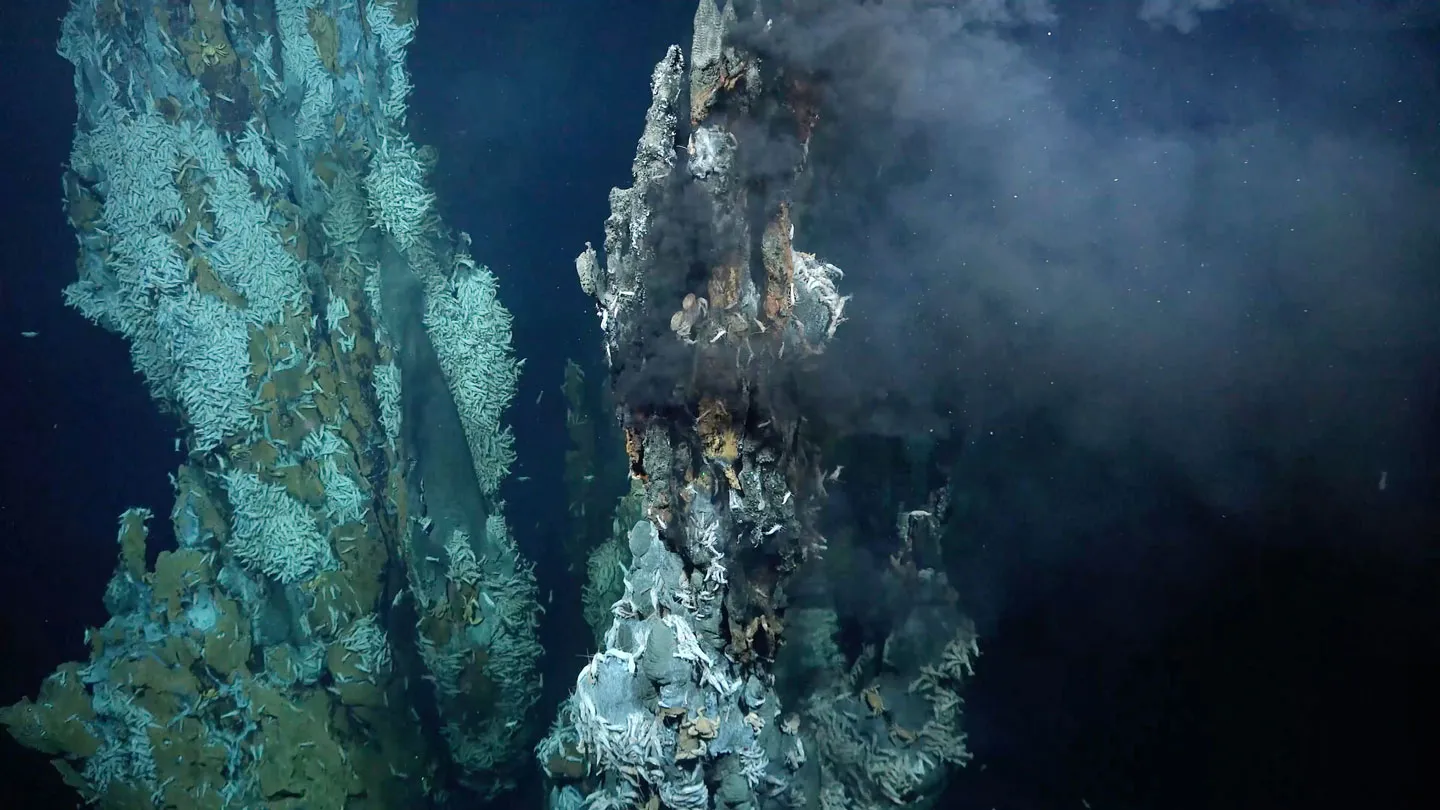
    The ocean is giving up one of its secrets: how members of the same species can turn up at far-flung deep-sea hydrothermal vents.

    An epic migration up to — and across — the ocean’s surface could be the answer. Chemical traces on the shells of three limpet species endemic to these extreme seafloor environments suggest that the animals spent their youth feeding on sun-loving phytoplankton. Eventually, the larvae of these flattened snails returned to the depths to turn into their adult forms and colonize new habitats, researchers at the University of Tokyo report July 15 in Science Advances.

    Sign up for our newsletter

    We summarize the week’s scientific breakthroughs every Thursday.


    Hydrothermal vents host some of the strangest ecosystems on Earth. These isolated oases, with their crushing pressures, extreme temperatures and heavy metal–filled waters escaping from underground, have become home to a suite of strange animals. Marine biologists have long suspected that eggs or larvae drift with the currents, maybe even reaching the surface, on their journey to the vents. But researchers lacked definitive proof.

    The study “provides convincing documentation” to confirm this extreme journey, while adding new clues about how these remote communities remain interconnected, even if they are sometimes separated by thousands of kilometers of barren ocean floor, says Lisa Levin, a marine ecologist at the Scripps Institution of Oceanography at the University of California, San Diego.

    A key clue to this epic journey was hidden in millimeter-sized larval shells that sometimes remain attached to the bodies of adult limpets. Analysis of these vestiges of youth revealed chemical signatures characteristic from warmer, near-surface waters, say marine biologist Takuya Yahagi and colleagues. The shells also lacked heavy metal elements, such as manganese and barium, which are abundant in hydrothermal water.

    Limpet larvae (right) have a small shell that sometimes remains attached to the body of adults after they metamorphose (left). Chemical clues in that shell helped scientists track the tiny snails’ epic sea voyage between deep-sea hydrothermal vents.©2026 Yahagi et al. CC-BY-ND

    The team analyzed 39 limpets — six from the 1,845-meter-deep Tu’i Malila site in Southwest Pacific, and 33 from a vent field at about 440 meters deep on the Kaikata Seamount in the northwestern Pacific. All the limpets shared the same shallow-water signatures. That suggests that this surface migration is an integral part of their life cycle, not a few isolated cases, the researchers say. By migrating upward, limpet larvae access more food than they would in the dark, deep ocean, while surface currents transport them across vast distances to new habitats.

    But the odds of success after such pilgrimage are minimal. “Almost all larvae are probably eaten or lost before finding a suitable hydrothermal vent,” Yahagi says. Even if they survive, the chances of landing at a small, active seafloor vent are extremely small. Vent animals increase their chances of success by producing enormous numbers of eggs, Yahagi says. While the team studied only limpets, the same strategy has been suggested for other animals, such as mussels and shrimp.

    Hydrothermal vent ecosystems are often thought of as isolated worlds powered entirely by geothermal energy. “Our results suggest that they’re actually much more connected to the sunlit ocean than we used to think,” says marine biologist Yasunori Kano of the University of Tokyo. “That’s an important step toward understanding both the evolution of vent animals and how deep-sea ecosystems function as part of the larger ocean.”

    currents Deepsea distant hydrothermal reach ride snails surface vents
    NCIJ NETWNCIJ NETWORK
    • Website

    Keep Reading

    Hubble Spies One-Sided Spiral – NASA Science

    AI helps Stanford scientists discover “natural Ozempic” without the usual side effects

    A Million-Panel Project – NASA Science

    Curiosity Blog, Sols 4954–4960: Celebrating Our Rover Engineers Past and Present

    Look for NASA+ Now Streaming on Amazon Fire TV

    The golden age of language was a few thousand years ago

    Add A Comment
    Leave A Reply Cancel Reply

    Editors Picks

    Art exhibit does not show Ann Widdecombe’s dead body – Full Fact

    July 24, 2026

    Trump’s new tariffs ‘a sales tax that will make life harder for Americans’, say Democrats – US politics live | Trump tariffs

    July 24, 2026

    World chess chief steps aside after EU sanctions – POLITICO

    July 24, 2026

    Faisal Islam: The UK’s Trump trade deal no longer looks world-beating

    July 24, 2026
    Latest Posts

    Trump slaps 50% tariffs on Canada and Carney vows to ‘intensify’ trade talks

    July 21, 2026

    How Two Brothers Dug for Dead Relatives: With a Shovel and a Kitchen Knife

    July 21, 2026

    Chile floods: Towns evacuated following heavy rain in Coquimbo

    July 21, 2026

    Subscribe to News

    Get the latest sports news from NewsSite about world, sports and politics.

    NCIJ Network is an independent digital news platform delivering trusted investigative journalism, European and global news, in-depth analysis, and fact-based reporting with accuracy, transparency, and integrity.

    Facebook X (Twitter) Instagram Pinterest YouTube

    Art exhibit does not show Ann Widdecombe’s dead body – Full Fact

    July 24, 2026

    Trump’s new tariffs ‘a sales tax that will make life harder for Americans’, say Democrats – US politics live | Trump tariffs

    July 24, 2026

    World chess chief steps aside after EU sanctions – POLITICO

    July 24, 2026

    Subscribe to Updates

    Get the latest creative news from FooBar about art, design and business.

    Type above and press Enter to search. Press Esc to cancel.