


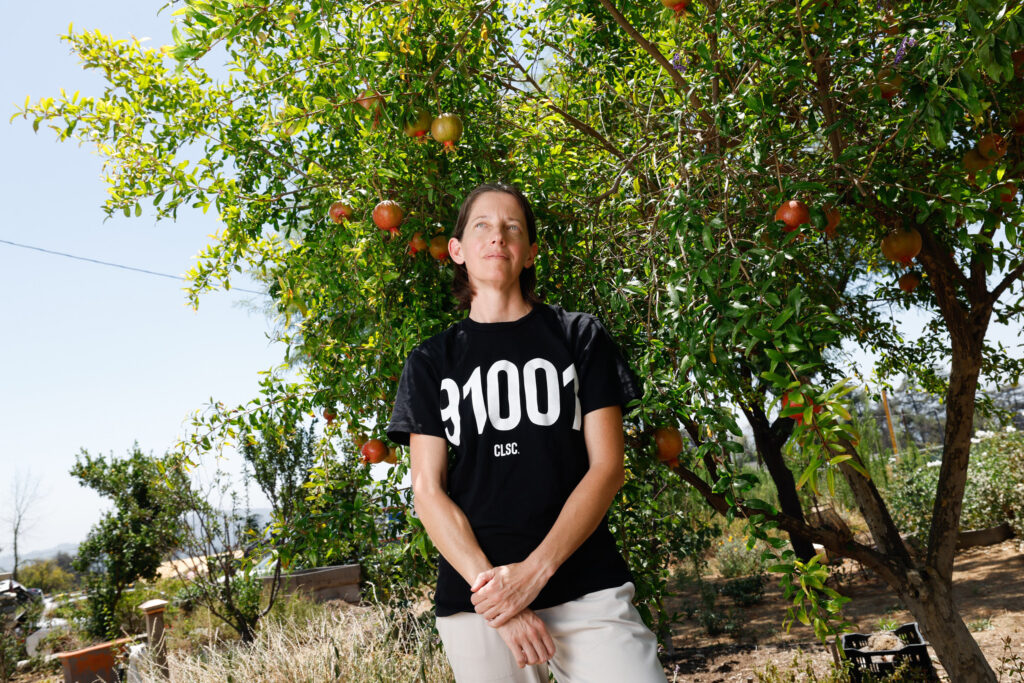
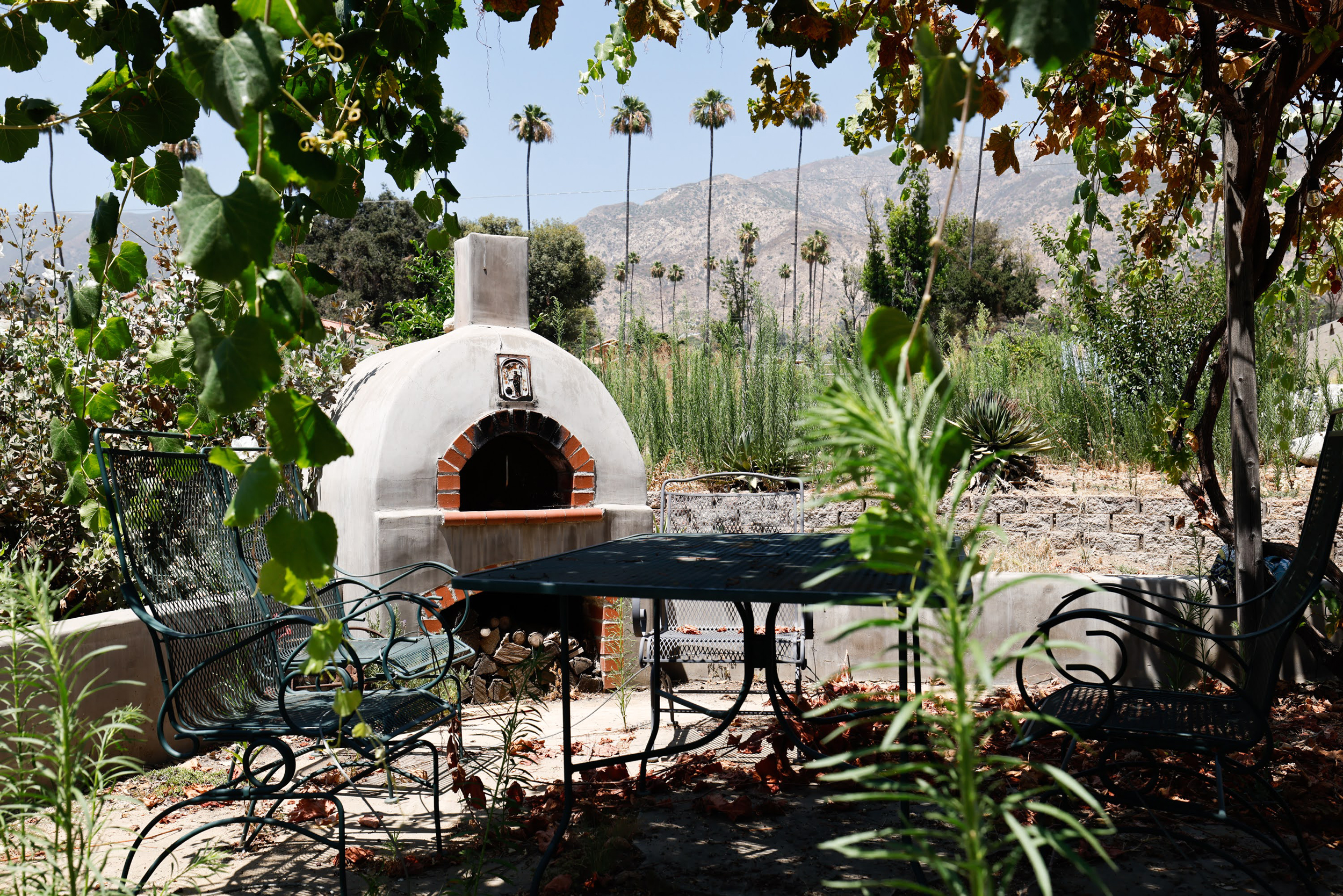
ALTADENA, Calif.—Sylvie Andrews walks among the brilliant white poppies, purple California grapes and olive-green thorns surrounding her yard’s blackened pizza oven—one of the only things that survived last year’s devastating Eaton Fire. But her eyes scan the block beyond, ever-aware of changes to her neighborhood.
Andrews says virtually all of her neighbors have received unsolicited offers for the empty plots of land where their homes burned as part of a recent push from developers moving into the wildfire-ravaged area.
She hasn’t herself yet, and Senate Bill 1090—the Keep Altadena Land in Altadena Hands Act—signed by California Gov. Gavin Newsom Wednesday, will make it less likely that she does.
But that doesn’t address the developments that have already been approved.
Will Andrews rebuild the home she lost in the blaze—completed in 2018 with Nick Wright, her partner at the time—in the place she has loved all her life?
“We don’t know,” the 46-year-old told Inside Climate News.
“We have to factor in questions about what our neighborhood will look like in five years. Will I rebuild my bungalow only to find that a developer buys the lot across the street, builds out to the property line and up two stories and blocks my view?” said Andrews, who is determined to never sell to a developer.
Andrews supports affordable housing and multi-family homes but doesn’t want her neighbor “to be some private-equity LLC shell corporation.”
The worry is not unfounded. Outside parties have advanced development more quickly in Altadena than owners of homes that burned have, interviews, local permitting records and data reviewed by Inside Climate News showed. While projects are also moving fast in the Pacific Palisades, Altadena’s older housing stock, historic layout and relatively lower fire risk have attracted droves of developers to an area with already strained infrastructure in the wake of the Eaton Fire.
“There’s too many question marks right now,” said Andrews, who works helping businesses and seniors, mostly in Altadena, with computer tasks. “Like a lot of people, we’re waiting for the [Southern California] Edison lawsuit to settle, so we find out how much money we’re looking at. But that’s not the only factor.”
Matilija poppies and a tomato grow on Sylvie Andrews’ property on July 10 in Altadena. Credit: Carlin Stiehl/Inside Climate News
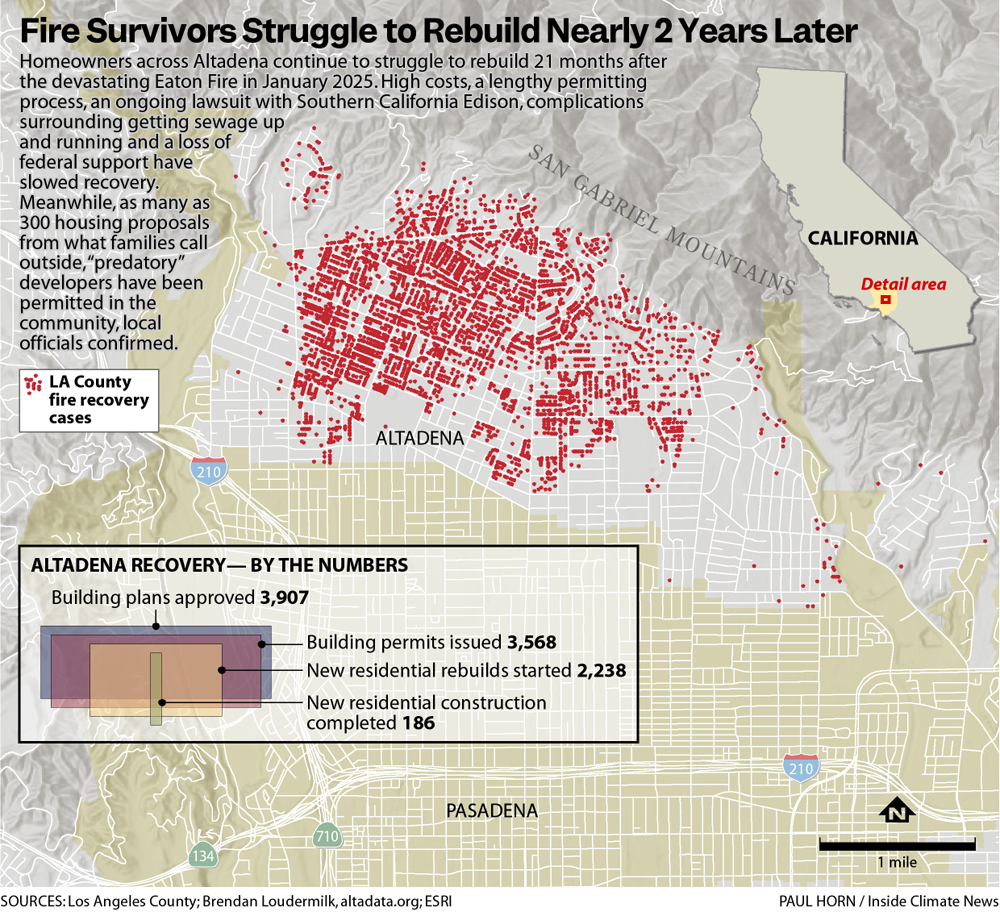
Another is how long it will take Altadena’s infrastructure to recover to make living tenable and affordable after the Eaton Fire. The wildfire, which officials reported was sparked by an old Southern California Edison transmission line, burned over 14,000 acres, resulted in 19 deaths, destroyed more than 9,000 structures and damaged over 1,000 others.
Los Angeles County has issued more than 3,600 building permits within the Eaton Fire burn scare between February 2025 and late September 2026.
SB 1090, signed by Newsom as the legislative session came to a close last week, limits controversial high-density development in two Altadena zip codes. In a letter accompanying his signing, Newsom said he recognized the community’s “desire for stability” as it charts its recovery.
But homeowners say plenty of projects have already slipped through the cracks. Inside Climate News has learned that as many as 60 new housing proposals—the vast majority from developers outside of the community, representing between 200 and 300 new structures—have already been approved in Altadena. SB 1090 does not affect any proposed developments with plans submitted prior to Oct. 1.
Laws to Ease Housing Crisis Complicate Rebuilding
Local government officials and families allege that developers have seized on other state legislation, taking advantage of the development opportunities provided by Senate Bill 1123 and Senate Bill 9, in a community still in recovery.
SB 9, passed in 2021, allows lots to be split and additional residential development on qualifying single-family lots. SB 1123, which took effect four years later, allows for construction of up to 10 small homes on plots zoned for single-family homes.
The bills, created to help alleviate California’s crippling housing shortage, also make it more feasible for a property to be split into smaller parcels that can then be individually sold to multiple businesses or people.
Various proposals for duplexes and bungalow courts have moved forward in Altadena despite criticism from residents still getting back on their feet. They worry that new units will add strain to the already limited parking options and stray from the craftsman homes that traditionally dotted the community.
These projects also deviate from a development plan the community itself had worked on just before the Eaton Fire and “welcome wholeheartedly,” said Shawna Dawson Beer, a longtime community organizer and one of the founding members of grassroots group Altadena for Accountability. The West San Gabriel Valley plan already included adding more housing, creating mixed-used corridors and walkable dense residential neighborhoods with infrastructure to support them.
Elizabeth Vazquez, a spokesperson for Los Angeles County Public Works—citing ongoing litigation—did not comment on permits issued under the senate bills passed to increase housing density before the Eaton Fire.
She defended the county’s pace of advancing projects for ordinary homeowners, which some residents have called too slow.
“Our permitting departments have shortened review turnaround timelines and deferred or refunded more than $33 million in permitting fees for wildfire impacted residents,” Vazquez said in an email, noting the county has also piloted new programs to make the process smoother.
Vazquez said work to preserve and restore Altadena’s historic look and character “will inherently require more time and planning to rebuild.”
Matthew Lewis, a spokesman for California YIMBY, argues that SB 1090’s three-year pause on dense development will speed up the displacement it’s meant to prevent. He pointed to LA Times analysis of permits from California fire zones, which found that only 38 percent of burned homes were rebuilt five years later.
Lewis, whose housing advocacy organization has more than 80,000 members, says the math is simple. Many Altadenans were underinsured and are now facing modern building costs, leaving rebuilding out of reach as they face years of “carrying the financial burden of an empty lot they can’t afford to build on,” he said.
“All a delay of three years achieves is it breaks the bank of the people who have to wait,” continued Lewis, who believes that SB 1090 has limited the options for property owners who can’t afford to finance a rebuild nor wait three years for the ban to end. “That seems like a very effective way to force people to sell.”
The middle-income families who made up much of Altadena won’t be able to come back, claimed Lewis, pointing out that lot splits and small multiplexes are often the only way owners can afford to stay after these incidents.
He described where Altadena residents stand today as “oppositional grief” that has become denial. “People have suffered a profound traumatic loss … I feel so bad that they’re in this place where they’re still so traumatized that they’re afraid to face that change.”
Nic Arnzen, who is on the Altadena council and whose own home burned down in the Eaton Fire, was critical of the “Yes In My Backyard” contingent.
“We are more than doing our part in assisting with the state housing crisis and are on track to be building back well over 1,000 more units from what we had before,” Arnzen said. “While I usually appreciate the YIMBY intent, it’s way off base and out of line in this circumstance. This is a community still traumatized by the disaster we went through and to have come at us in this way is shameful.”

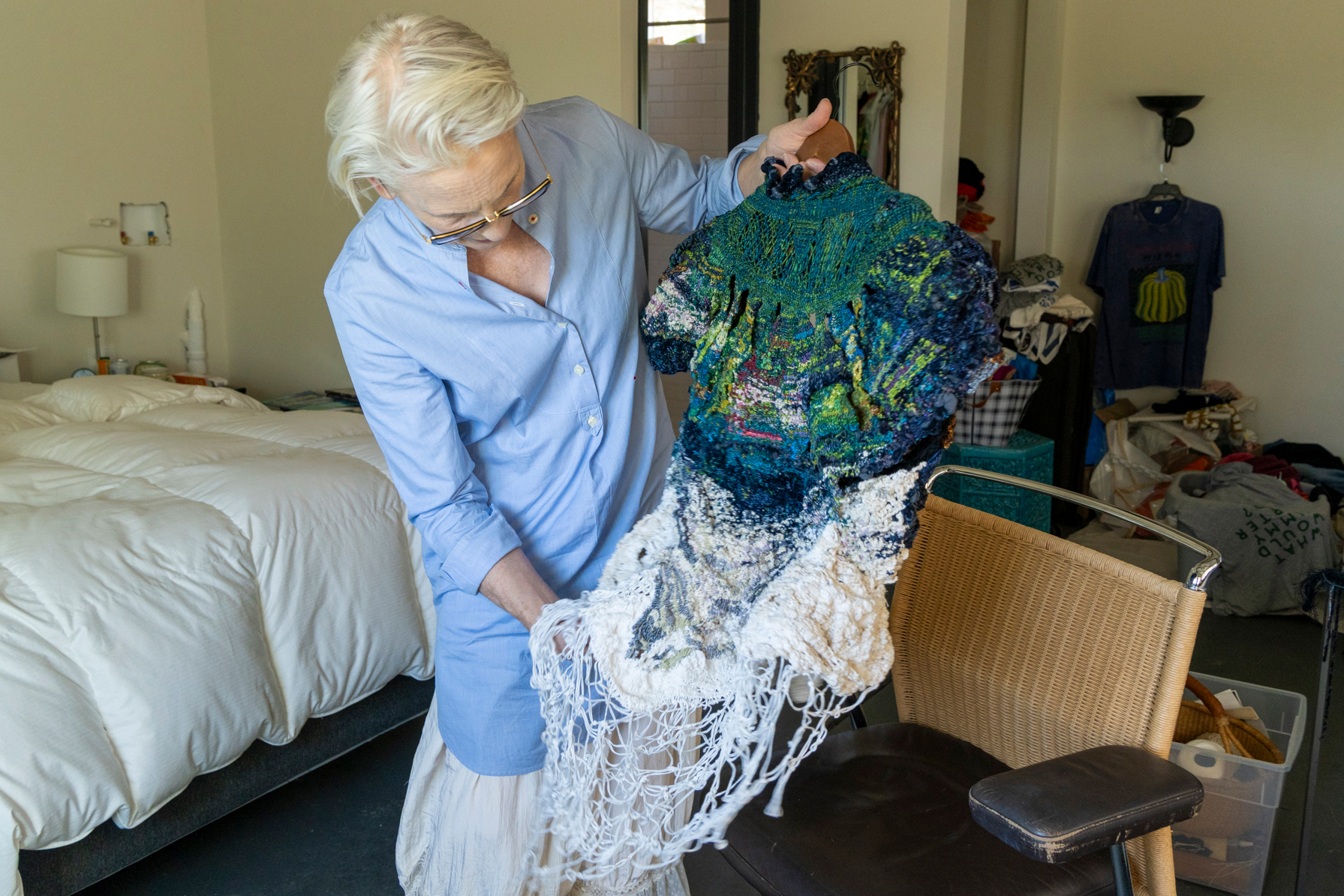
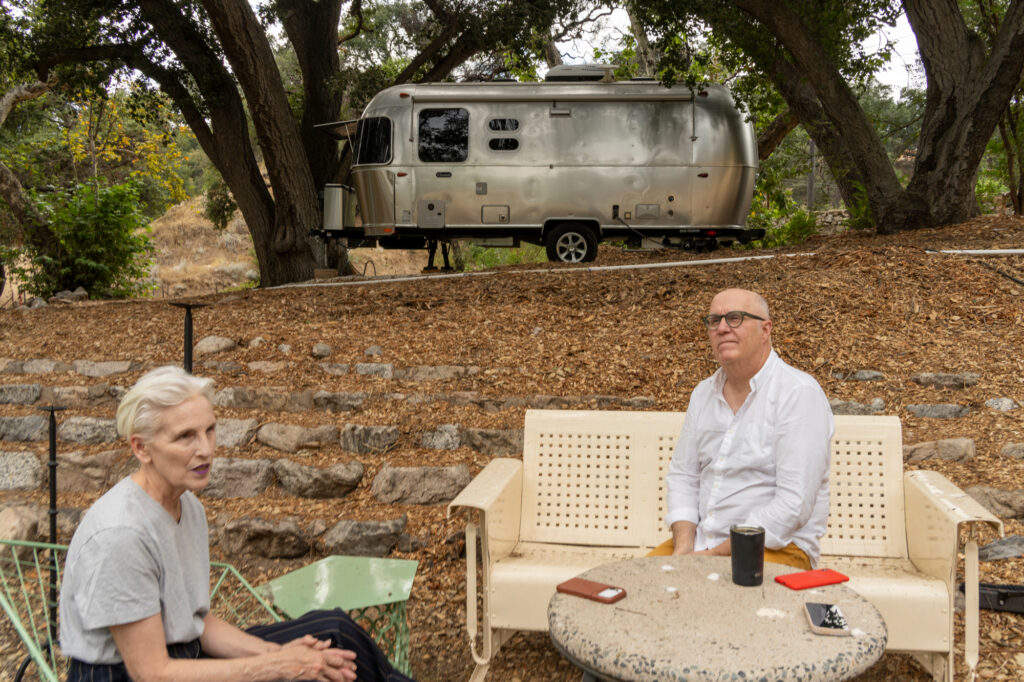
For Maryrose Smyth, the headaches on the ground continue to pile up. An artist—and the primary caregiver for her 18-year-old son, Sawyer, who has a rare genetic disease—Smyth likened building back in Altadena to sitting in a lifeboat and suddenly being told you don’t get oars.
In addition to the rebuilding hurdles, Altadena waited the longest of any community for federal disaster recovery funds.
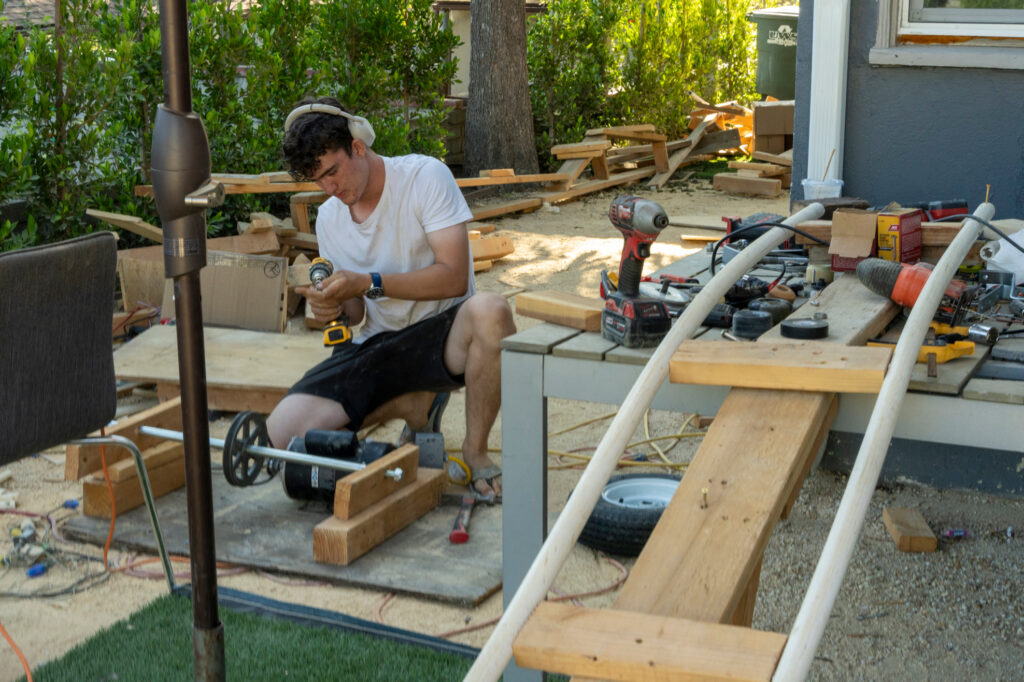
“We’ve been living out of boxes now for 18, 19 months,” said Smyth, 66, who also shared that securing a builder has been challenging due to developers working on a glut of projects in the area.
“We need more affordable housing, but that’s what urban planning is for—not corporate developers and private equity.”
— Maryrose Smyth, Altadena resident
“There are people who have a similar situation,” Smyth said, “where we’re caregivers. I’m a caregiver for our son, who has developmental limitations and challenges that we have to now create a new way around.”
Smyth, once an interior designer who curated her home with husband Mark Pickett, opposes much of the proposed development in the area, but would welcome affordable housing “if it’s done right.” She noted the community has not been consulted much amid the rebuild, and said she knows she’s likely to face a battle not unlike the one over affordable housing someday soon, when the time comes to find a group home for Sawyer.
“We need more affordable housing, but that’s what urban planning is for—not corporate developers and private equity,” said Smyth. “It should be done thoughtfully, so it is part of the community.”
“Stop the Land Grab”
The signs, banners and posters jutting out of lawns, held at press conferences by wildfire survivors and hanging off chain-link fences are not subtle.
“Save Altadena. Stop the Land Grab.” “10 Houses on Single Family Lots All Over Altadena.” “Altadena Not For Sale.”
Just under 200 of the nearly 7,000 housing units destroyed in the Eaton fire have been fully rebuilt, according to the latest data from the LA county permitting office, leading survivors to complain of a painfully slow recovery from the disaster.
That’s left the region’s future unclear, and residents fearful that its historically diverse character may be in peril.
This story is funded by readers like you.
Our nonprofit newsroom provides award-winning climate coverage free of charge and advertising. We rely on donations from readers like you to keep going. Please donate now to support our work.
Nestled at the threshold of the Angeles National Forest, Altadena has been a bastion of Black homeowners for decades—74 percent of Black households in the community owned their homes, versus 34 percent of Black households across Los Angeles County.
Only 18 percent of Altadena’s overall population is Black, but 11 of the 19 people killed in the Eaton Fire were Black and nearly half of all Black households in Altadena experienced significant damage or lost their home entirely. The historically Black community in Altadena is located west of Lake Avenue—an area that has seen an influx of Latino families in the last 20 years and experienced some of the heaviest losses.
These are some of the communities bound to be displaced if developer trends continue at the current pace, locals say.
Gov. Newsom’s executive order from July 2025—which gave local agencies the power to reject new duplexes in high-risk fire zones like the Pacific Palisades—did not apply to most of Altadena. Only the sliver of Altadena within the San Gabriel foothills sits within Fire Zone 0—the new Cal Fire designation of very high fire-hazard severity zone that requires property owners to create an ember-resistant barrier zone for the first five feet around their homes. Most of the area burned was considered so low-risk that the properties are not in any fire zone at all.
However, both the bills allowing multiple units to be built on parcels where a single home formerly stood, were specifically drafted for use on single lots in already dense residential areas, not to be deployed across large swaths of neighborhoods still in the midst of rebuilding, giving the Los Angeles County permitting office some leeway to block 1123 applications in Altadena.
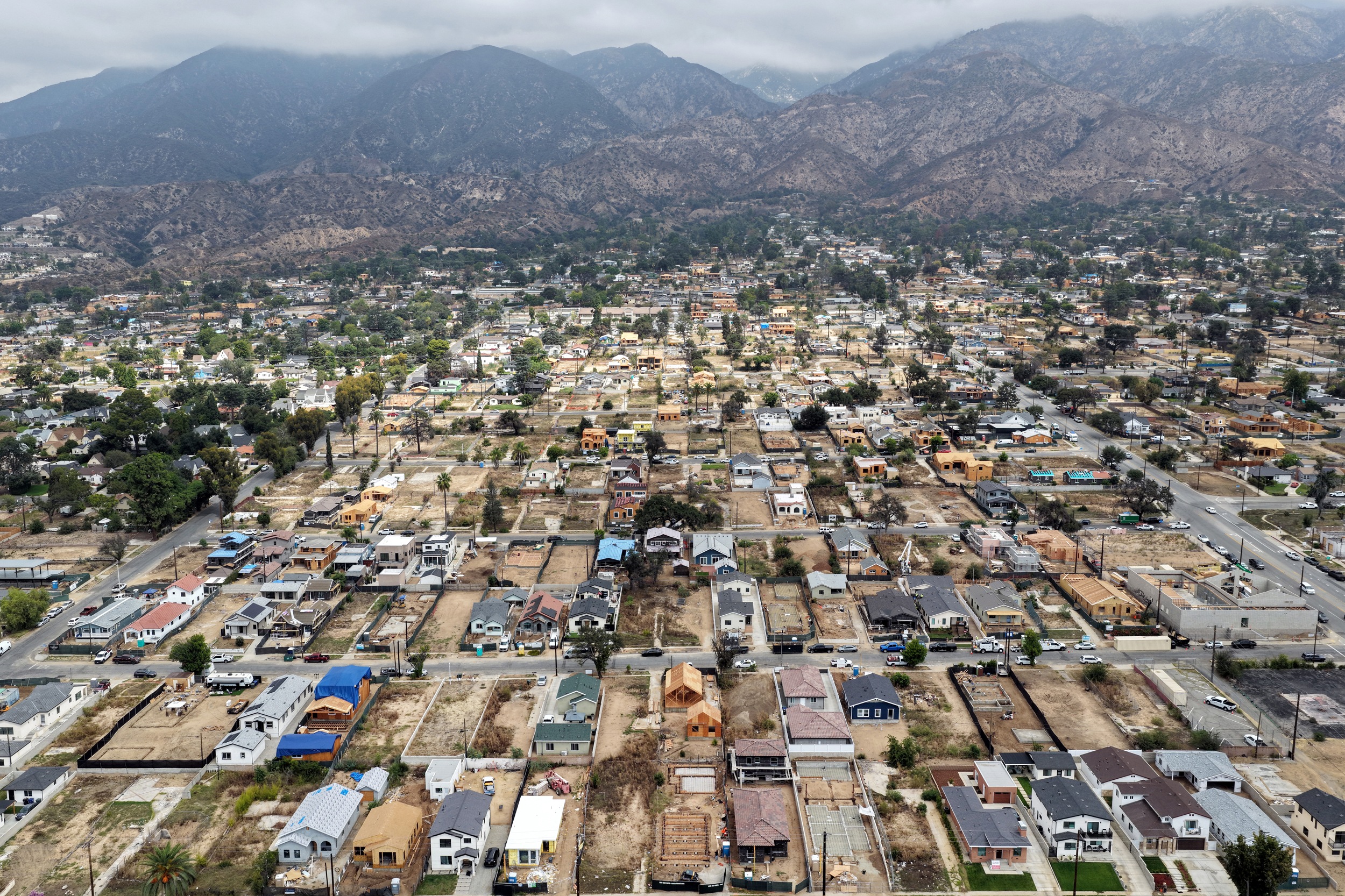
As it stands, there is nothing stopping developers from buying a property and leaving it undeveloped for a few years while the rest of the neighborhood rebuilds, then applying for an 1123 permit. Some real estate influencers have promoted this form of disaster capitalism as a savvy investment move on Instagram and TikTok.
SB 1090 will be in effect from Oct. 1 through January 7, 2030. Primarily sponsored by Sen. Sasha Renée Pérez, D-Pasadena, 1090 creates a three-year cooling-off period that will exempt Altadena from SB 1123. SB 9 can still be used by developers applying for projects.
“Altadena is a very working-class Black and Brown community, where they feel as though they’ve been treated very differently in this process,” Pérez told Inside Climate News shortly after the bill advanced. “I recognize that Altadena is not in a high-fire severity zone, but it was burnt down all the same.”
Making Space and Buying Time
The community has rallied around the local land trusts and cooperatives who wanted to use SB 1090 to create affordable housing that could help displaced fire survivors return to Altadena. The version of SB 1090 Newsom signed includes a carve-out for these groups, allowing them to use SB 1123 to create accessible housing.
Dawson Beer, the longtime community organizer, took issue with California YIMBY’s characterization of SB 1090 as legislation that will fast-track the displacement the bill aims to prevent.
“We removed SB 9 and got the county to expedite the bungalow court ordinance, to address the meaningful opposition issues,” Dawson Beer told Inside Climate News. “We reached a compromise that bars only the most egregious of these developments. And the ban only lasts three years.”
That’s not nearly long enough, she added.
Once all the lawsuits and insurance claims following the Eaton Fire have been settled and residents have had time to rebuild, developers are welcome to consider any vacant parcels for future projects, she said.
Pérez did not rule out future bills and other resources to further help community members and shield them from what she called “predatory speculators” as Altadena recovers.
“We’ve not been in [this] kind of situation before, and so it’s caused us to have new conversations about how we define what urban infill is and how we want to approach rebuilding efforts like this one,” Pérez said.
Arnzen, the Altadena council member, said that since this spring, developers have ramped up efforts to push projects in Altadena through the permitting process.
Unable to keep up financially, some families have either moved away or begun to rebuild without knowing if they will be able to afford to finish without being heavily in debt.
An analysis by Inside Climate News done in August relying on data from grassroots groups in Altadena, property data aggregators and LA County’s own data found multi-home projects located in narrow thoroughfares and clusters of 10-unit developments set to break ground next to single-family bungalows.
The influx of properties themselves are only one way that the multi-home developments will change the area, residents warn.
Altadena—which local arborists say has already lost between 75 to 80 percent of its tree canopy to the fire and subsequent debris removal—could now lose even more as contractors clear land and bring in excavators and tractors to build large complexes in places locals say were not designed to accommodate them.
Roadway safety in the midst of potential future fires, if multi-unit homes take up narrow nooks around the community, is another worry.
The largest number of those new developments trace back to Ocean Development Inc, a Simi Valley, California-based company. Other projects have been connected to over 100 different companies, some with ties to private equity, and located out of state.
Inside Climate News did not hear back from several developers involved in local projects, including Ocean Development.
Los Angeles County has informed Altadena Town Council members of over 60 housing proposals permitted through a streamlined system set up by existing laws, Arnzen told Inside Climate News.
“It’s not like they’re going through a long, drawn-out and thoughtful permitting process,” said Arnzen, confirming that those projects represent 200 to 300 structures.
“They pretty much can’t be stopped,” Arnzen said. “There’s nothing we can do retroactive.”
But even the developers who got in before the governor signed SB 1090 will have more battles ahead of them.
Arnzen intends “to shame incoming predatory” development companies before they break ground. Residents will “make sure that they know we’re going to speak up through their entire process,” he said.
About This Story
Perhaps you noticed: This story, like all the news we publish, is free to read. That’s because Inside Climate News is a 501c3 nonprofit organization. We do not charge a subscription fee, lock our news behind a paywall, or clutter our website with ads. We make our news on climate and the environment freely available to you and anyone who wants it.
That’s not all. We also share our news for free with scores of other media organizations around the country. Many of them can’t afford to do environmental journalism of their own. We’ve built bureaus from coast to coast to report local stories, collaborate with local newsrooms and co-publish articles so that this vital work is shared as widely as possible.
Two of us launched ICN in 2007. Six years later we earned a Pulitzer Prize for National Reporting, and now we run the oldest and largest dedicated climate newsroom in the nation. We tell the story in all its complexity. We hold polluters accountable. We expose environmental injustice. We debunk misinformation. We scrutinize solutions and inspire action.
Donations from readers like you fund every aspect of what we do. If you don’t already, will you support our ongoing work, our reporting on the biggest crisis facing our planet, and help us reach even more readers in more places?
Please take a moment to make a tax-deductible donation. Every one of them makes a difference.
Thank you,

Reporter, California
Steven Rodas covers water, wildfires and agriculture throughout California for Inside Climate News. Based in Los Angeles, he previously reported on the environment in New Jersey, covering energy, pollution, wildlife and development. Steven’s work has appeared in the San Francisco Chronicle, NJ.com/The Star Ledger and Grist. He worked as a copywriter at Google. Steven has a master’s degree from Syracuse University’s S.I. Newhouse School Of Public Communications. He is fluent in English and Spanish (and welcomes your tips).

Contributor
Nina Dietz is a freelance journalist covering climate change, the environment, and both human and planetary health. Her work has appeared in New Lines Magazine, City Limits, and Science Friday among others.
