


As nations met this week in Bangkok for informal meetings on a United Nations plastics treaty, more than 70 developing countries supported addressing all causes and drivers of plastic pollution, environmental advocates said.
Countries that comprise more than a quarter of the global plastics demand support strong measures to fight plastic pollution, said Giulia Carlini, senior attorney at the Center for International Environmental Law, in a statement. That’s enough to shift the market away from plastics, Carlini said.
But it’s unlikely to be enough to prevail over the “like-minded group” led by fossil-fuel producing nations that oppose limits on the production of plastics. The bloc, though a small minority, derailed an agreement last year because the treaty’s consensus approach allows even a single country to block a deal.
Still, environmental advocates see the economic upheaval caused by the war in Iran as an opportunity for negotiators to leverage another market incentive to reduce reliance on plastics.
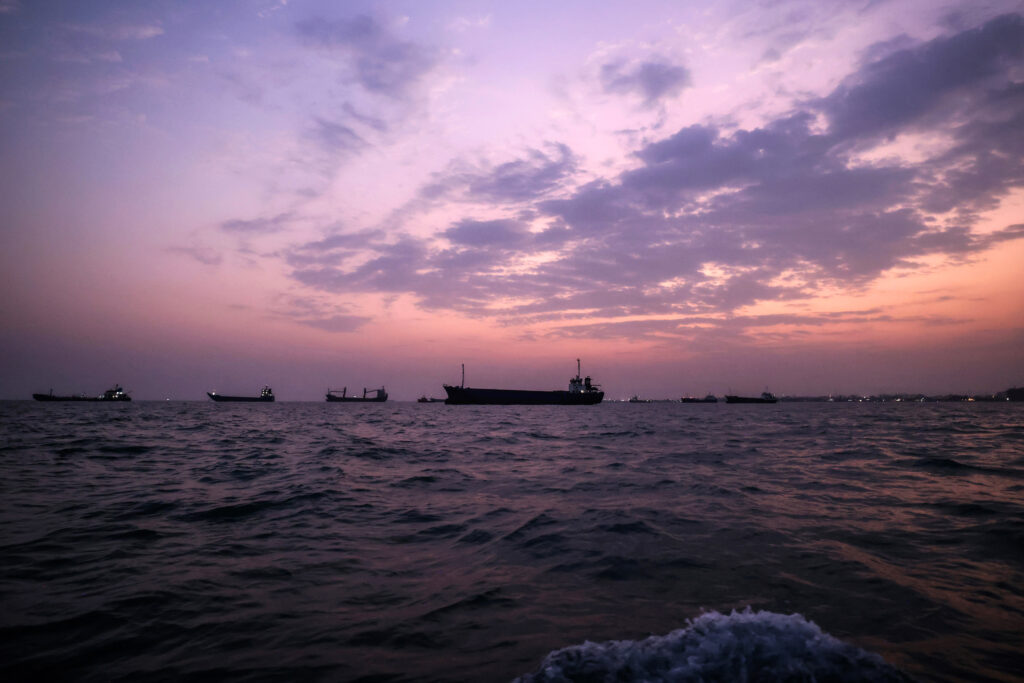
Military strikes on Iran by the United States and Israel in February triggered market shocks that disrupted economic sectors dependent on oil and gas. These supply-chain shockwaves left consumers paying more for gas, food, clothes, shoes and other products made from petrochemicals or packaged in plastic.
Shortages of polyethylene—the most common plastic, used in single-use bags and many other products—raise the cost of goods in “virtually every retail category,” according to the Institute for Public Procurement, a nonprofit that supports public servants.
Supply chains for the thousands of plastic products made from fossil fuels rely on one of the world’s most critical oil trade routes, the Strait of Hormuz. Before the war, nearly 20 percent of oil and gas exports, about 24 percent of the plastic building block naphtha and about 40 percent of polyethylene moved through the strait. Oil flows there have only recently returned to prewar levels, according to CNBC.
The war in Iran has exposed the economic vulnerability of basing supply chains for essential needs on a product that depends on volatile fossil-fuel supply chains, said Jacob Kean-Hammerson, global plastics policy lead at Greenpeace USA.
The war caused a “huge naphtha crisis,” Kean-Hammerson said, which in turn led to shortages and price increases for basic needs like food and medical supplies. That created economic liabilities and vulnerabilities for governments, but it’s hitting consumers the hardest, he said.
By weakening every link in the plastics supply chain, the war offered governments one more reason to reduce reliance on fossil fuels and plastics and boost economic resilience through a global treaty, a recent briefing from Greenpeace International noted.
If countries choose that path, they’ll have public support.
The vast majority of people in 10 countries—including oil and gas producers such as the U.S.—realize that plastic is made from fossil fuels and support limits on plastic production through a binding international agreement, a 2024 survey found.
A well-designed treaty will not only provide environmental and health benefits down the line, Kean-Hammerson said, but also chart the path toward a more stable, renewable, reusable future.
Triple Planetary Crisis
The United Nations calls the interplay of climate change, pollution and biodiversity loss a triple planetary crisis. Plastics lie at the intersection of all three.
Nearly every item made of plastic comes from fossil fuels and releases greenhouse gases throughout its life cycle, from extraction, refining and manufacturing to waste management and contamination of the environment. The global production of primary plastics, used to make most plastic goods, generated about 2.24 gigatons of carbon dioxide or its greenhouse gas equivalent in 2019 alone, a 2024 Lawrence Berkeley National Laboratory analysis found.
But those figures don’t account for open burning of plastic, a growing health threat in low-resource countries with limited waste-disposal services. Along with climate pollutants, plastic combustion releases a toxic stew of deadly dioxins, furans and heavy metals, as well as fine particles that kill millions every year.
Plastic pollution endangers ecosystems and the animal and plant life that depend on them. Scientists have documented thousands of species exposed to plastic waste, mostly through ingestion or entanglement. Plastic debris, particles and chemical additives transported by wind and ocean currents pollute nearly every corner of the globe.
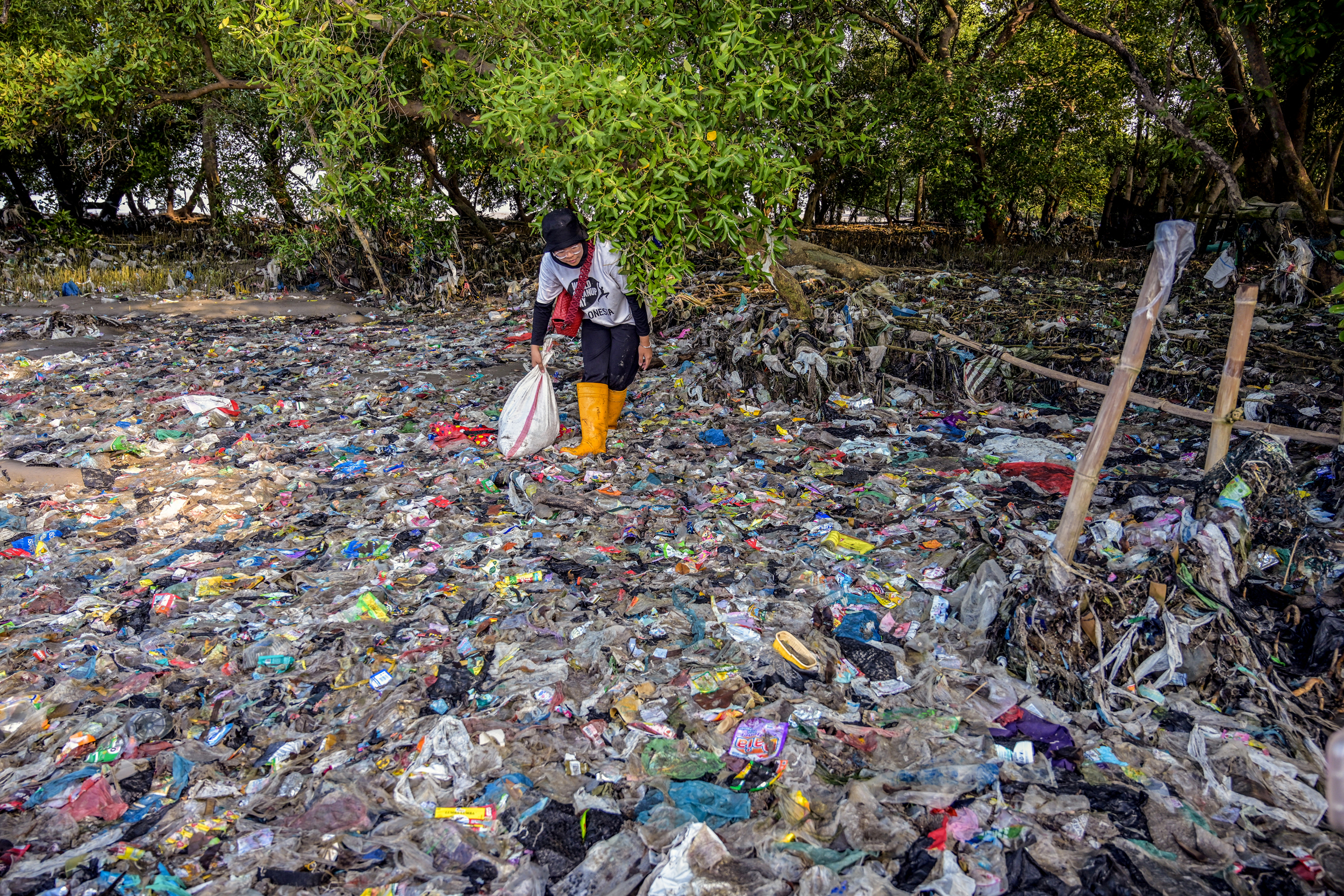
The initial 2022 U.N. resolution that launched the treaty negotiations called for addressing the “full life cycle of plastics,” but states have not agreed on what that means. Scientists, however, have tried to estimate the health costs of plastic throughout its life cycle.
Failing to rein in plastic production between 2016 and 2040 would cost 83 million healthy life years, primarily due to the consequences of air pollution, global warming and exposure to toxic chemicals, researchers reported in The Lancet Planetary Health in January. The study didn’t account for exposures to chemicals during product use or to microplastics because such data isn’t available.
Plastics are a “grave, growing and under-recognized danger to human and planetary health,” scientists and health experts warned in a 2025 Lancet policy paper.
The global burden of disease caused by chemicals and plastics is in the trillions of dollars, so the benefits of regulating chemicals of concern would be substantial, said Martin Wagner, a professor of biology at the Norwegian University of Science and Technology and a member of the Scientists’ Coalition for an Effective Plastics Treaty.
“But in the plastics treaty,” Wagner said, “we’re always forgetting about the cost of inaction and the benefits.”
Flouting Transparency and Participation Rules
Efforts to forge a global agreement to end plastic pollution started in March 2022, when the U.N. Environment Assembly adopted a resolution with 175 countries recognizing that “the high and rapidly increasing levels of plastic pollution represent a serious environmental problem at a global scale, negatively impacting the environmental, social and economic dimensions of sustainable development.”
The resolution called for an intergovernmental negotiating committee to draft a legally binding agreement by the end of 2024.
This story is funded by readers like you.
Our nonprofit newsroom provides award-winning climate coverage free of charge and advertising. We rely on donations from readers like you to keep going. Please donate now to support our work.
Member states failed to meet that goal, thwarted by disagreements over whether to require enforceable limits on plastic production.
Negotiations then resumed as “informal talks” restricted to representatives of member states in June. That left environmental advocates, scientists and other representatives of civil society organizations, which offer expert guidance and testimony during formal negotiations, worried about what was happening behind closed doors.
There’s broad concern across observer institutions and independent scientists about being excluded from these treaty discussions, said Wagner, who has participated in several sessions.
Some member states are strategically wielding scientific misinformation, Wagner said. He pointed to specious claims that toxic plastics chemicals can be dealt with under other U.N. agreements and that there’s no research on microplastics, which he called “insane.”
Researchers have published at least 23,000 studies on microplastics, but negotiators are trained to deploy misinformation to support their interests, said Wagner, an expert on microplastics and chemicals. “If scientists are not present in these negotiations, we have no way of fact checking, one job that we did quite a lot during the previous meetings.”
He worries that even as scientists are not privy to what’s being said during “this black box of negotiations,” state-owned fossil-fuel companies may well be participating.
Kean-Hammerson said excluding observers from discussions violates U.N. legal precedents that grant civil society, Indigenous peoples and other groups the right to access information and participate in negotiations on international agreements. Without observers there to offer their expertise, he said, “you’re left with political decisions that aren’t based on sound science.”
Julio Cordano, a Chilean diplomat who chairs the Intergovernmental Negotiating Committee for the treaty, said observer organizations were invited to provide written views on the “guiding questions” to consider for the meetings in Bangkok and that he convenes regular webinars to keep them informed.
The events are “not decision-making meetings,” Cordano said, but are intended to support “continuity of engagement” among members and consider possible ways forward when formal negotiations resume in March.
So far, negotiations have moved away from an effective, science-based plastics treaty that protects health and the environment by helping end plastic pollution, Wagner said, toward a waste treaty that does not.
The so-called like-minded group, which includes China, Iran, Saudi Arabia and Russia among other unnamed nations, already managed to force the majority of countries to greatly reduce their ambition, Wagner said. “Yet the like-minded group hasn’t moved an inch away from their initial position, which is a waste management treaty.”
At the third round of negotiations in Kenya, Iran argued on behalf of the group that plastic polymers are not pollutants and plastic pollution is caused by mismanagement of waste.
The American Petroleum Institute, a powerful fossil-fuel lobbying group, did not respond to a request for comment, but also opposes limits on production.
Restricting access to and production of materials needed for many manufacturing sectors without readily identifiable and commercially available alternatives could result in price increases, supply reliability issues and reduced product efficacy, the institute argued in a statement released with several other chemical, plastics industry and fossil fuel trade groups in 2024.
If countries focus only on waste, Wagner said, plastic production will increase so much that no waste management system, even in rich countries, will be able to manage it.
Plastic production doubled between 2000 and 2019 and is projected to triple from today’s levels by 2060.
But those figures are likely underestimates. No international standard governs what a country categorizes as plastic in its production, consumption and waste estimates, researchers reported in the journal Science in July. As a result, they found, some countries exclude entire categories from production figures, including synthetic fibers and polyethylene terephthalate, widely used for food and beverage packaging and better known as PET.
Greenpeace has been advocating to reduce plastic production by 75 percent by 2040 since the negotiations started, because that’s what the science supports, Kean-Hammerson said.
But many countries simply want to be able to access information on production, import and export volumes, he said, which is typically stored in high-priced industry databases.
The treaty negotiations haven’t even included discussions around how access to trade data would let countries set global targets to reduce production, Kean-Hammerson said. He was astounded to see that the recent text for negotiating barely mentioned monitoring plastic pollution.
“If you’ve got a treaty to end plastic pollution, and they can’t even tell whether it’s going up or down,” he said, “what are we doing here?”
About This Story
Perhaps you noticed: This story, like all the news we publish, is free to read. That’s because Inside Climate News is a 501c3 nonprofit organization. We do not charge a subscription fee, lock our news behind a paywall, or clutter our website with ads. We make our news on climate and the environment freely available to you and anyone who wants it.
That’s not all. We also share our news for free with scores of other media organizations around the country. Many of them can’t afford to do environmental journalism of their own. We’ve built bureaus from coast to coast to report local stories, collaborate with local newsrooms and co-publish articles so that this vital work is shared as widely as possible.
Two of us launched ICN in 2007. Six years later we earned a Pulitzer Prize for National Reporting, and now we run the oldest and largest dedicated climate newsroom in the nation. We tell the story in all its complexity. We hold polluters accountable. We expose environmental injustice. We debunk misinformation. We scrutinize solutions and inspire action.
Donations from readers like you fund every aspect of what we do. If you don’t already, will you support our ongoing work, our reporting on the biggest crisis facing our planet, and help us reach even more readers in more places?
Please take a moment to make a tax-deductible donation. Every one of them makes a difference.
Thank you,

Reporter, California
Liza Gross is a reporter for Inside Climate News based in Northern California. She is the author of The Science Writers’ Investigative Reporting Handbook and a contributor to The Science Writers’ Handbook, both funded by National Association of Science Writers’ Peggy Girshman Idea Grants. She has long covered science, conservation, agriculture, public and environmental health and justice with a focus on the misuse of science for private gain. Prior to joining ICN, she worked as a part-time magazine editor for the open-access journal PLOS Biology, a reporter for the Food & Environment Reporting Network and produced freelance stories for numerous national outlets, including The New York Times, The Washington Post, Discover and Mother Jones. Her work has won awards from the Association of Health Care Journalists, American Society of Journalists and Authors, Society of Professional Journalists NorCal and Association of Food Journalists.
