


By | Published October 1, 2026
In 2008, GBH’s investigative news program Frontline was putting together their regular special on the year’s presidential candidates: The Choice, featuring Barack Obama and John McCain. Working on a hunch, the editors went back into GBH’s local news footage, searching Ten O’Clock News stories related to Harvard Law School in the 1990s to see if they could find any footage of Obama as a law student. The hunch paid off: an archivist cataloging that footage had recognized a young Obama speaking on behalf of Harvard’s first black tenured professor, Derrick Bell, in 1990 in a b-roll tape that was cut from the edited news broadcast.
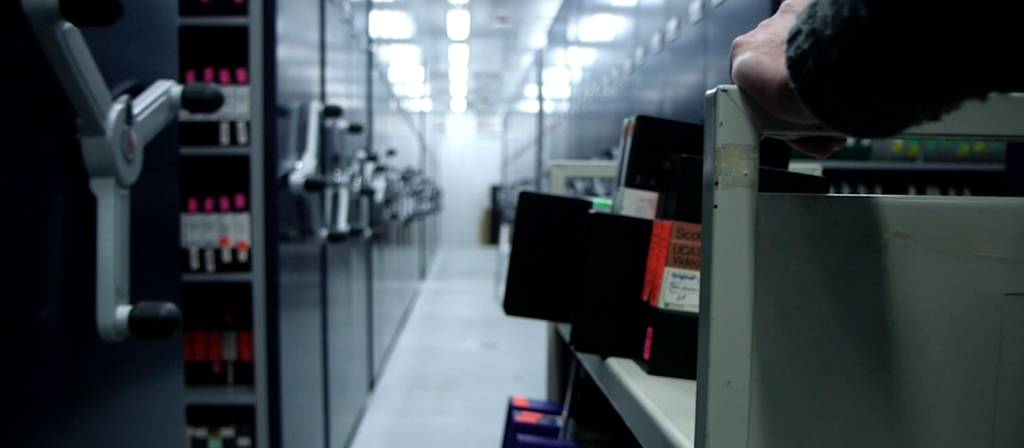
Reporters can – and have – argued for decades about what it meant that Obama introduced Bell in 1990, but nobody can deny that it happened. The original camera recording of the event can still be viewed in the GBH Archives, if you’re willing to pull out the U-matic deck. In 1990, Obama’s presence in this story didn’t much matter; in 2008, it was an introduction to a new candidate; in 2012, during a re-election campaign, it was debated as evidence of “radical” tendencies on sites such as Buzzfeed and Slate; now, in 2026, it’s part of a presidential legacy, cited on Wikipedia and PBS Learning Media.
The story changes. The facts remain, and often they’re recorded in local news archives. Past statements by politicians, visuals of changing neighborhoods, and real-time coverage of legislative impacts can all be found in the daily reporting of television news shows. Moreover, because this archival footage has a verifiable footprint and chain of custody, it can be an important resource for combating deepfakes and disinformation. However, scrounging the limited available metadata for useful sources can present a challenge, let alone finding ways to view the footage and license it for use.
As archivists at the GBH Archives and the American Archive of Public Broadcasting, we often work closely with reporters and producers to provide archival content to support developing stories. For example, the most recent season of GBH’s The Big Dig podcast series, Catching the Codfather, which examines the exploits of controversial fishing mogul Carlos “The Codfather” Rafael, uses contemporary reporting on the 1985–1986 New Bedford Fisherman’s Strike to help explain how the effects of that strike are still felt by New Bedford’s fishing industry.
Other archives such as the Institut national de l’audiovisuel (INA) in France have used their old news collections to contextualize current news, invite public figures to react to their past statements, and develop long-form documentary storytelling grounded in the archive. A recent edition of the Canadian Broadcasting Corporation’s Flashback newsletter features stories on air quality in Toronto due to wildfire smoke from 2026 and 1988. At INA, the deaths of 40 swimmers in the Canal Saint-Martin during the recent heatwave were contextualized by a video using archival footage to show the evolution of the canal’s use over time.
INA, CBC, and GBH hold a distinct advantage: they have archivists and reporters working together within the same institution, with in-house access to their own archives. If you’re outside of such an institution, how can you access trustworthy historical material?
One method is to cast a broad net. The American Archive of Public Broadcasting (AAPB) is a great place to begin because it contains hundreds of thousands of hours of local news from all over the country, contributed directly by PBS stations and curated by AAPB archivists. The stations retain rights to these materials, but have collaborated with GBH and the Library of Congress to digitize their archival tapes and provide viewing copies on the AAPB website to support discovery and educational and research access to the content.
That said, material in the AAPB often hasn’t been cataloged in detail. Full-text transcript searches can help – an interview with Larry Bird from his first year in the NBA, for example, is not yet described in the item’s metadata but still discoverable by pulling up the transcript for the item and searching his name. Not all material in the AAPB is viewable on the public web, but the transcript search can also help researchers and journalists figure out what restricted items might be of interest to their story. If the transcript seems intriguing, researchers can email aapb_notifications@wgbh.org to request temporary access to materials, and then reach out to the producing station if it’s something they end up wanting to use.
Another option is to query specific news organizations that you suspect may hold the content you want. At most archives, only a portion of the collection is available remotely. The GBH Archives provides in-person researchers with read-only access to our internal database, which allows researchers to review text records describing items in the archives collection.
Although these are the organizations we know best, there are many other broadcast archives that contain valuable content for today’s news. One of the greatest available resources is the NewsHour archive. Their material is available through the AAPB, but they also have a stock footage search portal (accessible with User ID: Guest and Password: Guest) and a licensing department contact page. Other relatively well-resourced television news archive departments include WNET’s footage licensing department, KQED’s footage licensing department, and the Bay Area Television Archive.
In the age before the internet, local news was a large part of how local audiences understood the truth of their world; PBS News, especially, has been the most trusted news source in the country for the past twenty years. In the face of ongoing efforts to erase or rewrite history, collaborating with archivists to explore trusted news archives – documentation of the past, when it happened, with a clear chain of custody showing where it came from and why it mattered – can be a vital resource for journalists in combating disinformation and understanding the events that built the world that we live in today.
