

Close Menu
NCIJ Network NCIJ Network
    What's Hot

    Common medications may secretly rewire your gut, with effects lasting for years

    November 23, 2026

    Can AI spot breast cancer earlier? NHS launches world’s largest trial to find out

    November 23, 2026

    An album to keep your mind on track | Steely Dan

    November 23, 2026
    Facebook X (Twitter) Instagram
    Trending
    • Common medications may secretly rewire your gut, with effects lasting for years
    • Can AI spot breast cancer earlier? NHS launches world’s largest trial to find out
    • An album to keep your mind on track | Steely Dan
    • Does new Etsy policy allow AI training on artists’ work?
    • Lucy Powell promotes UK education in China despite risks – POLITICO
    • 65 Years of Human Spaceflight at NASA Johnson 
    • The link between nurturing and masculinity | Men
    • Let refugees work and contribute to our society | Refugees
    • About
      • Our Team
      • Editorial Policy
      • Editorial Independence
      • International Support
    • Trust & Standards
      • AI Usage Policy
      • Conflict of Interest Policy
      • Corrections Policy
      • Ethics Policy
      • Fact-Checking Policy
      • Source Protection
    • Get Involved
      • Guide for Sources
      • Support Independent Journalism
    • Legal
      • Cookie Policy
      • Privacy Policy
      • Terms of Use
    Facebook X (Twitter) Instagram
    NCIJ Network NCIJ Network
    Monday, November 23
    • Home
    • World
    • Ai
    • Business
    • Politics
    • Health
    • Crypto
    • Science
    • Technology
    • Cybersecurity
    • Defense & Security
    • Economy
    • Energy
    • Europe
    • More
      • Fact Check
      • Investigations
      • Opinion & Analysis
      • Environment
    NCIJ Network NCIJ Network
    Home»Science

    Could quitting ultra-processed food boost your mental health?

    NCIJ NETWNCIJ NETWORKBy NCIJ NETWNCIJ NETWORKOctober 1, 2026 Science No Comments3 Mins Read
    Share
    Facebook Twitter LinkedIn Pinterest Email

    A small preliminary study from UC San Francisco adds to mounting evidence that eating fewer ultra-processed foods may help reduce symptoms of depression.

    Published Sept. 23 in JAMA Psychiatry, the study was funded by the National Institutes of Health. Researchers believe it is the first study to compare depression symptoms in the same participants before and after they moved from their usual ultra-processed diet to healthier foods.

    The pilot study included only 20 people, but senior author Andrew Krystal, MD, Ray and Dagmar Dolby Distinguished Professor in UCSF’s departments of Psychiatry and Behavioral Sciences and Neurology, said it “successfully established the viability of carrying out this research in a larger-scale trial.”

    Depression Symptoms Improved After a Major Diet Shift

    Participants cut their intake of ultra-processed foods by more than 85%. After doing so, they showed moderate to large improvements across three different measures of depression. Anxiety scores also improved modestly.

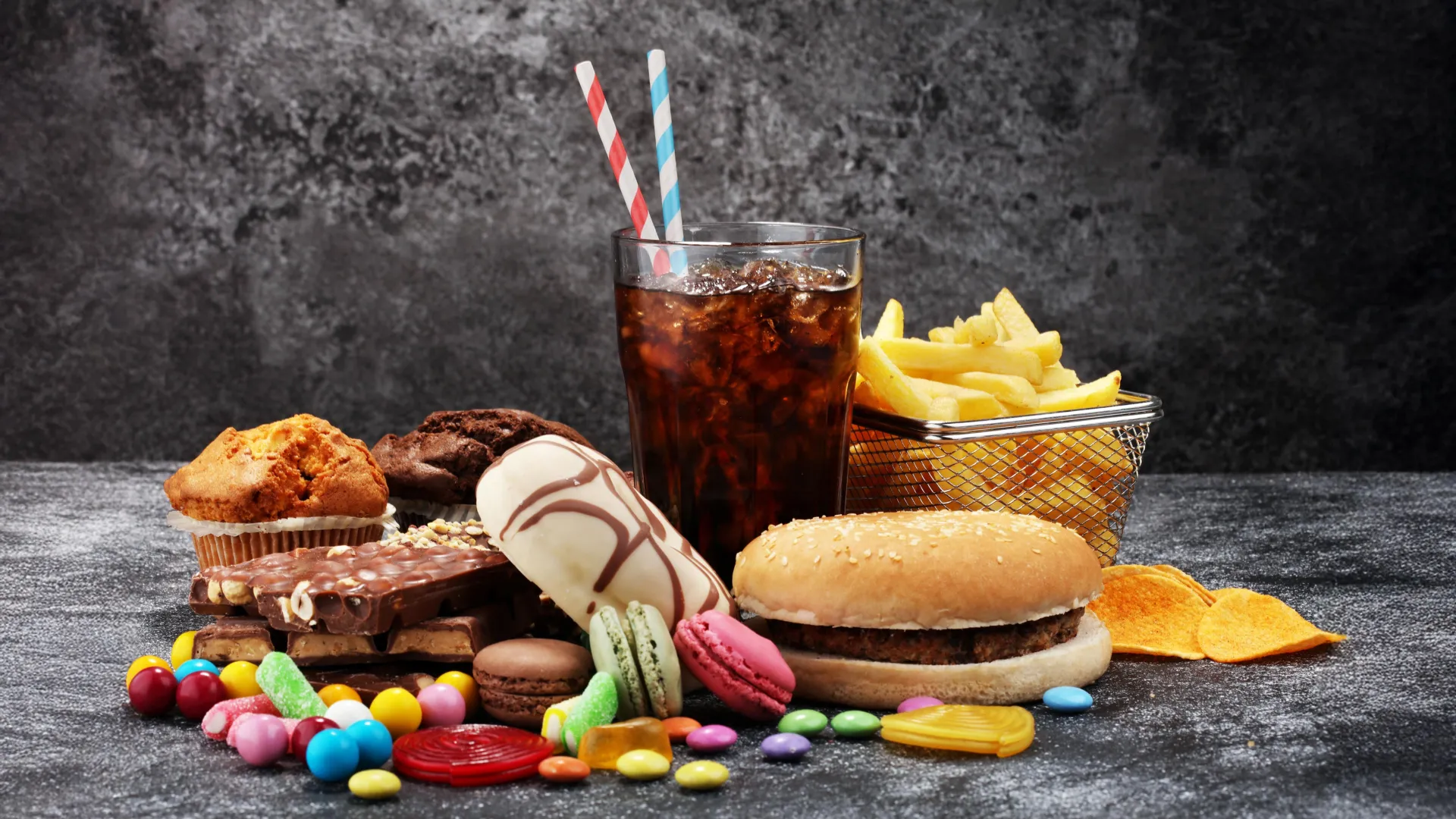
    Ultra-processed foods include products such as packaged snacks, fast food, sugary drinks, and other industrially manufactured foods. These products may contain ingredients including preservatives, artificial coloring, flavor enhancers, and emulsifiers.

    “Reducing the amount of ultra-processed food in our diet can be challenging, because it’s highly palatable, cheap, and convenient,” said corresponding author Nyasha Chagwedera, MD, PhD, assistant professor in the UCSF Department of Psychiatry and Behavioral Sciences. “Ultra-processed food triggers dopamine, the pleasure hormone, which promotes craving. Food companies work with scientists to find just the right amount of sugar, salt, and fat that make you want to eat more and more.”

    Testing the Gut-Brain Connection

    The participants had an average age of 44, and 70% were female. Along with depression, 14 participants also had anxiety. Everyone in the study had a high BMI and at least one metabolic disorder — such as hypertension, diabetes, or elevated LDL cholesterol.

    Researchers divided the participants into two groups. One group stayed on its usual diet for four weeks, while the other switched to a diet low in ultra-processed foods. Participants selected and bought their own food with guidance from the research team. After four weeks, the groups switched diets.

    Chagwedera, who founded the UCSF Metabolic and Mental Health Program, said one possible explanation for the connection between ultra-processed food and depression involves what she described as a “leaky, out-of-balance gut.” According to this idea, ultra-processed foods may damage the protective lining of the gut.

    “This gut damage can create low-grade, chronic inflammation throughout the body that either directly causes depression or makes people more vulnerable to it.”

    “In other words, junky processing may harm your gut in ways that ripple up to your brain.”

    Larger Depression Trial Planned

    Because the study was small, the findings are still preliminary. The researchers now plan to investigate the effect in a larger group, with enrollment for phase 2 expected to begin in 2028.

    Authors: Additional UCSF authors include Eliana Kim, MD, Dorothy T. Chiu, PhD, Chengshi Jin, PhD, Catherine Lee PhD. Other authors are Susannah Tye, PhD, of the University of Queensland, Australia, Mayo Clinic, and Emory University.

    Funding: National Center for Advancing Translational Sciences, National Institutes of Health, through UCSF-CTSI Grant Number UL1 TR001872; NHLBI grant R38AG070171, NIMH grant R38AG070171, and the UCSF Weill Institute of Neurosciences.

    Boost food health mental Quitting ultraprocessed
    NCIJ NETWNCIJ NETWORK
    • Website

    Keep Reading

    Common medications may secretly rewire your gut, with effects lasting for years

    65 Years of Human Spaceflight at NASA Johnson 

    COP31 climate talks fail to reach deal amid fossil fuel and money rows

    A study of 30,000 people reveals which antidepressants may work best

    A 3-million-year-old child just made human evolution far more complicated

    Powerful new weight-loss drug helps patients cut knee pain in half

    Add A Comment
    Leave A Reply Cancel Reply

    Editors Picks

    Common medications may secretly rewire your gut, with effects lasting for years

    November 23, 2026

    Can AI spot breast cancer earlier? NHS launches world’s largest trial to find out

    November 23, 2026

    An album to keep your mind on track | Steely Dan

    November 23, 2026

    Does new Etsy policy allow AI training on artists’ work?

    November 23, 2026
    Latest Posts

    Review: Jan Carson’s ‘Few and Far Between’ Explores the Legacy of the Troubles in Northern Ireland

    August 22, 2026

    Crypto Biz: Treasury ‘Not-QE’ Fuels Bitcoin Rally

    August 22, 2026

    Android Car Malware Spreads Through Built-In Updaters for Ad Fraud, Proxy Botnet

    August 22, 2026

    Subscribe to News

    Get the latest sports news from NewsSite about world, sports and politics.

    NCIJ Network is an independent digital news platform delivering trusted investigative journalism, European and global news, in-depth analysis, and fact-based reporting with accuracy, transparency, and integrity.

    Facebook X (Twitter) Instagram Pinterest YouTube

    Common medications may secretly rewire your gut, with effects lasting for years

    November 23, 2026

    Can AI spot breast cancer earlier? NHS launches world’s largest trial to find out

    November 23, 2026

    An album to keep your mind on track | Steely Dan

    November 23, 2026

    Subscribe to Updates

    Get the latest creative news from FooBar about art, design and business.

    Type above and press Enter to search. Press Esc to cancel.