


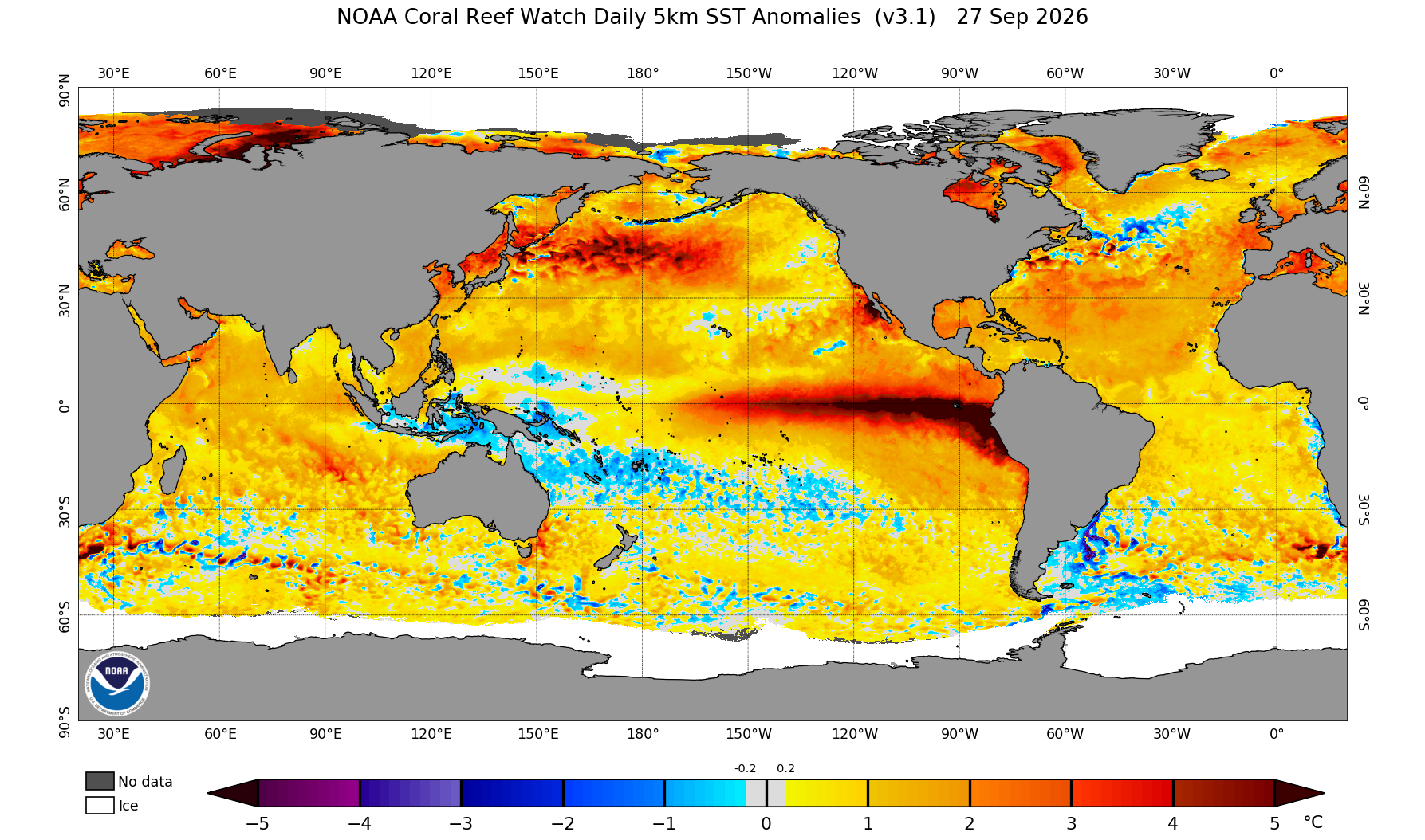
- A potentially historic El Niño event is building in the Pacific Ocean and already impacting the globe. Based on most recent models, this year’s event could be the largest ever recorded.
- Recent studies suggest that climate change is increasing the intensity of El Niños. A paper analyzing coral samples from the Galapagos Islands found that intensity has increased 36.5% in the last four decades.
- Modeling suggests that climate change will continue to intensify El Niños into the future and change their frequency. Though this is still debated, with some models showing more limited influence.
As a potentially historic El Niño builds in the Pacific, evidence suggests that climate change is ratcheting up the intensity of such events. And as temperatures rise in the future, the number and frequency of strong El Niños could increase even further, some experts say.
“The evidence is accumulating that climate change makes for more powerful El Niños,” climate scientist Mark Cane with Columbia University in the U.S. told Mongabay in a video interview. His work was instrumental in enabling accurate forecasting of El Niño events in the late 1980s and early ’90s.
This year’s El Niño is on the verge of breaking all records as it continues to build and is forecast to peak between October and December 2026, according to most models. A pre-print study found an event of this size is six times more likely due to climate change.
The 2026-2027 event “is clearly going to be very large, up there with the handful of largest events that we’re aware of,” Cane said.
A continuing debate
Whether climate change is intensifying El Niños and altering their frequency — and crucially, whether it will continue to do so — remains an open question.
Today’s El Niños can be forecast months in advance and tracked closely using monitoring stations and satellites. But in-depth data on El Niños prior to 1981 is sparse. To get a glimpse of past events, researchers have sought clues from corals, tree ring samples and sediment records.
What that research indicates, Cane said, is that periods of intense El Niños have been influenced by “external radiative forcing,” such as volcanic eruptions or periods of solar activity. But it remains uncertain whether the variation seen today is caused by climate change, though a correlation between rising temperatures over recent decades and the increasing number of strong El Niños has been identified.
In a recently published paper, researchers used coral samples from the Galapagos Islands as a proxy to analyze sea-surface temperatures in the region stretching back over a roughly 1,000-year timespan.
The international research team analyzed calcium and strontium ratios and oxygen isotopes in coral skeletons that offered measurements of seawater during the coral’s formation. Their samples ran up to 2014, so didn’t include the very strong 2015-2016 El Niño and moderate 2023-2024 event. They did include the 1982-1983 and 1997-1998 very strong events, two of the most powerful ever recorded.
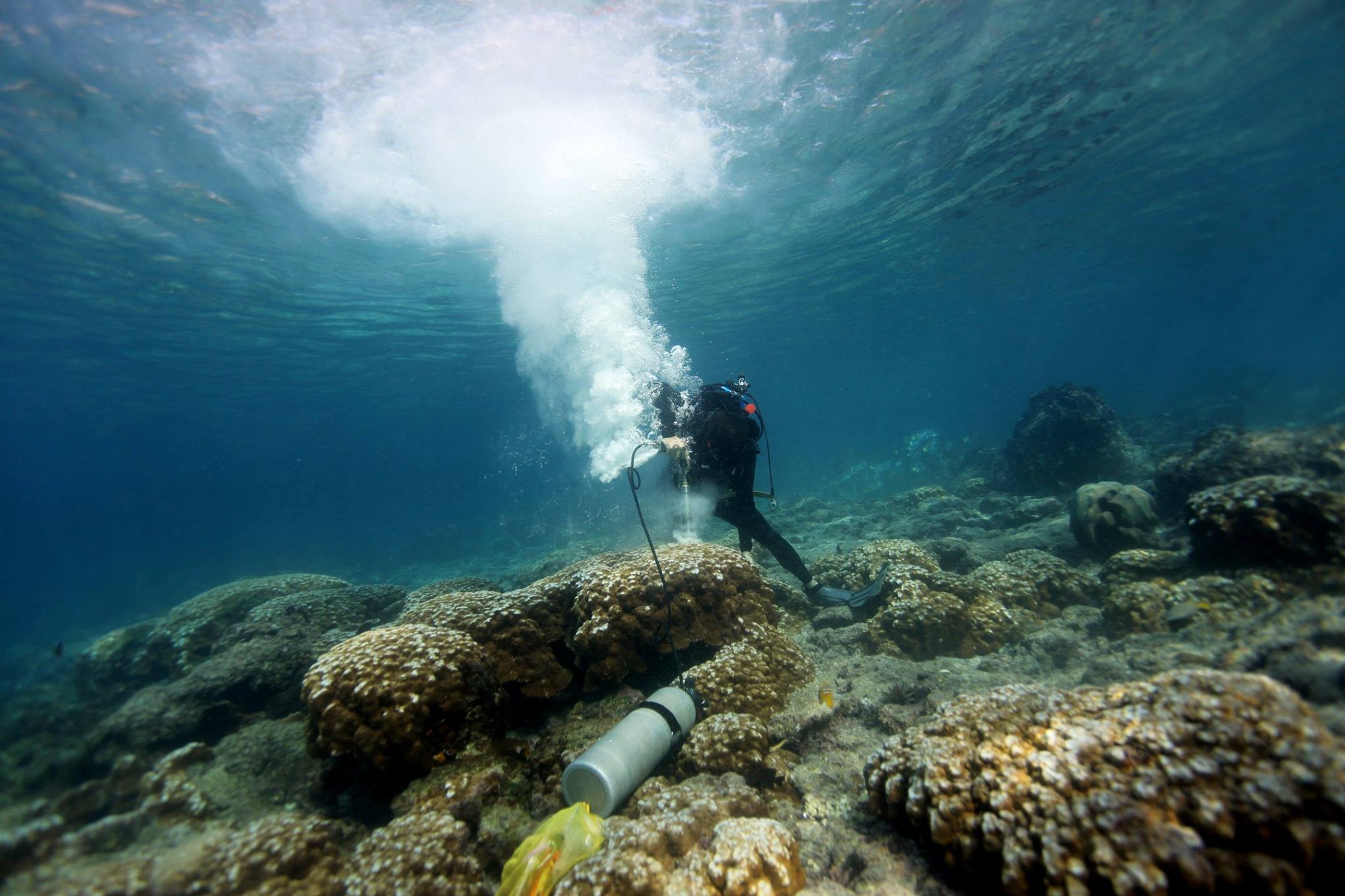
“We were able to use the coral records to show that the El Niño variability in the last 40 to 50 years is stronger than in the pre-industrial era,” Julia Cole told Mongabay in a video interview. She is lead author of the coral paper and professor and chair of the Department of Earth and Environmental Sciences at the University of Michigan, U.S.
The study showed a 36.5% increase in El Niño intensity in the last 40 years. The data mirrored the well-known hockey stick climate graph, with intensifying El Niños tracking rapidly rising temperatures. “I think our data suggests that there is a shift to a stronger period,” she said.
“[W]hat’s happening now, is consistent with a trend towards stronger El Niño variability. What we can’t say is how long will that trend continue and how bad will it get,” Cole added. “Our corals let us identify what the trend has been, and the trend does parallel warming. What they don’t do is let us look into the future.”
Cole’s coral findings echo those of Cane’s work on tree rings, published in 2024; both suggest El Niños are intensifying in recent decades. “It’s not a definitive piece of evidence, as ours isn’t,” Cane said. But “I think it becomes more and more credible that we’re seeing something highly unusual because of what humans have done to the climate system.”
Climate modeling questions
Researchers who want to know how climate change could influence future El Niños can’t rely on coral, tree rings or other real-world evidence. They must rely on climate modeling. And for several decades researchers puzzling over the El Niño-climate change relationship have come up with differing results depending on models used.
From early on, some modeling predictions showed that increasing greenhouse gases in the atmosphere and ensuing warming would indeed intensify El Niño variability, said Axel Timmerman, director of the IBS Center for Climate Physics at Pusan National University in South Korea, who first published a paper on the topic in the late 1990s.
Those findings have subsequently been backed by more recent studies that indicate increased variability and intensity. A 2014 paper, for example, predicted a doubling of extreme El Niño events under future warming. Yet other models have shown the opposite or a period of intensification followed by weakening.
“The lay of the land here is best represented by the fact that I have published two papers coming to completely opposite conclusions about what climate change is going to do to El Niño using different models,” Christopher Callahan, a climate scientist at the University of Idaho, U.S., told Mongabay in a video Interview.
Contributing to this uncertainty is the random variation found within the El Niño system itself, Callahan said. “You can get decades of very quiet El Niño just due to random fluctuations in the ocean and the atmosphere,” he noted. “It’s hard to distinguish climate change from those significant random variations.”
In his view, it is reasonable to conclude that recent intensification is due to random variation. “On the other hand, we have decent evidence that we are now in a period of a more extreme and more active El Niño than the last several hundred or even thousand years, in a way that very closely tracks the rising global temperature,” Callahan added.
Cole’s coral study provides an important piece to the puzzle, as it contributes sea surface temperature data to the mix of other evidence pointing to intensifying El Niños over recent decades, said Timmerman, who wasn’t involved in the study.

Timmerman adds that research does show climate change is altering the “hydrological variability” in the El Niño system. That’s because Earth’s globally-warmed atmosphere can increasingly hold more moisture, intensifying the rainfall associated with El Niños, but paradoxically also influencing periods of drought. “That is very important because [an extreme regional shift in] precipitation is of course one of the main [El Niño] impacts,” Timmerman said.
For him, the key question is whether the intensification suggested in the data is proof that the Earth has entered a new, dangerous phase of ever stronger El Niños caused by climate change. “I would say we are not there yet,” he told Mongabay in a video interview.
Pointing to the potentially historic El Niño now unfolding as an example, Timmerman noted that it is one event consistent with trends seen in the data and in climate modeling, but not in itself firm evidence. “We can never attribute one event to a trend, but of course this will definitely increase this trend further,” he explained.

Preparing for a turbulent world
The United Nations recently announced that the human-induced warming limit of 1.5° Celsius (2.7° Fahrenheit) above pre-industrial temperature levels set by the 2015 Paris Agreement will be exceeded. The international body urged action to return as quickly as possible below the 1.5° C level which could help “avert the worst impacts of climate change and preserve a liveable planet.”
Throwing potentially amplified El Niños into the mix adds fuel to the fire, experts say. Respected climate scientists James Hansen and Zeke Hausfather now both expect that the current historic El Niño could push 2027 to 1.7° C (3.06° F) above the pre-industrial period, the highest global average annual temperature on record — though that overheating should abate as El Niño wanes.
“If we can link stronger El Niños to a warming climate, this adds one more way in which a warming world is wreaking havoc on our daily lives and on the risks and hazards that we face from climate change,” Cole said. “It’s one more reason to take seriously the need to address the root causes of global warming.”
This does not necessarily mean each El Niño in coming decades will be more powerful than the last, even if climate change is influencing it, she added. But Cole notes that even tomorrow’s lower strength El Niños could have devastating impacts, because they’ll be amplified by escalating warming. For example, the 2023-2024 event was only a moderate El Niño, but it still caused significant damage to economies and ecosystems.
“I think it’s important to remember that now in a warmer world, even a moderate El Niño will have bigger impacts than it would have in a cooler world,” Cole said.
Experts agree that nations need to prepare for “one-off” historic El Niños like the one taking shape, but add that adaptation over the long term to a changing climate is just as vital.
“We may actually have more [El Niño] events in shorter periods of time that are strong.” Timmerman said. “And on top of this, we have the warming. So all of these factors can lead to compounding effects that require completely different resilience strategies in the future.”
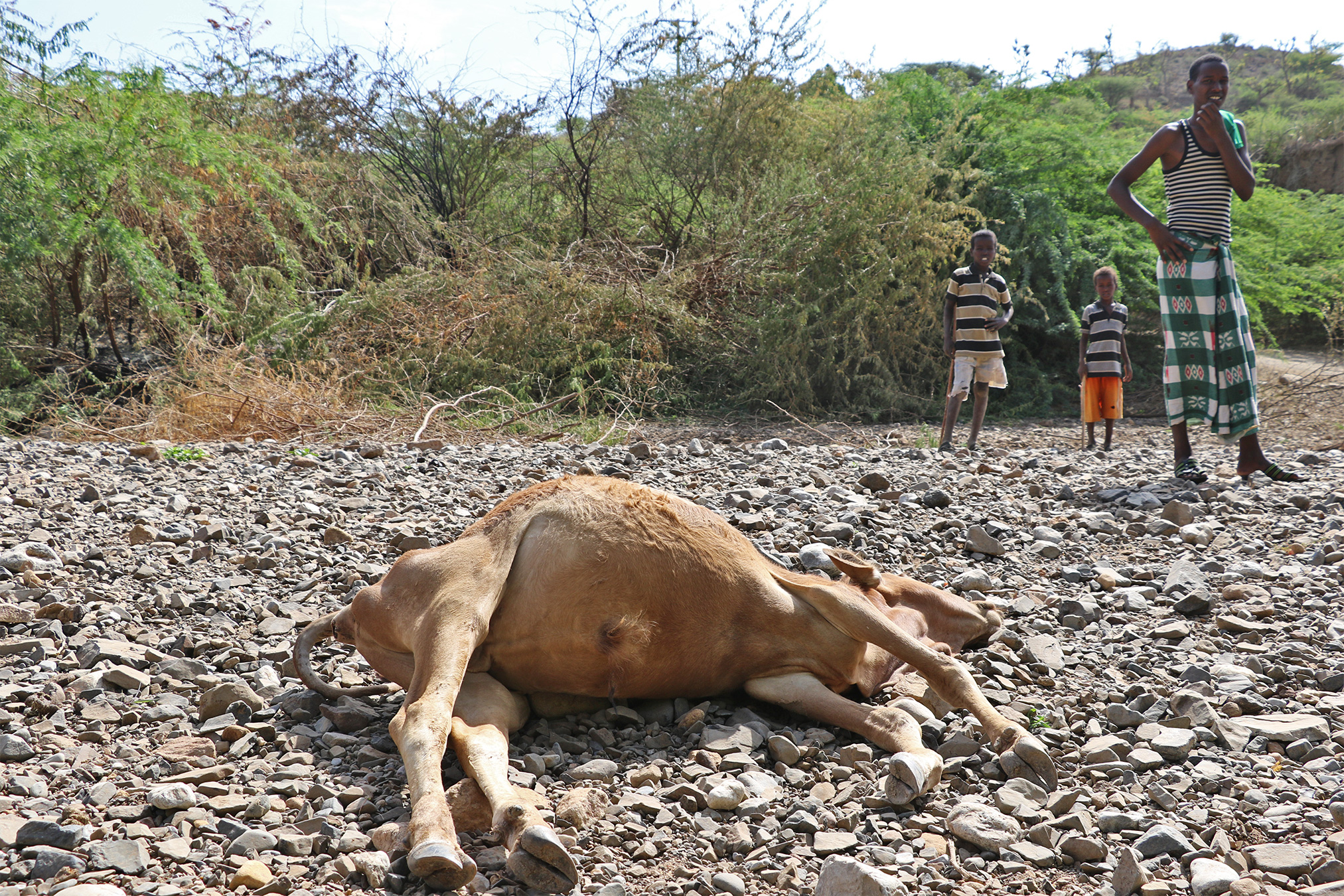
Banner image: 2015’s very strong El Niño triggered a prolonged drought and humanitarian crisis in Ethiopia. In the future, as global warming intensifies, even moderate El Niños could have outsized impacts on regional food security. Image by EU Civil Protection and Humanitarian Aid via Flickr (CC BY-NC-ND 2.0).
World must look to the past to prepare for likely unprecedented El Niño
Citations:
Cole, J. E., Thompson, D. M., Dyez, K. A., Tripp, C. J., Tudhope, A. W., Lofverstrom, M., … Edwards, R. L. (2026). Recent strengthening of eastern Pacific ENSO in the last millennium paleorecord. Science. eady2660. doi:10.1126/science.ady2660
Cook, E. R., & Cane, M. A. (2024). Tree rings reveal ENSO in the last millennium. Geophysical Research Letters, 51(19). e2024GL109759. doi:10.1029/2024gl109759
Cai, W., Borlace, S., Lengaigne, M., Van Rensch, P., Collins, M., Vecchi, G., … Jin, F. (2014). Increasing frequency of extreme El Nino events due to greenhouse warming. Nature Climate Change, 4(2), 111-116. doi:10.1038/nclimate2100
Callahan, C. W., Chen, C., Rugenstein, M., Bloch-Johnson, J., Yang, S., … Moyer, E. J. (2021). Robust decrease in El Nino/Southern Oscillation amplitude under long-term warming. Nature Climate Change, 11(9), 752-757. doi:10.1038/s41558-021-01099-2
FEEDBACK: Use this form to send a message to the author of this post. If you want to post a public comment, you can do that at the bottom of the page.

