


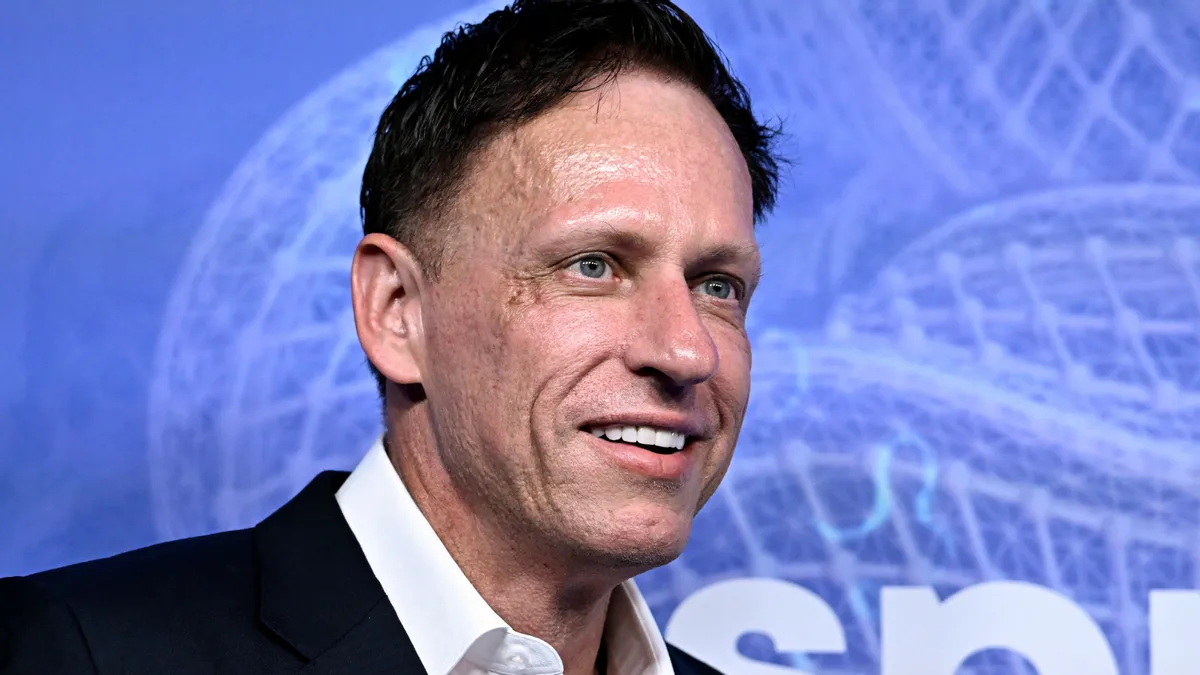
Billionaire Peter Thiel once said, “If you’re evil, you’re at least competent. And if you’re evil, you’re not bad. And therefore, maybe you’re actually kind of good because you’re at least getting something done.”
Thiel made the remark during a Sept. 24, 2026, appearance on the podcast “MD Connects,” in which he was answering a question about attaching morals to new technologies such as artificial intelligence. Though some users sharing the claim alleged Thiel was talking about the moral or ethical compass of human beings, context shows that wasn’t the case.
A rumor that billionaire Peter Thiel, co-founder of Paypal and the AI company Palantir, once claimed that being evil was actually good circulated online in September 2026.
People on social media and Reddit shared a quote in which Thiel purportedly said, “If you’re evil, you’re at least competent. And if you’re evil, you’re not bad. And therefore, maybe you’re actually kind of good because you’re at least getting something done.”
Some users shared an alleged video of Thiel saying the phrase.
Peter Thiel, venture capitalist and co-founder of PayPal, on competence mattering more than morality:
“if you’re evil, you’re at least competent. And if you’re evil, you’re not bad.”
“A Ferrari is an evil car because it doesn’t get many miles per gallon. A Trabi is a bad car.… pic.twitter.com/2H3GTzqIPA
— Guillermo Flor (@guilleflorvs) September 25, 2026
The quote was correctly attributed to Thiel.
He made the statement in an interview on the podcast “MD Meets,” hosted by Mathias Döpfner, in an episode released Sept. 24, 2026. The episode is available to listen to on podcast platforms such as Spotify and Apple Podcasts, with a video version viewable on YouTube that matches the clip that circulated online.
Thiel’s statement begins around the 13:40 mark when the host asks, “Why do we always moralize new technologies? I would say technologies are just neutral. You can use them for good and for bad causes and it depends on us, what we human beings are doing with it.”
Thiel responded:
I’m going to get in trouble for what I’m about to say, but I think we moralize way too much. There’s always a question I like to ask: What is the antonym of good? And the moral antonym is evil. The functional antonym is bad. A Ferrari is an evil car because it doesn’t get many miles per gallon. A Trabbi is a bad car. It’s less good than a golf cart. You know, the former East German car. And so, if you’re evil, you’re at least competent. And if you’re evil, you’re not bad. And therefore, maybe you’re actually kind of good because you’re at least getting something done.
The video clip circulated online without the context of Döpfner’s question, which appeared to lead some users to believe Thiel was discussing the ethical compass of human beings rather than using a metaphor to describe the debate over the ethical use of technology.
Thiel continued to explain his point of view using an example of two different interpretations of the German legend Faust, in which a successful man makes a deal with the devil in return for pleasure and knowledge.
Thiel added:
If you contrast the Faust books of [Christopher] Marlowe vs. [Johann Wolfgang von] Goethe, in Marlowe’s “Faust,” it was the 16th-century Faust story, Faust is a fake scientist. He’s sort of like a magician, a fake alchemist. It’s bad science. And he goes straight to hell. In Goethe’s “Faust,” he has a pact with the devil and he sort of gets this knowledge by morally dubious means. But it still always works out more for the best and Goethe’s Faust gets redeemed. I think it’s better to be good than evil, I want to be very clear, but I prefer Goethe’s “Faust” to Marlowe’s “Faust.”
The moral question of our society, we have all these good vs. evil debates, and we’re just full of badness. Most of the time, things are not even evil, they’re not even good. They’re just merely bad. So you’re in a world where 99% of the businesses, companies, people, political leaders, business leaders are totally incompetent, that’s the problem we should actually be talking about.
In a column published in The New York Times on Jan. 11, 2017, Thiel answered a question about whether he liked a character based on him in the HBO comedy “Silicon Valley,” to which he said, “I liked him. I watched the first season. My character died. I think eccentric is always better than evil.”
For further reading on Thiel and his company, Palantir, from the Snopes archives, check out our investigation of Palantir’s alleged creation of a national database of U.S. citizens.
