


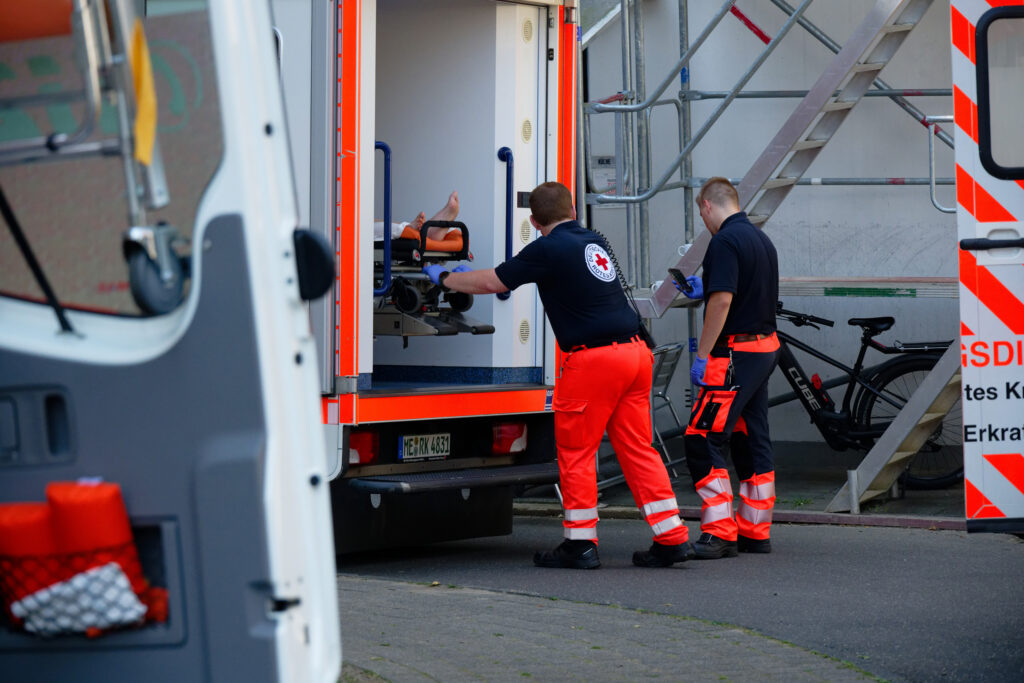
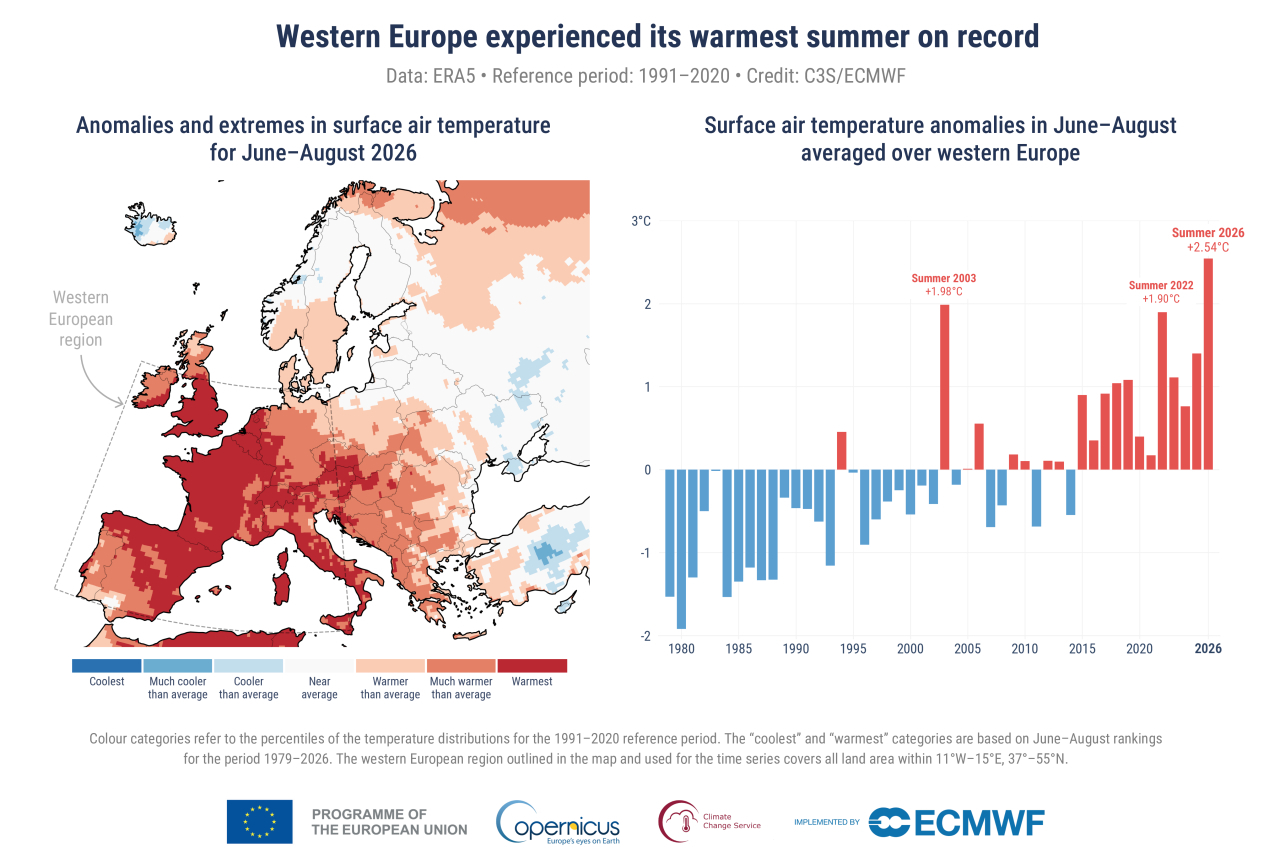
A series of deadly heat waves from May to August overwhelmed Germany’s healthcare and emergency response systems and led to an estimated 16,000 heat-related deaths during the summer, the most heat mortalities ever recorded in the highly developed country.
At the 2026 Extreme Weather Congress in Hamburg this month, experts from local and regional governments, hospitals and universities said that Germany’s advanced climate research and weather technology provided accurate forecasts of persistently dangerous high temperatures, but the death toll exposed gaps between scientific knowledge and the country’s adaptation efforts, as well as shortcomings in the emergency response.
A report released during the Hamburg meeting explains that Germany’s building, cooling, water and transportation infrastructure was built for a climate that no longer exists, and that its health system is not heat-resilient. Meteorologists said heat messaging was fragmented across levels of government, while health researchers and other caregivers described hospitals’ lack of procedures for declaring and managing heat emergencies.
Across the world, accurate heat forecasts don’t translate to effective protection from its impacts, and other regions may be just one extreme heat wave away from mass casualties like Germany’s, said Kristie Ebi, a University of Washington global health professor who has helped guide major international climate reports.
In 2021, a well-forecasted heat dome over the Pacific Northwest drove temperatures far beyond previous regional records, pushing local heat resilience to the limit. More than 1,000 excess deaths and a 69-fold increase in heat-related hospitalizations followed.
Cities and counties scrambled to keep up by opening emergency cooling shelters and other pop-up measures, Ebi said, but coordinating a response across public health, emergency services and other agencies takes more than a day or two in the midst of an unfolding mass-casualty heat wave. It requires long-term planning, including “stress tests” against increasingly severe heat scenarios as greenhouse gas pollution continues to accumulate in the atmosphere.
The heat deaths in Germany and the Pacific Northwest expose a broad weakness in heat preparedness, Ebi said: Warning systems are often not designed around what happens after the alert goes out—how people receive and react to the information, who coordinates the response, how vulnerable people are contacted and who ensures that cooling centers are accessible and identified.
In England and Wales, heat-related deaths soared to at least 2,700 in May and June, marking one of the deadliest years on record, according to the UK Met Office.
Clair Barnes, a climate researcher at Imperial College London’s Centre for Environmental Policy, said understanding how people perceive and respond to risk is crucial as extreme heat becomes more common. Repeated heat waves can quickly normalize dangerous conditions. During high-level heat warnings in the United Kingdom this summer, Barnes observed people returning to their usual dog-walking and running routines.
Building effective communication, Barnes and other researchers said, requires trusted messengers in local social networks, alongside clear weather warnings linked to specific protective measures. Broad public messaging alone may not reach older people, migrant and refugee communities, people with disabilities and others who may be isolated and especially vulnerable to extreme heat.
Compounding Threats
Ebi, the University of Washington scientist, said extreme climate impacts can also collide and compound each other in ways that undermine standard heat advice. As the heat dome settled over the Pacific Northwest in 2021, wildfire smoke made it harder to cool homes by opening windows, she added, highlighting the need for cooling shelters to prepare for both extreme heat and hazardous air pollution.
At the Hamburg conference, German meteorologist Karsten Schwanke said it was a “routine work day” when he started forecasting the coming temperatures in late May.
“The 2026 heat wave was nothing that surprised us,” he said. What did surprise him was the lack of a meaningful response until the forecasted temperatures actually arrived. Official agencies appeared to wait, out of bureaucratic reticence, to see whether the heat wave would happen rather than taking a proactive approach, he said.
Schwanke said that, at the current level of human-caused warming, even hotter temperatures, exceeding 110 to 114 degrees Fahrenheit, would have been possible last summer under a slightly different atmospheric pattern.
“It won’t surprise me if that happens in the next two years sometime,” he said. What does startle him is that Germany hasn’t done more to update vulnerable infrastructure after 30 years of clear warnings.
Even today, Schwanke added, roads, schools and hospitals are often still being built according to standards developed in the 1980s. He views that as evidence that political leaders have yet to fully grasp the threat global warming can pose. Infrastructure being designed and built today needs to be resilient to temperatures that could approach 120 degrees Fahrenheit by 2050, he said.
Barnes, the UK-based climate scientist who studies how global warming affects extreme weather, said similar adaptation measures are needed in northern European cities and other temperate regions that have not experienced anything resembling today’s extreme heat in the centuries since they were built.
“We’re seeing more dangerous extreme temperatures sooner than we expected to see by this point.”
— Clair Barnes, Imperial College London’s Centre for Environmental Policy
Scientists with the UK Met Office and other researchers found that human-caused warming added between 5 and 7 degrees Fahrenheit to the maximum temperatures “and is estimated to be responsible for about 42 percent of the deaths” during heat waves in May and June.
In northern Europe, “we need to shift our attitude to accept that we are now going to have to build resilience for an extreme climate” outside the bounds of what human societies have experienced in the last few thousand years, Barnes said. Extreme heat should be treated as a systemic public health threat, much like seasonal influenza risks, not as an occasional hazard, she added.
Yet a lack of standardized heat-death reporting across jurisdictions makes it difficult to understand the scale of the threat and to prepare adequately, she said.
“It’s important to have an understanding of the historic trends to look at what we might be facing in coming years,” Barnes said. The average annual temperature increases of recent years are within the range projected by models, but, she said, “We’re seeing more dangerous extreme temperatures sooner than we expected to see by this point.”
Normalizing Heat Deaths?
Counting heat wave deaths across jurisdictions is complicated because heat can exacerbate a range of underlying conditions, said Hanns Moshammer, an environmental physician at the Medical University of Vienna.
The true toll can be obscured when death certificates list conditions such as heart failure, stroke or kidney failure rather than heat as a contributing factor. Moshammer also said that heat-related deaths can be downplayed because they often are among people whose life expectancy was already limited based on pre-existing medical conditions.
This story is funded by readers like you.
Our nonprofit newsroom provides award-winning climate coverage free of charge and advertising. We rely on donations from readers like you to keep going. Please donate now to support our work.
Aaron Thierry, an ecological scientist and postgraduate researcher at Cardiff University in Wales, who studies communication around climate change, warned against treating those deaths as an unavoidable consequence of extreme heat.
“That was kind of the narrative we heard around COVID, about people being disposable, and that’s not a good thing, that’s not how we should be thinking about these things at all,” he said.
Barnes recalled receiving a heartbreaking email on the day the 2025 heat-deaths analysis that she co-authored was released. The writer told her that his father had been hospitalized with heart issues but seemed to be doing well.
“He was sitting up in bed, he was chatting, he was fine,” the acquaintance wrote.
“And then the heat wave hit,” Barnes said. “There were eight men on that ward with one fan between them, and no air conditioning. They just watched them all fade. The last one died on the last day of the heat wave, and it just didn’t have to happen.”
“We just need to prepare,” she added, “and we need to stop it.”
About This Story
Perhaps you noticed: This story, like all the news we publish, is free to read. That’s because Inside Climate News is a 501c3 nonprofit organization. We do not charge a subscription fee, lock our news behind a paywall, or clutter our website with ads. We make our news on climate and the environment freely available to you and anyone who wants it.
That’s not all. We also share our news for free with scores of other media organizations around the country. Many of them can’t afford to do environmental journalism of their own. We’ve built bureaus from coast to coast to report local stories, collaborate with local newsrooms and co-publish articles so that this vital work is shared as widely as possible.
Two of us launched ICN in 2007. Six years later we earned a Pulitzer Prize for National Reporting, and now we run the oldest and largest dedicated climate newsroom in the nation. We tell the story in all its complexity. We hold polluters accountable. We expose environmental injustice. We debunk misinformation. We scrutinize solutions and inspire action.
Donations from readers like you fund every aspect of what we do. If you don’t already, will you support our ongoing work, our reporting on the biggest crisis facing our planet, and help us reach even more readers in more places?
Please take a moment to make a tax-deductible donation. Every one of them makes a difference.
Thank you,

Reporter, Austria
Bob Berwyn is an Austria-based reporter who has covered climate science and international climate policy for more than a decade. Previously, he reported on the environment, endangered species and public lands for several Colorado newspapers, and also worked as editor and assistant editor at community newspapers in the Colorado Rockies.
