


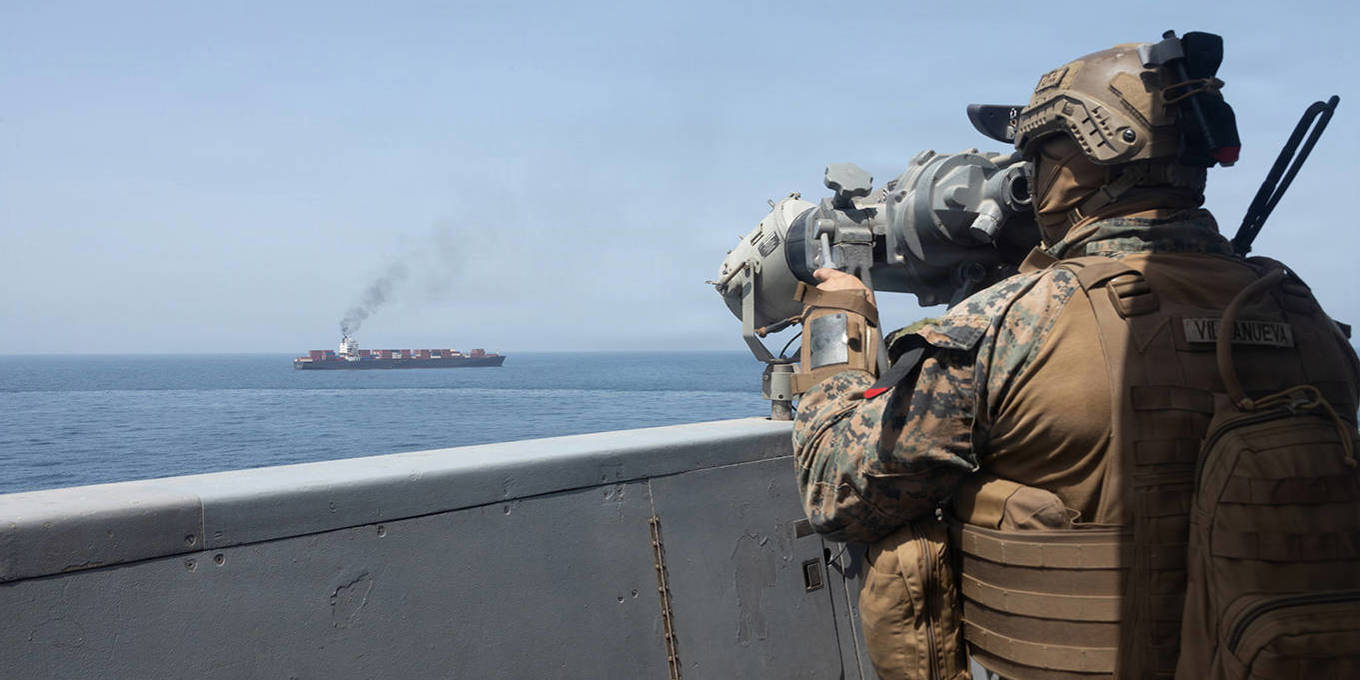
While there is no single prescription for energy security, strengthening “response capacity,” such as by establishing stockpiles, substituting sources, and diversifying suppliers, is essential. The point is not to eliminate vulnerabilities altogether, but to ensure that there are options when disruption arrives.
GENEVA/HOUSTON/LISBON—The largest energy-supply shock in modern history has delivered a surprising lesson: the global energy system is remarkably adaptable. When the Iran war disrupted passage through the Strait of Hormuz, roughly one-fifth of global oil supplies and liquefied natural gas was affected. But worst-case scenarios have been broadly avoided, thanks to years of investment in resilience.
The United States, Japan, and Europe drew on large oil stockpiles. China did the same, while leveraging the flexibility it had built into its refineries, petrochemical industry, and even transport system. Saudi Arabia and the United Arab Emirates redirected oil through pipelines that bypass the Strait of Hormuz. Producers that do not ship their supplies through the Strait increased exports, and traders and refiners rapidly rearranged supply chains. All told, more than one in five barrels of seaborne oil traded in the second quarter of 2026 took a different route than before the crisis.
But these shock absorbers have limits. Inventories are being depleted, refining capacity remains strained, and alternative routes are subject to disruption. Moreover, resilience in one part of the world does not translate into resilience everywhere. Countries with fewer options for responding—for example, because they lack the right type of buffers—have faced higher prices and physical shortages. In India, commercial liquefied petroleum gas supplies were constrained for months after the war began in February. In Pakistan, LNG shortages were still contributing to rolling blackouts in late August.
Against this backdrop, how to build resilience has become an urgent question. Every economy needs energy, but the resources that provide it are distributed unevenly. Around 95% of the world’s population lives in a region that imports at least one major fuel. China imports roughly 70% of its oil, and India close to 90%. Trade is therefore indispensable. Reliable and diversified trade linkages amount to a building block of resilience.
But trade can also create dependencies that become vulnerabilities. Countries might rely on a few geographically distant suppliers or routes that are exposed to disruption. The Strait of Hormuz is far from the world’s only maritime chokepoint; two-thirds of energy trade crosses at least one.
Our analysis of 65 countries suggests that, in the event of disruption, response capacity is critical, with short-term buffers (like stockpiles) and longer-term solutions (such as domestic resources, alternative suppliers, or the ability to substitute fuels) all playing a role. The range of factors at play helps to explain why headline import dependence can be misleading: two countries that import the same amount of energy may have very different response capacities, because one has larger stockpiles or better access to alternatives.
Even a large net exporter might be vulnerable to disruptions if it relies on imports of specific fuels. Brazil exports crude oil, but imports about a quarter of its diesel. Indonesia exports LNG, but depends on imported oil, and has limited storage capacity for refined fuels.
Governments are already moving to reduce exposures and strengthen their response capacity. For example, Pakistan is considering the creation of a strategic petroleum reserve. India and South Africa are increasing theirs. And Indonesia aims to increase its fuel-storage capacity from roughly 25 days of consumption to 90.
But inventories alone cannot deliver long-term energy security. Likewise, while other measures can reduce exposure or strengthen response capacity, they each have limits.
Electrification and domestically-produced clean energy can structurally reduce fuel-import dependence. We estimate that currently viable low-emissions technologies could, in theory, displace imports equivalent to 26–31% of today’s global oil and gas consumption. In practice, technology, economics, upfront investment, and asset turnover will affect the speed and scale of progress on substitution.
New oil and gas production may also reduce import dependence, but not everyone has the right resources or economic conditions. Domestic coal can backstop some power systems, but with important consequences for emissions and air quality. Reconfiguring trade can diversify suppliers and routes, but it requires infrastructure that can itself be disrupted.
Put simply, there is no single prescription for energy security. Some strategies will seek to reduce dependencies through substitution; others will build buffers, domestic supply, or alternative suppliers and routes. Many will do both.
It is up to policymakers to identify which vulnerabilities could lead to the greatest economic and social damage, and where limited investment can buy the most resilience. This is particularly true for developing economies, which often lack fiscal space and access to affordable capital.
While investments will be costly, the impact of energy shocks could prove even costlier without them. In South Africa, load shedding reduced GDP growth by an estimated 1–3 percentage points in 2022. How much the current energy shock will end up costing vulnerable emerging economies remains to be seen, but the total bill will surely be substantial.
Cooperation can help limited resources go further. Regional coalitions can help countries pool reserves, coordinate emergency responses, build interconnected infrastructure, or secure alternative supplies at better rates. ASEAN countries are already exploring the possibility of creating a regional fuel reserve in response to the Hormuz crisis.
Companies face the same challenge, but on a different scale. Their vulnerability may hinge on one fuel, feedstock, supplier, port, or production site. They can stress-test those exposures and determine where flexible inputs, alternative suppliers, inventories, diversified production, or efficiency justify investment—including for the continuity and revenues they can preserve during disruption.
The current energy shock will not be the last. Only by investing in resilience today—making deliberate choices about which dependencies to address and how—can countries and companies ensure that, when the next shock hits, they have options.
