


Founder’s Briefs: An occasional series where Mongabay founder Rhett Ayers Butler shares analysis, perspectives and story summaries.
In 2022, poachers had taken 14 white rhinos from private farms in Namibia in six weeks, so owners started removing their horns. One cow had a horn 86 centimeters (34 inches) long. Jaco Muller said he was nearly in tears when it was removed. “It is such a magnificent animal,” he said. “But for the animal’s sake, it is for the best.”
Dehorning gave poachers less reason to kill a rhino. For Muller, the sight of a dehorned rhino was preferable to finding a dead one.
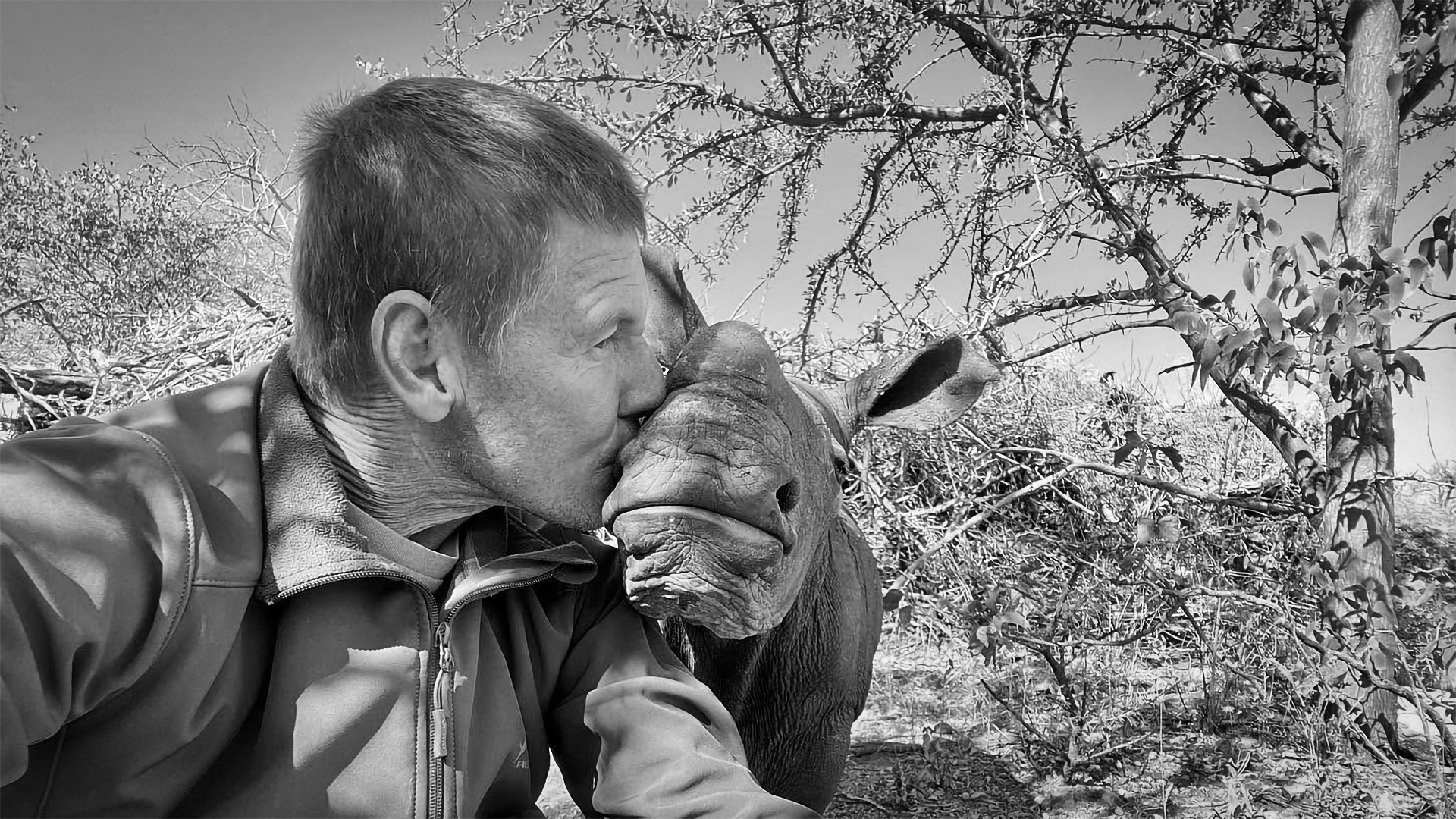
The idea for breeding rhinos came from his son, then 15, as a school project. In 2010, Muller converted the family’s antelope-breeding operation into what became the Rhino Momma Project in Namibia’s Kunene region.
Muller believed that breeding more white rhinos (Ceratotherium simum), keeping them secure enough to reproduce, and then replenishing populations across Africa could help save the species. So he built a breeding program with a rhino-custodianship farm and the nonprofit Help Our Rhinos Now, or HoRn.
The first calf was born in 2013; by 2025, the project had become one of Namibia’s larger privately run rhino-breeding operations.
Kifaru Lodge, which Muller opened in 2018, brought in money from tourists to help cover security and rhino care.
Muller also supported legalizing the trade in rhino horn. His argument was that prohibition let criminals collect the profits while farm owners and conservation groups paid for security. He compared harvesting horn to shearing sheep: the animal would survive, the horn would grow back, and a regulated market might finance protection.
“Right now, only poachers make money from horns,” he said in 2025.
That was, and remains, a controversial argument. Opponents question whether a legal trade would enable laundering of poached rhino horns or increase demand. For Muller, the case came from the economics of a breeding program: horns were valuable, and protecting the animals was expensive.
He believed rhinos needed populations outside Namibia as well. In a controversial move in 2024, 42 white rhinos from Kifaru Lodge were exported to Texas. He cited the Arabian oryx, which survived through captive breeding and reintroduction, as an example.
Muller often used a gyrocopter to survey the reserve from the air, looking for signs of intrusion and checking on rhinos spread across the property. On Sept. 19, Muller, 53, was killed when the gyrocopter crashed while he was monitoring rhinos and wildfire flare-ups near Outjo. By then, the school-project idea had become a herd of rhinos: the project had recorded 197 births since its first calf arrived in 2013.
Banner image: Jaco Muller. Image courtesy of the Rhino Momma Project.
