


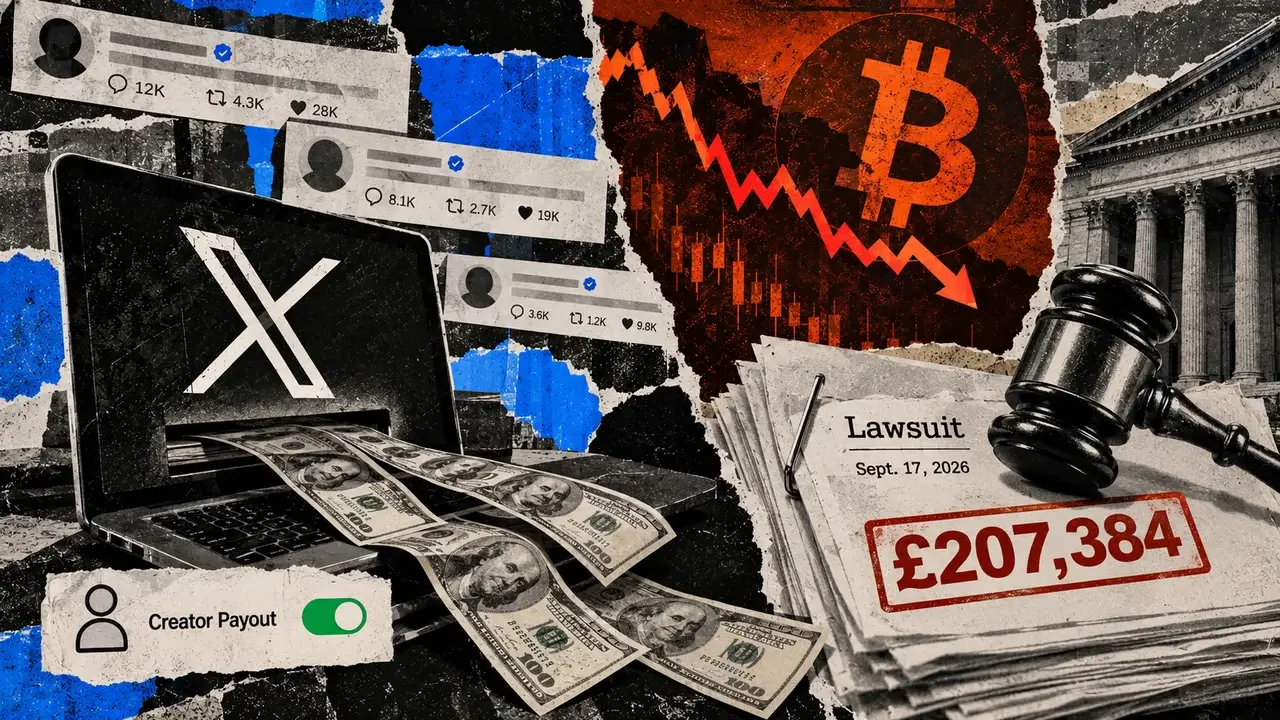
You don’t have to own Bitcoin to make money from people getting excited about it. On X, just posting about it can be a business in itself, and the company now wants £207,384 back from people it alleges took that business a bit too far.
In its Sept. 17 lawsuit, X accuses Vivek Kumar Sen, Zamyang Sherpa, and unidentified operators of running a coordinated account network that manipulated engagement to collect creator payments.
If £207,000 seems like very little money for a company the size of X, that’s because it absolutely is. So why is a company that was bought for $44 billion suing a couple of guys for literally pennies?
The stakes here are the principles behind its (often controversial) payment program and the potential cost of allowing other users to copy the (alleged) behavior. Paying creators gives people a reason to publish, but if manufactured popularity pays too, the company then risks funding the very activity it wants to remove from people’s feeds.
Bitcoin can fall while the posts keep paying
The basic arrangement is straightforward: X pays eligible creators for attracting an audience, with views from paying subscribers contributing to earnings. The account essentially gets paid for the attention it gets, more or less regardless of what it or its audience says or does.
That means that someone writing about Bitcoin has a much different set of incentives from someone buying Bitcoin. Buyers just want the price to go up, but posters (for lack of a better word) can get attention anytime they want just by posting content that’s bound to enrage or entice their audience.
There’s nothing inherently dishonest about that. Newspapers and TV also earn money from audiences through good markets and bad ones. But readers should understand the arrangement, especially when a post feels like friendly advice from someone who shares their enthusiasm.
Short attention spans mean a lengthy announcement or analysis is unlikely to attract hundreds of thousands of views, so users who want a quick, immediate burst of attention resort to publishing clickbait-y headlines. Then, publishing versions or sometimes even word-for-word copies of that headline through multiple accounts gives the same material a better chance of finding an audience.
X alleges the accounts in this case went even further by coordinating their posts and interactions. One example in its filing puts the same posts from @Vivek4real_ and @TrendingBitcoin just 11 seconds apart. It also alleges connections between payment records and devices used by the accounts.
Those connections are more relevant than speed alone. Independent people reacting to the same announcement can publish almost simultaneously, and X’s rules allow multiple accounts with different purposes. The abuse X accused these users of involves making coordinated activity look like independent engagement and collecting money from it.
Most readers can’t see who receives an account’s payments or which devices operate it. They see different names, different pictures, and many verified accounts that appear to agree with one another.
Small bill, expensive habit
X’s public explanation of the lawsuit shows that protecting the creator monetization program is at the center of the case. In his announcement of the lawsuit, general counsel James Burnham said the company will act against fraud to protect its platform and legitimate creators’ earnings.
That makes deterrence the main reason for the lawsuit. X has a reason to discourage this kind of behavior before more people decide it’s a business worth copying. Recovering one set of payments can also show users that the consequences extend beyond just losing an account.
If getting caught means only being banned, the money already collected could make the attempt worthwhile. Being pursued for repayment and legal costs makes that a significantly less attractive deal.
The principle also has a commercial purpose. Creators who spend hours producing original work need to believe the platform can distinguish their audience from manufactured activity, and readers need a feed they want to keep opening. Paying for behavior that frustrates both groups would undermine the product X is trying to sell.
CryptoSlate previously covered ZachXBT’s criticism of paid anti-bot measures, including his argument that scammers could afford verified accounts. The same economic logic applies here: an entry fee offers little protection against someone who expects to earn much more once inside.
The defendants didn’t manipulate Bitcoin’s price or entice anyone to make BTC purchases. The case against them only involves the abuse of creator payments.
However, the posts could still have affected users. The posts wouldn’t need to publish lies to get engagement and mislead their readers, either. Imagine a company says it’s considering buying Bitcoin. Immediately after the original announcement, five or more verified accounts say that the company bought Bitcoin, and all of the posts have a significant amount of engagement from verified users that confirm the purchase happened. A random user encountering those posts could very reasonably think that the purchase did happen, as it looks like the information is coming from several independent sources.
That experience extends well beyond crypto. Health advice, political claims, and celebrity rumors can all seem more convincing when they appear to come from several places. Bitcoin adds an immediate financial temptation because readers can act on what they’ve seen within minutes, while the people circulating it may already be earning from the attention.
Paying people to add something
X has begun replacing the program involved in the lawsuit with Original Content Rewards. Existing revenue-sharing participants could earn through Sept. 7, and applications for the replacement began rolling out Sept. 8. The transition predates the filing, so it can’t be presented as a consequence of this case.
The new rules exclude copied material and lightly rewritten versions of someone else’s work, while allowing commentary that adds the author’s own perspective. Artificially generated views don’t qualify for payment either.
The new regime makes sense: give people a financial reason to contribute something. Applying it, however, is much harder. Someone who adds a joke to an announcement has contributed their own words; someone who explains a condition buried in the document has given readers information that could affect how they understand it. Both are commentary, but they do different work.
Originality doesn’t guarantee accuracy, either. People can write completely original nonsense, while an account quoting an official document may be giving readers exactly what they need. Good aggregation earns its audience by saving people time and directing them toward evidence.
Under the new program’s terms, X controls payment calculations and can withhold earnings for manipulation. How it uses that power will determine whether creators trust the replacement. Removing copycats could reward people doing better work, but mistaken exclusions could also cut off legitimate income. Creators need explanations they can understand and a way to contest errors.
CryptoSlate’s coverage of X’s links to crypto exchanges examined the shorter route from reading about an asset to trading it. Creator payments put another person earning money along that route, before the reader has bought anything.
X can pursue repayment and make abuse more expensive, but the incentive to chase attention will survive this lawsuit. Its task is to make careful, original work worth paying for. The reader’s task is simpler: check whether those five enthusiastic accounts have brought five pieces of evidence, or just five opportunities for someone to earn from the same announcement.
