


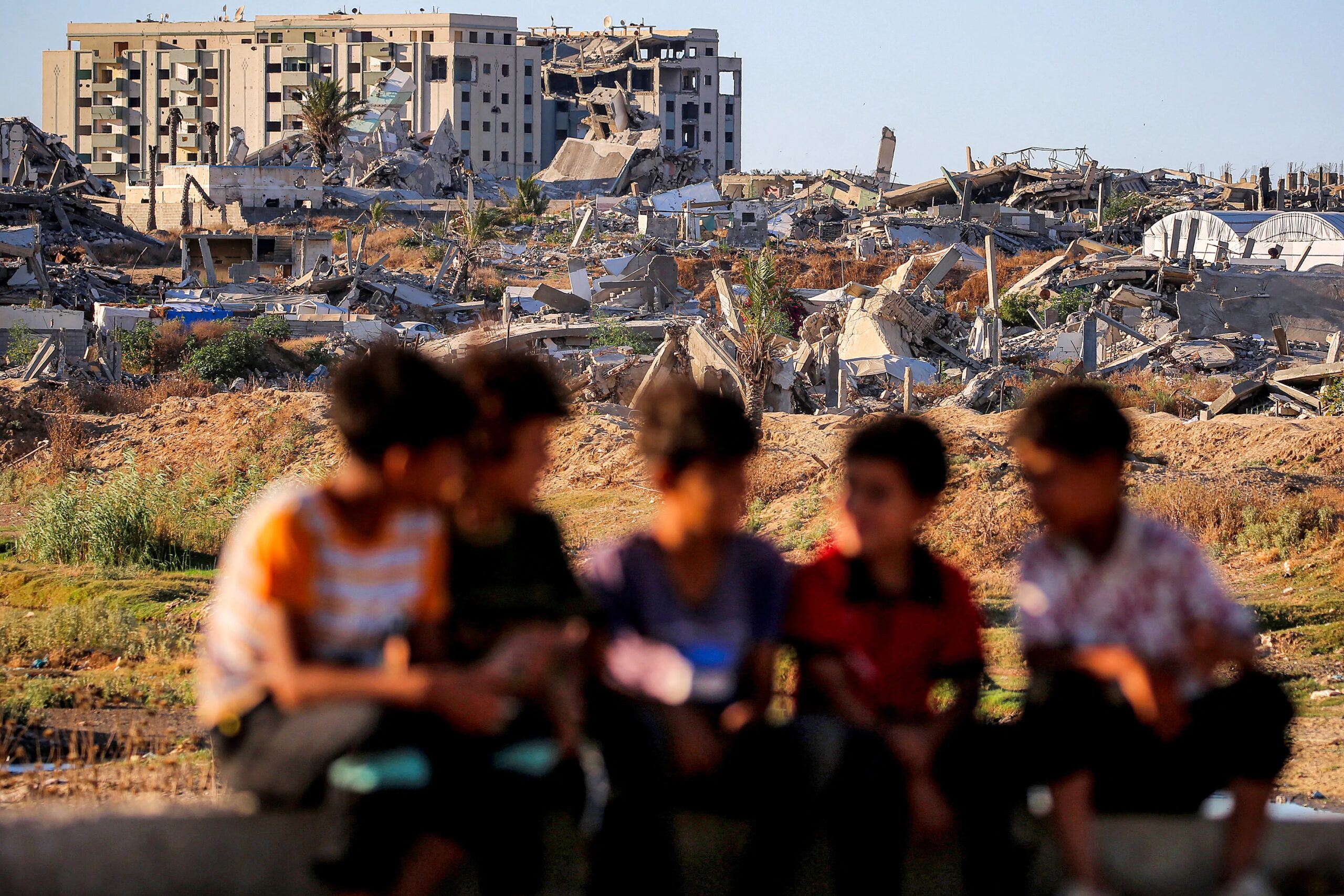
World leaders are about to choose a new United Nations secretary-general. Whoever gets the job will inherit an uncomfortable truth: The world body’s promise to end poverty, hunger, and disease is in retreat because today’s leaders are presiding over an era of multiple and growing forever wars.
In September 2015, U.N. member states set 17 Sustainable Development Goals, or SDGs, to be achieved by 2030. These sought to end extreme poverty, promote climate action, and set social and economic targets, all while “leaving no one behind.” But the commitment assumed the existence of functioning states, international cooperation, and development systems capable of turning finance into progress.
World leaders are about to choose a new United Nations secretary-general. Whoever gets the job will inherit an uncomfortable truth: The world body’s promise to end poverty, hunger, and disease is in retreat because today’s leaders are presiding over an era of multiple and growing forever wars.
In September 2015, U.N. member states set 17 Sustainable Development Goals, or SDGs, to be achieved by 2030. These sought to end extreme poverty, promote climate action, and set social and economic targets, all while “leaving no one behind.” But the commitment assumed the existence of functioning states, international cooperation, and development systems capable of turning finance into progress.
Instead, the world has entered a new global disorder. States flout laws, and impunity is on the rise, while aid budgets are cut and international cooperation is undermined. The United States, which was once the anchor of the global system, has abandoned its former role. Countries including the United Kingdom have joined in with significant aid cuts.
Meanwhile, more wars are raging today than at any point since World War II, and they are lasting longer than ever. More than 70 percent of conflicts that have begun since 2020 have continued for more than a year, up from 44 percent in the 2000s. So-called civil wars, or wars within states, are increasingly internationalized through external sponsorship. According to the Institute for Economics & Peace’s 2025 Global Peace Index, 98 countries were entangled in conflicts outside of their borders in the five years prior to the report, up from 59 in 2008. These internationalized wars are nearly four times less likely to end.
The U.S. war of choice in Iran exemplifies the adage that it is easier to start a war than end it. It also shows the risks of conflict in our interconnected world—farmers and consumers across the world pay the price when global fertilizer supplies, among other key goods, cannot pass through the Strait of Hormuz, which Iran has effectively blocked since February.
The SDGs, adopted more than a decade ago, were not built for this era. Indeed, the word “conflict” appears less often than “fisheries” in the SDGs. For instance, both Goal 2 (“Zero Hunger”) and Goal 14 (“Life Below Water”) prioritize fisheries and fishers, while there is no formal target addressing humanitarian food aid or conflict and displacement as drivers of hunger.
Yet conflict is the principal force determining whether any development target can be achieved, and it is the main driver of heightened levels of poverty and hunger around the world
Already eight years ago, the International Rescue Committee (IRC), which I lead, warned that more than 80 percent of fragile and conflict-affected states were off track to meet these goals, and nearly 26 million refugees were being left out of the official reporting processes. Since then, the situation has become direr. Research indicates that as of 2021, armed conflict slowed global progress on the SDGs by the equivalent of 18 years. Today, only 15 percent of the 139 SDG targets with sufficient data are on track, with fragile and conflict-affected states lagging furthest behind. Nearly half of all deaths of children under 5 years old have also occurred in those states.
By 2030, more than half of the people living in extreme poverty are expected to be in the 20 countries named on this year’s IRC Emergency Watchlist—countries that account for just 12 percent of the world’s population but 89 percent of those in humanitarian need globally. A generation of development gains has been lost to forever wars.
As long as the escalation of hard power beats out peacemaking and peacebuilding, human development will take second place on the global stage. But even within those constraints, the international community can do much more to support people caught in conflict. Two priorities outlined in a new report by the IRC stand out.
First, the international community must approach the remaining years before 2030 with a laser focus on outcomes and action. The world does not need another round of declarations; it needs funding for interventions proven to work in the hardest places. Cash assistance, for instance, helps displaced families avoid destitution and rebuild faster than aid delivered in kind; it can also reach millions more people with the same funding envelope and generate $2 in local economic activity for every $1 of funding.
Likewise, we know how to deliver vaccines beyond the reach of conventional health systems. Deploying health workers to treat malnutrition with one lifesaving product, such as ready-to-use therapeutic food, at the community level—rather than requiring families to reach distant health facilities, often through dangerous, conflict-affected, or flood-impacted terrain—can be 20 percent more cost-efficient per child.
Civil society and humanitarian agencies have kept essential services running where government systems have collapsed, yet international financing still treats these shock absorbers as temporary subcontractors rather than core delivery partners. Governments, the World Bank, the vaccine alliance Gavi, and other multilateral institutions should make it easier for proven organizations to access funding and deliver services, directing resources to partners that show results, reach people quickly, and use money well.
The second task is designing what comes after the SDGs. This should be a narrower framework built around poverty, hunger, health, and education in fragile and conflict-affected states, with a standalone goal to reduce attacks and support front-line workers and essential services. Communities living in conflict zones and the world’s most fragile nations should be at the center of the next agenda, not at its margins.
Importantly, the targets should also be clear and quantifiable. They should measure whether children in conflict zones get vaccinated, malnutrition treatment continues during war, displaced families can access cash and social protection, and schools and clinics stay operational. Attacks on hospitals and aid workers must be tracked with the same rigor as economic growth. What isn’t measured is too easily neglected.
The next U.N. secretary-general will face a choice: to keep measuring the world’s promise against a framework that is no longer suited to the world we live in today or to rebuild that framework around the truth that growing conflict is the biggest reason that development goals cannot be realized as written. The original promise to leave no one behind remains the right one. But only a model that reflects reality can deliver it.
