


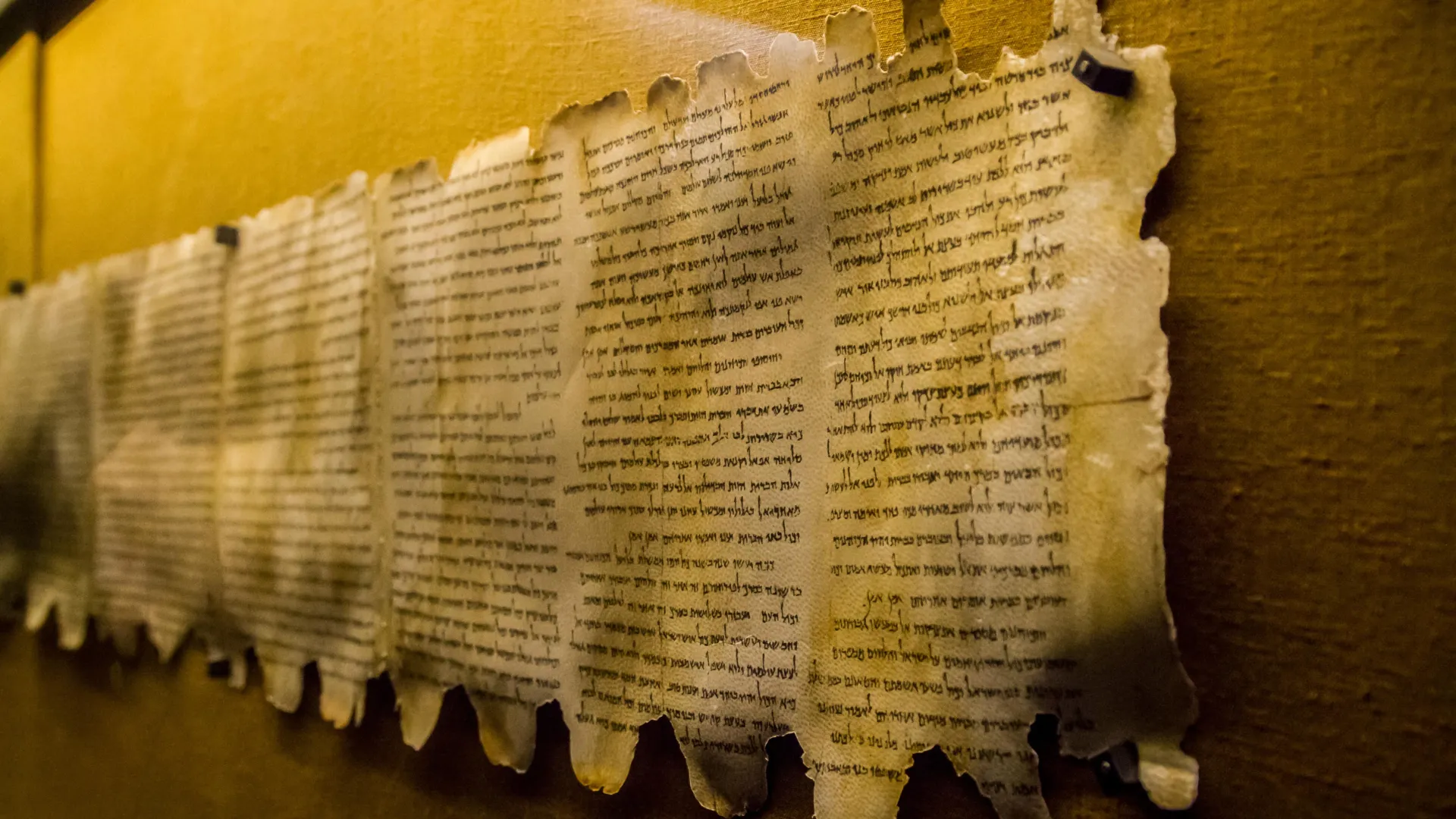
A longstanding mystery surrounding the Dead Sea Scrolls may have a new explanation. Researchers have debated for decades whether the Qumran sect actually followed its unusual 364-day calendar or whether the system existed mainly as a religious and theoretical ideal.
A study from Tel Aviv University argues that both possibilities may be partly correct. According to the proposed reconstruction, the sect likely used the calendar during its early history, when disagreements over religious dates contributed to its separation from the Jerusalem establishment. Later, however, the system may have been abandoned because of a fundamental astronomical problem and changing political relations with the Hasmonean leadership under Alexander Jannaeus.
The research was conducted by Prof. Eshbal Ratzon of the Department of Jewish Philosophy and the Cohn Institute for the History and Philosophy of Science and Ideas at the Entin Faculty of Humanities. The findings were published in the Tarbiz Quarterly for Jewish Studies.
A Calendar Built Around 52 Perfect Weeks
The Qumran calendar differed sharply from the lunisolar calendar that shaped Jewish religious life during the Second Temple period.
Its year contained exactly 364 days, which can be divided evenly by seven. That produced 52 complete weeks every year and ensured that religious festivals always occurred on the same day of the week.
For members of the Qumran sect, this orderly structure was more than a mathematical convenience. They regarded it as reflecting a perfect divine system.
The calendar also carried political and religious significance. Authorities at the Temple in Jerusalem determined important dates using the prevailing calendar, but the Qumran sect rejected the idea that human leaders should have that power. Its members believed the dates had already been established by God during the Creation of the world and therefore should not be altered by people.
The Hidden Problem With 364 Days
The very feature that made the Qumran calendar so elegant also created a serious practical problem.
A 364-day year is about one day and a quarter shorter than the roughly 365-day astronomical year. That discrepancy seems small at first, but it grows steadily over time.
If the system were followed for twenty years without correction, religious festivals would shift by almost four weeks relative to the seasons. After several decades, a festival associated with spring could eventually fall in winter or even autumn.
That would have been especially troublesome for a community whose religious festivals were closely connected with agriculture, harvests, first fruits, and the seasonal cycle.
The problem can be compared with a clock that loses one minute every day. The error is barely noticeable at first, but after enough time passes, the clock no longer reflects the actual time.
Prof. Ratzon’s study suggests that something similar may have happened with the Qumran calendar. Although the system was conceptually elegant and mathematically orderly, it gradually drifted farther away from the natural seasonal cycle it was meant to organize.
Was the Calendar Ever Really Used?
Scholars have offered several explanations for this puzzle over the years.
Some have proposed that the Qumran community periodically inserted additional days or weeks to keep the calendar aligned with the seasons. Others have argued that the 364-day system was never intended for everyday use and functioned only as an idealized religious framework.
Prof. Ratzon argues that the Dead Sea Scrolls do not clearly support either explanation.
Instead, she points to evidence suggesting that the calendar was deeply important to the sect’s religious identity and formed a major part of its disagreement with the religious authorities in Jerusalem.
Nearly twenty scrolls discovered at Qumran address calendars and astronomy, an unusually large number that indicates how significant these subjects were to the community.
The Book of Jubilees, one of the important works preserved in the Qumran library, strongly criticizes the prevailing lunar calendar. It presents the 364-day system as the original calendar given to Moses on Mount Sinai.
A Calendar at the Center of a Religious Conflict
Drawing on this evidence, Prof. Ratzon proposes a different historical scenario.
She argues that the Qumran sect actively followed the 364-day calendar during its formative period in the second century BCE. The dispute over how sacred time should be measured may have intensified the sect’s conflict with religious leaders in Jerusalem and contributed to its isolation.
But as the decades passed, the growing mismatch between the calendar and the seasons would have become increasingly difficult to ignore.
Political circumstances also changed.
Relations between the Qumran sect and the ruling Hasmonean dynasty improved during the reign of Alexander Jannaeus. He supported a halacha similar to that of the sect and opposed the Pharisaic leadership.
According to the study, this changing political environment may have made it easier for the sect to abandon its previously rigid position and adopt the more practical calendar used at the Temple.
The sect’s original calendar did not necessarily disappear from its religious thinking. Instead, it may have survived as an ideal system believed to have been valid during the Creation of the world and potentially destined to return in the End of Days.
A Possible Solution to a Dead Sea Scrolls Mystery
This interpretation could explain why the 364-day calendar occupies such a prominent place in the Qumran writings even though it appears to have vanished from practical historical use.
Prof. Ratzon concludes: “The Qumran calendar has long been regarded as one of the Qumran sect’s defining features, but also as one of the most baffling mysteries of the Dead Sea Scrolls. This study proposes an alternative for the seeming contradiction between a functional calendar and a theoretical one. It is quite possible that the calendar was in fact used for a certain period of time, but then, losing its practical role due to both inherent problems and political changes, became a religious ideal and a symbol of identity. This would explain both its centrality in the Qumran scrolls and its gradual disappearance from historical reality.”
