


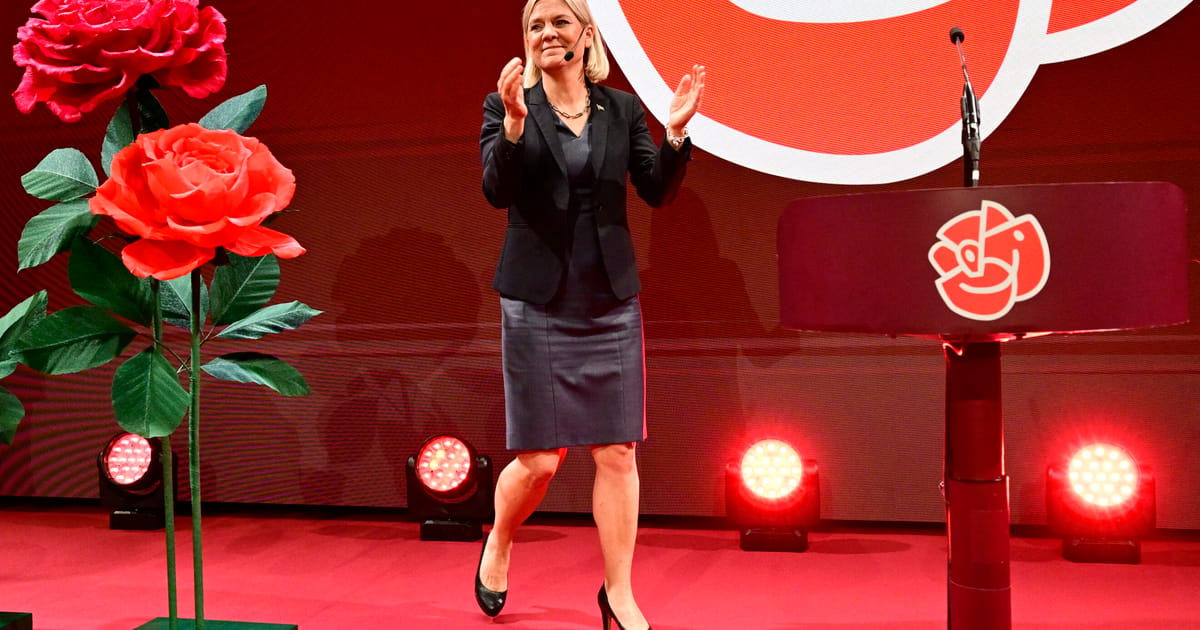
The election is one of the closest in recent Swedish history, and offered voters a sharp choice between electing a new left-wing government or allowing far-right ministers into power for the first time.
Swedish public broadcaster SVT called the election for Andersson’s side on Wednesday night. Her Social Democrats are Sweden’s biggest party and have enjoyed the loose support of three other opposition parties who are seen as her likely coalition partners: The Greens, the Center Party, and the Left Party.
Kristersson’s conservative Moderates have been campaigning alongside the Christian Democrats, the Liberals and the far-right, anti-immigration Sweden Democrats. His allies do not expect him to concede defeat until Andersson wins a vote in parliament to prove she can command a majority. That vote won’t happen before Sept. 29 at the earliest.
Coalition negotiations will begin in earnest once the final outcome is confirmed. In theory any combination of parties can form into a government but in reality, the two-bloc system is likely to hold, meaning Andersson will seek to govern with some or all of her left-leaning partner parties.
Andersson’s Social Democrats stand on 99 seats, with her most natural allies in the Greens on 22. But that still leaves her 54 seats short of a majority and with a potentially difficult task persuading the other two parties in her bloc to cooperate with each other.
The Left Party, which has a historic association with communists, is emboldened by increasing its seat tally at this election to 30. And it has said the price of supporting a government will be gaining ministers inside the new top team.
