


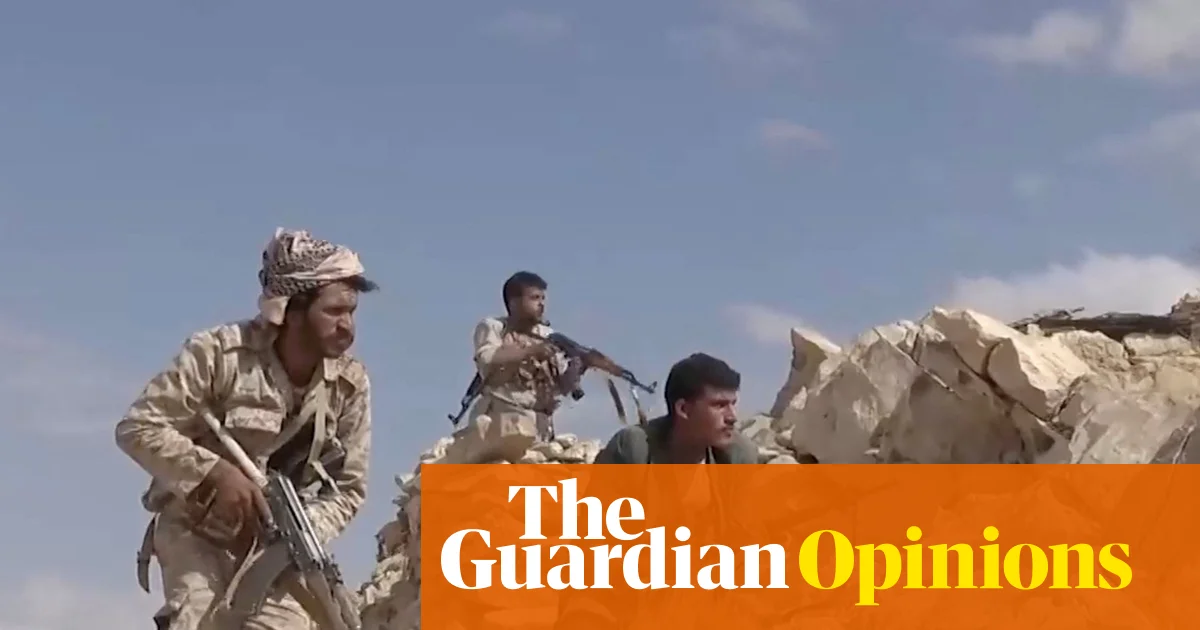
Even in a region beset by turmoil and learning to expect the unexpected, the lightning advance of Yemen’s Houthis along the Red Sea coast has shocked observers. More than 100,000 people have been forced to flee in a country where immiseration and displacement have become routine and half the population depend on humanitarian aid. But outsiders are paying close attention, because by claiming thousands of kilometres in a matter of days, and seizing strategically important islands, the Iran-backed rebels now control the Bab al-Mandab strait – the other major regional energy chokepoint after the Hormuz strait.
The Iran war has forced Saudi Arabia to rely on moving oil via its east-west pipeline to Red Sea ports. Now drone strikes – blamed on an Iran-backed militia in Iraq – have shut the pipeline: on one estimate, a month-long closure could cut global crude supply by 120m barrels. The halt to shipping through the Bab al-Mandab strait could be much more protracted. Taking the oil north is a far slower and more expensive route to Asian markets, and does not preclude attacks by the Houthis, who are also targeting oil facilities.
Saudi Arabia had painfully extracted itself from a war with the Houthis which it recklessly spearheaded – nominally in support of the internationally recognised government – at astounding cost to its own coffers and Yemeni civilians. It apparently hoped that it could calibrate its response to a flight from Iran to Houthi-controlled Sana’a in July, the first in over a decade, sufficiently to save the 2022 truce. But bombing Sana’a airport gave the Houthis the opportunity to escalate while blaming Riyadh.
The Houthis are not mere proxies for Tehran, but their interests are increasingly aligned, thanks to Donald Trump’s unlawful war on Iran. They need to maintain Iranian support and the strait of Hormuz crisis has created a new opportunity to exert economic pressure, and perhaps create a new income stream, via strategic gains along the coast. The forces ranged against them, including the government and southern secessionists, are more fractured than ever. The United Arab Emirates, which has clashed with its former close partner Saudi Arabia, withdrew its troops at the turn of the year.
Saudi strikes alone will not be enough to push the Houthis back. But Mr Trump has rebuffed requests for help. The Houthis have been canny enough to say that they are targeting only the Saudis, though that message reinforces the fact that their leverage could be used more broadly in future. They are also closer than ever to Djibouti, home to US, Chinese and other military bases.
The Saudis face a choice between negotiations with an emboldened enemy now making increasingly maximalist demands – or returning to the kind of full-scale war they previously regretted, with little support this time. Turkey and Pakistan are not rushing to act on the new Mecca defence pact the three countries signed in August.
Yemen’s recent history amply demonstrates the futility of seeking a military solution. Ultimately, its citizens deserve a government not dependent on either Riyadh or Tehran. Outside parties should concentrate on promoting a political process within the country. They should stress that both sides must protect civilians, and support humanitarian efforts. Their priority, however, should be a resolution to the Iran war, without which danger in the region, and broader instability, will only grow.
-
Do you have an opinion on the issues raised in this article? If you would like to submit a response of up to 300 words by email to be considered for publication in our letters section, please click here.
