


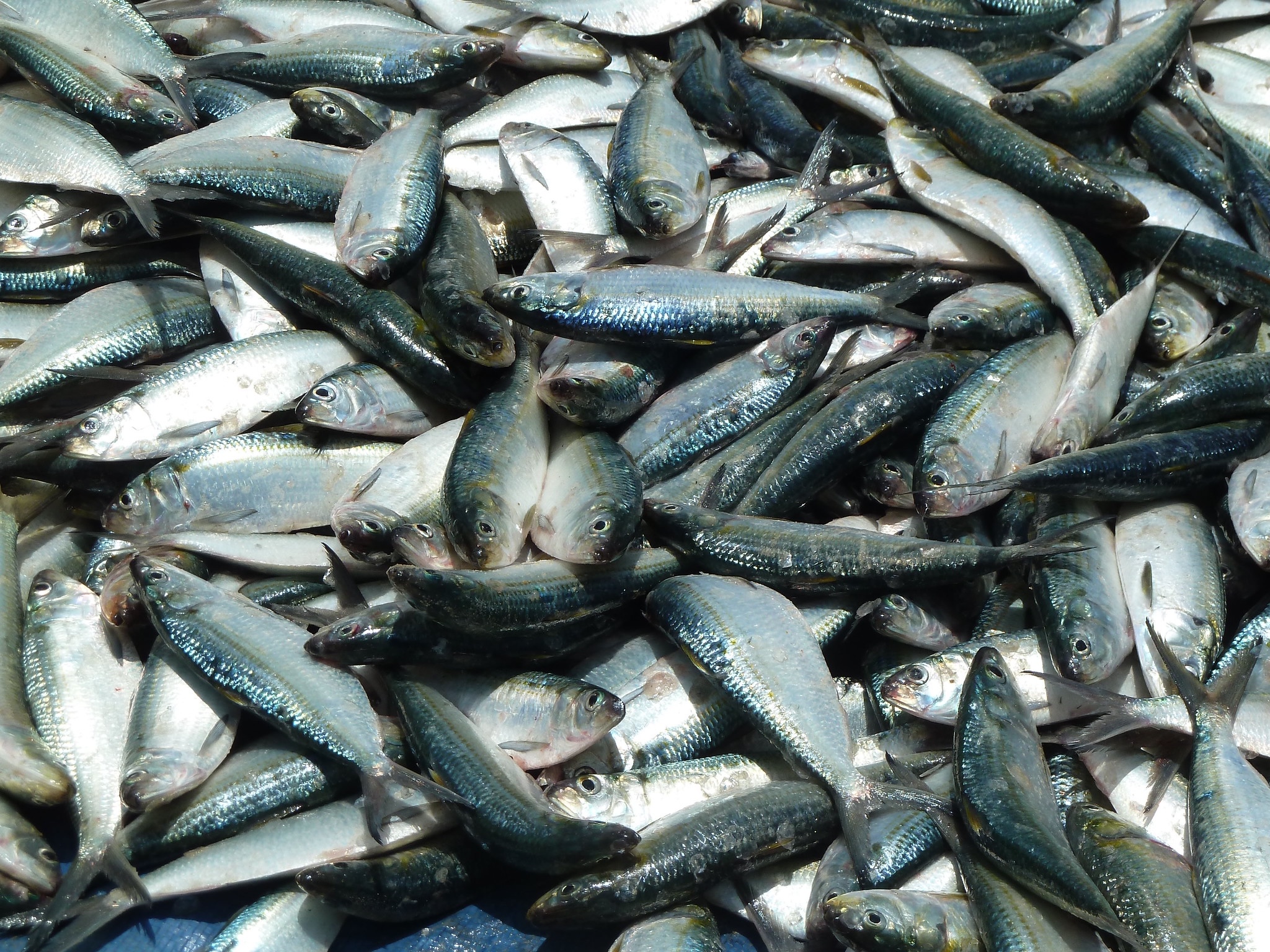
Populations of sardinella, an important protein-rich fish, are in rapid decline in the waters off Guinea-Bissau in West Africa. The decline appears to be related to industrial fishing for two species of sardinella used to make fishmeal, according to a report by investigative news organization OCCRP.
In Guinea-Bissau, fish like the Madeiran sardinella (Sardinella maderensis) and round sardinella (Sardinella aurita) are among the primary ingredients in fishmeal, a processed fish product added to livestock feed for added protein and nutrients.
But sardinella is also a crucial food for people in Guinea-Bissau and other West African nations. A fisheries assessment for the Guinea-Bissau government showed sardinella stocks have been decimated, according to the OCCRP report.
This decline coincided with the arrival two Chinese fishmeal factories and a fleet of Turkish fishing boats off the coast of Guinea-Bissau.
In an email to Mongabay, OCCRP report co-author Josef Skrdlik said the migration patterns of sardinella still aren’t fully understood, so there could be other explanations for the decline. “That said, the assessment, combined with the export data we’ve compiled, points to the Chinese-owned factory ships as the main culprits,” Skrdlik said.
“The export data indicates that the production on the ships — supplied by a Turkish fleet for which sardinella was a key target — took place at a scale consistent with the decline in the sardinella stocks observed between 2013 and 2025,” he added. “In particular, fishmeal exports by a company linked to the floating factories corresponded to at least 350,000 tons of raw fish turned into fishmeal, according to our calculations. For comparison, in 2013, the combined aurita and maderensis stocks were estimated at 270,109 tons.”
In response to the assessment of the sardinella decline, the Guinea-Bissau government banned fishmeal production. Amadú Djaló, director of industrial fishing at the Ministry of Fisheries and Maritime Economy, told OCCRP the fishmeal sector was to blame for the sardinella decline. He said the ban was put in place to protect “fish intended for human consumption, especially for the disadvantaged population.”
In the OCCRP report, local fisherman Tejan Joof said he used to spend a day or two at sea and return with a full catch. “Now we need to spend four or five days at sea,” he said. “Sometimes, even with all these days, you don’t even catch what you want before our supplies run out.”
“Fishmeal production on vessels represents a new type of threat, as production at sea is much harder to oversee and regulate and, until recently, was very poorly mapped and understood,” Skrdlik said. “I hope that our report sheds some light on how damaging these activities can be and on the corporate structures underpinning the production, thus providing information that could help inform potential regulatory responses.”
Banner image: A sardinella catch. Image courtesy of Anne Delaporte via Flickr (CC BY-NC-ND 2.0)
