


Republicans in Congress are continuing their efforts to shield the fossil fuel industry from legal liability for its role in unleashing the heat-trapping gases linked to a cascade of deadly, record-setting disasters across the globe.
On Wednesday, the House Judiciary Committee is scheduled to debate and vote on a bill introduced in April by Rep. Harriet Hageman (R-Wyo.) titled the “Stop Climate Shakedowns Act of 2026.” The sweeping bill aims to “prohibit liability against those engaged in the mining, extraction, production, refinement, transportation, distribution, marketing, manufacture, or sale of energy for damages or injunctive or other relief.”
The bill says that linking fossil fuel emissions to climate-related disasters lacks “scientific credibility”—a claim contradicted by decades of scientific research. If made law, it would give fossil fuel companies broad immunity from lawsuits stemming from these events.
A companion bill introduced by Sen. Ted Cruz (R-Texas) and three fellow Senate Republicans would similarly thwart lawsuits against the industry on the same basis. Both Wyoming and Texas are major fossil fuel-producing states.
“Energy security is national security,” Hageman said in a statement, after introducing the bill. “America’s energy producers should be protected from the dangerous legal precedent that would be set by the retroactive punishment of lawful activity.”
The legislation has a long way to go before becoming law, but the debate comes at a time when the oil industry and its allies in Congress and the Trump administration are aggressively pursuing strategies—some contradictory—to remove guardrails on fossil fuel use and production.
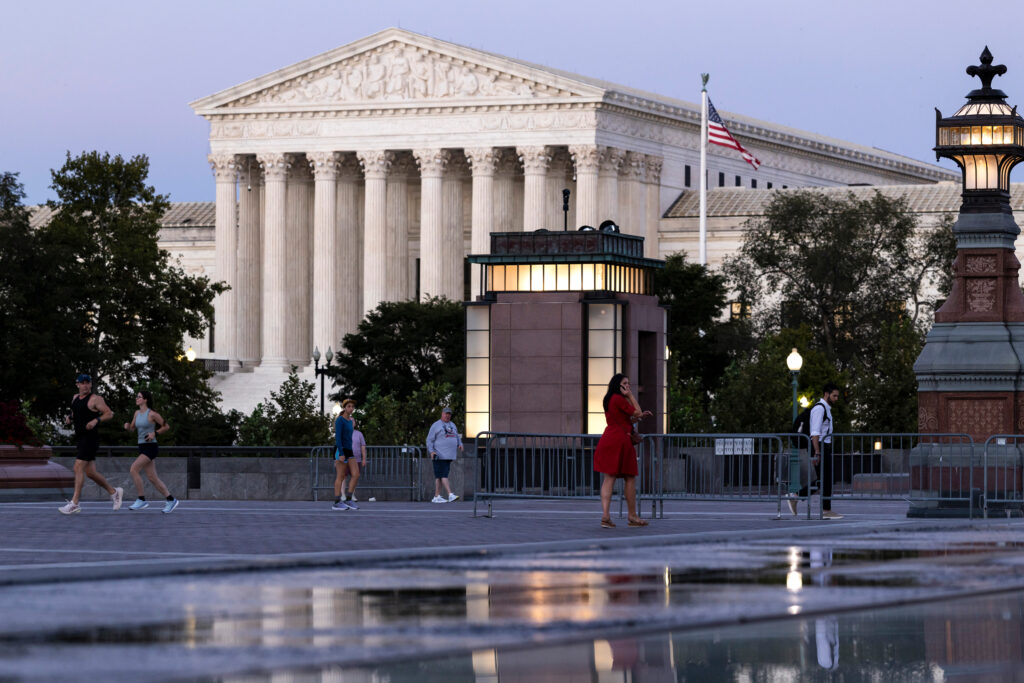
The bills come in response to mounting lawsuits against the fossil fuel industry, filed by cities, states and others, and as the U.S. Supreme Court is three weeks away from hearing an appeal by oil companies that could halt many of them.
“What we are seeing now is an all-out attempt by the fossil fuel industry and its allies to put Big Oil above the law and shield them from having to face accountability in court,” said Mike Meno, the communications director for the Center for Climate Integrity, an advocacy group.
Meno noted that 11 states, Washington, DC., two tribal governments and dozens of cities and counties have sued the oil and gas industries for deceiving the public about their climate impacts.
“More than one in four Americans live in a community that is fighting to put big oil companies on trial to hold them accountable for their climate deception and make them pay for the harm that deception has caused,” Meno added.
One of these legal cases, Suncor Energy v. County Commissioners of Boulder County, is scheduled to be heard by the Supreme Court on Oct. 5. In 2018, Boulder sued ExxonMobil and Suncor for damages to cover the costs of adapting to climate-related extreme heat and wildfires. Last year, the Colorado Supreme Court said the case could move to trial—a decision that Exxon and Suncor are now challenging in the country’s top court. The companies argue that federal rather than state law should cover greenhouse gas emissions.
Wednesday’s markup comes two days after the Trump administration’s latest attempt to gut carbon pollution standards, this time from existing coal and new gas power plants. On Monday, the Environmental Protection Agency finalized a rule to repeal the Biden-era 2024 Carbon Pollution Standards.
The agency also proposed a supplemental rule Monday that would limit its authority to regulate power plant pollution going forward, saying greenhouse gas pollution from these facilities doesn’t pose a threat to public health.
In February, the Trump EPA overturned the landmark finding that greenhouse gas pollution harms public health—the basis for regulating greenhouse gases from transportation, the country’s biggest source of greenhouse gases. At the same time, it repealed ambitious tailpipe emissions standards set by the Biden administration.
It’s unclear whether the bill being marked up Wednesday will pass out of committee. But even if it doesn’t, some of its provisions could end up in other must-pass legislation.
“This is one piece of the bigger picture,” said Maggie Coulter, an attorney at the Center for Biological Diversity’s Climate Law Institute. “The federal government’s backing off regulations. This kind of Big Oil immunity would take the power away from states to go after companies for their deceptive practices.”
In the Suncor case, the industry argues that the federal government has the authority to regulate greenhouse gases after all.
In briefs submitted to the court, the Trump administration makes similar arguments.
“We don’t want states to regulate [greenhouse gas emissions] because the federal government’s got it covered,” Coulter said, noting the government’s position. “But the federal government’s actually rolling everything back and not regulating anything. They’re really talking out of both sides of their mouth.”
About This Story
Perhaps you noticed: This story, like all the news we publish, is free to read. That’s because Inside Climate News is a 501c3 nonprofit organization. We do not charge a subscription fee, lock our news behind a paywall, or clutter our website with ads. We make our news on climate and the environment freely available to you and anyone who wants it.
That’s not all. We also share our news for free with scores of other media organizations around the country. Many of them can’t afford to do environmental journalism of their own. We’ve built bureaus from coast to coast to report local stories, collaborate with local newsrooms and co-publish articles so that this vital work is shared as widely as possible.
Two of us launched ICN in 2007. Six years later we earned a Pulitzer Prize for National Reporting, and now we run the oldest and largest dedicated climate newsroom in the nation. We tell the story in all its complexity. We hold polluters accountable. We expose environmental injustice. We debunk misinformation. We scrutinize solutions and inspire action.
Donations from readers like you fund every aspect of what we do. If you don’t already, will you support our ongoing work, our reporting on the biggest crisis facing our planet, and help us reach even more readers in more places?
Please take a moment to make a tax-deductible donation. Every one of them makes a difference.
Thank you,

