


Plague is often linked to rats, packed medieval cities, and the devastating epidemics that tore through Europe during and after the Middle Ages.
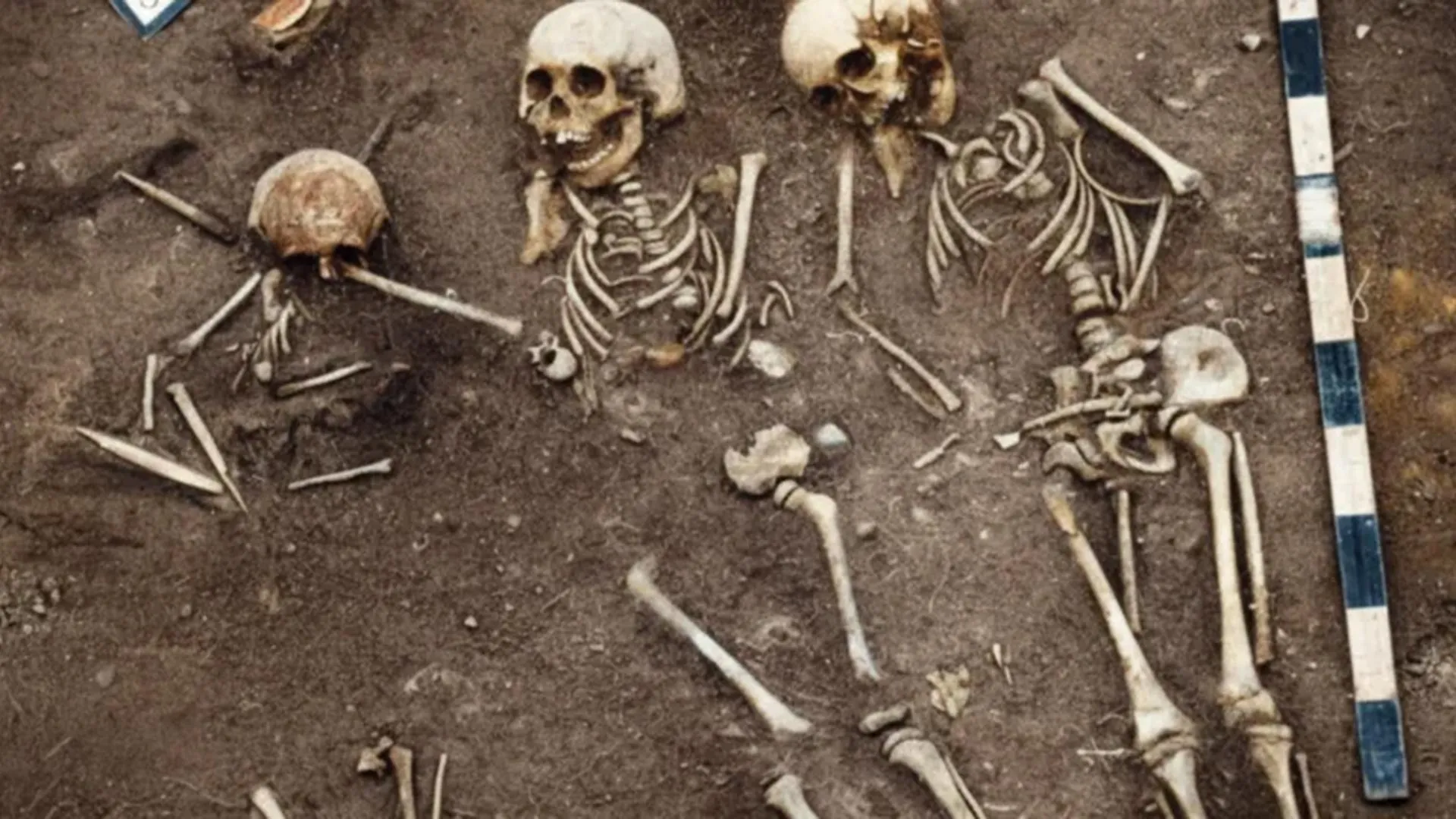
But new research published in Nature suggests the disease was already a deadly threat 5,500 years ago. At that time, it was killing people in small, mobile hunter-gatherer groups – long before farming and urban life created the crowded conditions usually associated with major plague outbreaks.
Ancient DNA Reveals Early Plague
An international research team studied ancient DNA recovered from human remains at four hunter-gatherer burial sites in the Lake Baikal region of East Siberia. By sequencing genetic material preserved in teeth, the scientists were able to reconstruct ancient bacterial genomes and identify previously unknown early forms of plague.
“Whether the earliest forms of plague were mild or virulent has been a matter of debate, but our findings demonstrate that these ancient strains were already highly lethal,” says senior author Eske Willerslev, Professor at the University of Copenhagen and the University of Cambridge.
To understand what happened within these prehistoric communities, the researchers combined genetic evidence with archaeology and radiocarbon dating.
“Based on the plague DNA, the genetic relationships between the victims, the archaeological analysis and the radiocarbon dating, we’ve built a really clear, complete picture of what happened during these outbreaks,” says lead author Ruairidh Macleod, who carried out the work while a PhD student at the University of Cambridge – and is now Research Fellow at the University of Oxford.
The team found DNA from Yersinia pestis – the bacterium that causes plague – in 18 of the 46 people tested. That means nearly 40 percent of the individuals carried evidence of plague, a detection rate even higher than that reported at some medieval plague burial sites.
Early Plague May Have Been Far Deadlier Than Expected
Earlier research had shown that ancient strains of Yersinia pestis were missing some of the genetic features that eventually allowed bubonic plague to spread efficiently through fleas and rodent hosts. Because of that, scientists had often assumed that the earliest versions of the bacterium probably could not trigger severe outbreaks.
The new findings challenge that view.
At the two largest cemeteries, researchers found an unusually large number of children and young teenagers among those who had died. Archaeologists had struggled for decades to explain why so many young people were buried there over such a short period.
“The unusually high number of children and the short timespan was a real puzzle that we’ve been trying to solve since the 1990s. Finding out that plague was the cause is extraordinary, but it makes so much sense,” says archaeologist Andrzej Weber of the University of Alberta, Principal Investigator of the Baikal Archaeology Project.
Radiocarbon dating indicates that many of the deaths happened close together in time. In some cases, siblings appear to have died together, while other graves contain parents and children who may also have died during the same outbreak.
A Possible Clue to the Plague’s Lethality
The ancient plague strains also contained a distinctive superantigen – a toxin-producing genetic factor not seen in historic plague strains. Superantigens can cause the immune system to react with unusual intensity, potentially leading to severe inflammation and making an infection much more dangerous.
“This finding changes our understanding of the earliest plague outbreaks: Even before the bacterium evolved efficient flea-borne transmission, these ancient strains appear to have carried a potent combination of virulence factors that could make infection highly lethal,” says senior author Martin Sikora, Associate Professor at the University of Copenhagen.
Taken together, the evidence suggests that some of the earliest known plague outbreaks may already have been as deadly as later historical epidemics, particularly for children. That appears to have been possible even before the bacterium developed the efficient flea-based transmission associated with later bubonic plague.
Did Plague Spread From Marmots to Humans?
The findings also add support to the theory that plague may have first emerged in Central or North-East Asia before spreading more widely across Eurasia through populations of wild rodents.
Archaeological evidence indicates that the hunter-gatherers living around Lake Baikal had close contact with marmots – large burrowing rodents that still carry plague today. Researchers therefore suspect that some of these prehistoric outbreaks may have begun when the disease passed directly from infected marmots into humans.
If so, plague was already capable of causing deadly outbreaks in small human communities thousands of years before the rise of cities, crowded settlements, and the flea-driven epidemics that would later make the disease infamous.
