


Welcome back to World Brief, where we’re looking at escalating Houthi strikes on Saudi Arabia, a Russian drone narrowly missing a diplomatic train, and a parliamentary election setback for Sweden’s far right.
Insecurity in the Straits
U.S. President Donald Trump claimed on Monday that Iran wants to make a deal to end the war. “The failing Nation of Iran wants to make a deal, quickly and badly,” Trump wrote on Truth Social, adding that the White House is “open” to the concept. But regional powers appear to be on a different page, as Gulf Arab states postponed scheduled negotiations with Tehran the same day following fresh Houthi strikes on Saudi Arabia.
Welcome back to World Brief, where we’re looking at escalating Houthi strikes on Saudi Arabia, a Russian drone narrowly missing a diplomatic train, and a parliamentary election setback for Sweden’s far right.
Insecurity in the Straits
U.S. President Donald Trump claimed on Monday that Iran wants to make a deal to end the war. “The failing Nation of Iran wants to make a deal, quickly and badly,” Trump wrote on Truth Social, adding that the White House is “open” to the concept. But regional powers appear to be on a different page, as Gulf Arab states postponed scheduled negotiations with Tehran the same day following fresh Houthi strikes on Saudi Arabia.
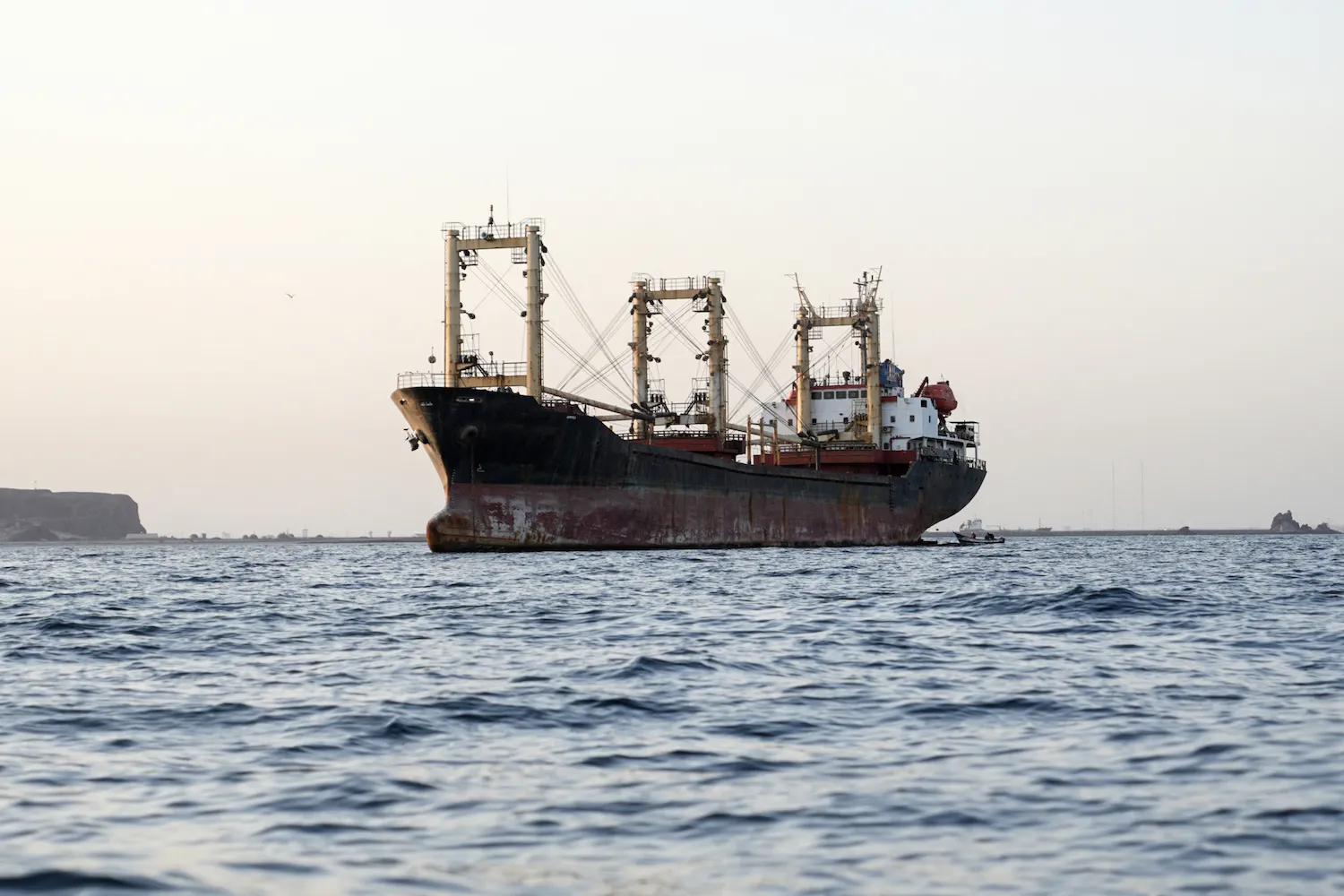
In recent days, Yemen’s Iranian-backed proxy group has launched a lightning offensive against the Saudi-led military coalition that supports Yemen’s internationally recognized government. After first seizing the Yemeni port city of Mokha on Thursday, Houthi forces took control of Perim Island, the islands of Greater and Lesser Hanish, and Zuqar Island as well as the coastal town of Dhubab—solidifying the rebels’ grip on the critical Bab el-Mandeb strait, which connects the Red Sea to the Gulf of Aden and serves as a vital alternative to the Strait of Hormuz.
The Houthis have also doubled down on strikes against Saudi Arabia itself, firing dozens of missiles and drones on Monday at a military airbase in the southern Saudi city of Khamis Mushait. Riyadh issued emergency alerts in response, and oil prices briefly jumped around 4 percent, with Brent crude briefly hitting a nearly four-month high at $108 per barrel.
At the same time, Riyadh continued to struggle on Monday to repair its critical East-West pipeline, which shut down last week following drone strikes that Saudi officials allege were traced to Iran-backed militias in Iraq. The nearly 750-mile-long pipeline has been vital during the Iran war, allowing Saudi Arabia—one of the world’s largest oil exporters—to get its product to market without having to traverse the Strait of Hormuz.
If the pipeline remains shuttered, then Saudi exports will be significantly curtailed, and the country could be forced to cut oil production. That would put additional strain on an already overtaxed global energy market.
The White House tried on Monday to downplay international concerns that the recent slew of fighting has worsened the global energy crisis. “Oil is flowing through the Hormuz Strait,” Trump wrote on Truth Social, while in a separate post, he assured that “Oil will drop like a rock as soon as the Military Conflict with Iran is over.” Trump also suggested this weekend that the United States could “stay and keep the oil” in Iran as part of a similar deal to the one made with Venezuela following Washington’s military operation there early this year.
But the markets remain pessimistic. According to Oman, a meeting with Iranian representatives and other regional officials in Muscat on Monday was postponed “in the interests of consensus.” Although specific reasons were not cited, the cancellation’s timing—coming in tandem with fresh Houthi attacks as well as a deadly strike on an Iranian commercial vessel—suggests that Gulf Arab states remain divided on how to stabilize the region’s maritime lanes.
Today’s Most Read
The World This Week
Tuesday, Sept. 15: Iraqi Prime Minister Ali al-Zaidi visits Germany.
Wednesday, Sept. 16: European Commission President Ursula von der Leyen delivers the annual State of the European Union address.
Rwanda and the Democratic Republic of the Congo begin a seventh, two-day meeting to discuss monitoring their cease-fire.
Thursday, Sept. 17: Canadian Prime Minister Mark Carney addresses the European Parliament.
Italian Prime Minister Giorgia Meloni visits Norway.
European Council President António Costa visits Ireland.
Friday, Sept. 18: The Association of Southeast Asian Nations hosts an economic ministers’ meeting in the Philippines.
Sunday, Sept. 20: Russia holds legislative elections, though early voting began on Friday.
Norwegian Prime Minister Jonas Gahr Store begins a two-day trip to Canada.
What We’re Following
Close call. A Russian drone hit a civilian train in Ukraine near the Polish border on Sunday, narrowly missing a separate train carrying several senior European leaders, including former British Prime Minister Boris Johnson and former Swedish Prime Minister Carl Bildt, who were returning from a security conference in Kyiv. Another train also carrying foreign dignitaries, including former CIA Director David Petraeus, also missed the attack, as it was still parked at a local station.
“It is highly probable that the Russian drone’s intended target was in fact the diplomatic train, which had departed the station earlier than scheduled,” Ukrainian railway operator Ukrzaliznytsia wrote on Telegram. According to Bildt, the train that was hit was evacuated before the drone struck, and no one was hurt. Still, the attack highlighted Russia’s continued strikes on civilian infrastructure.
On Monday, European Union foreign-policy chief Kaja Kallas accused Moscow of trying to “scare” the West to discourage further support for Kyiv.
Yet the White House’s frustration appears to be toward Ukraine rather than Russia. Trump told Ukrainian President Volodymyr Zelensky on Sunday to stop targeting Russian diesel facilities, arguing that such attacks—and not the conflict in the Middle East—are causing fuel shortages that are “hurting the world.” Crude prices have skyrocketed since the United States and Israel launched airstrikes on Iran in late February and Tehran subsequently closed the Strait of Hormuz to global traffic.
FP’s editor in chief, Ravi Agrawal, was on the train with Bildt and the other foreign dignitaries when the incident occurred. FP Insiders can read more about his trip here.
Unexpected setback. Results for Sweden’s parliamentary election continued to trickle in on Monday, but preliminary figures suggest that the center-left opposition may have secured a three-seat lead. This would likely trigger the formation of a new government, ousting Prime Minister Ulf Kristersson’s right-wing bloc, whose recent ties with the far-right Sweden Democrats may have been a step too far for many voters.
Experts initially assumed that Sunday’s election would be an easy right-wing win, as Kristersson’s unified coalition has exposed the fragmented nature of Sweden’s more progressive parties. However, Kristersson’s decision to ally with the Sweden Democrats, whose neo-Nazi and white supremacist roots pushed forward one of Europe’s strictest migration policies to date, seems to have backfired.
Projections show the Sweden Democrats losing 11 seats in parliament, marking its first major setback in 16 years and giving the country’s left-leaning coalition a total of 176 seats. Final results aren’t expected until later this week. But if early results hold true and the left-wing coalition wins a majority, it will then have to try to form a government, a process that experts warn could take weeks.
Prioritizing the Arctic. European leaders convened in Finland on Monday to call for greater European Union engagement in the strategically valuable Arctic. “We agree that the EU needs to step up its action to promote stability, sustainable development and prosperity while safeguarding its interests,” the leaders of Denmark, Estonia, Finland, France, Greece, Germany, Latvia, Lithuania, the Netherlands, Poland, Romania, and Sweden wrote in a joint statement.
The group vowed to strengthen critical sea lane protections; invest in the region’s rich mineral deposits; and address rising security concerns from China, Russia, and the United States. Although the 12 leaders—alongside Costa and Kallas—discussed ways to bolster information-sharing and improve military cooperation, a formal Arctic strategy is unlikely to be released for another few weeks.
The last time the bloc unveiled an Arctic strategy paper was in 2021. Since then, global warming has accelerated ice melts, Washington has threatened to seize control of Greenland, Beijing has expanded commercial shipping into the region, and the Russia-Ukraine war has placed new pressure on the Northern Sea Route.
Odds and Ends
Romania broke the Guinness World Record on Saturday for hosting the “longest table made from recycled materials.” In an effort to raise money for the country’s first pediatric psychiatry hospital, around 20,000 people sat down at a 3.1-mile-long table in Bucharest to address the rising number of adolescents diagnosed with serious mental health disorders, such as substance abuse and depression. Such figures increased from 3,839 children in 2018 to more than 5,600 children in 2024; meanwhile, Romania maintains one of the lowest healthcare budgets in the EU relative to GDP.
