


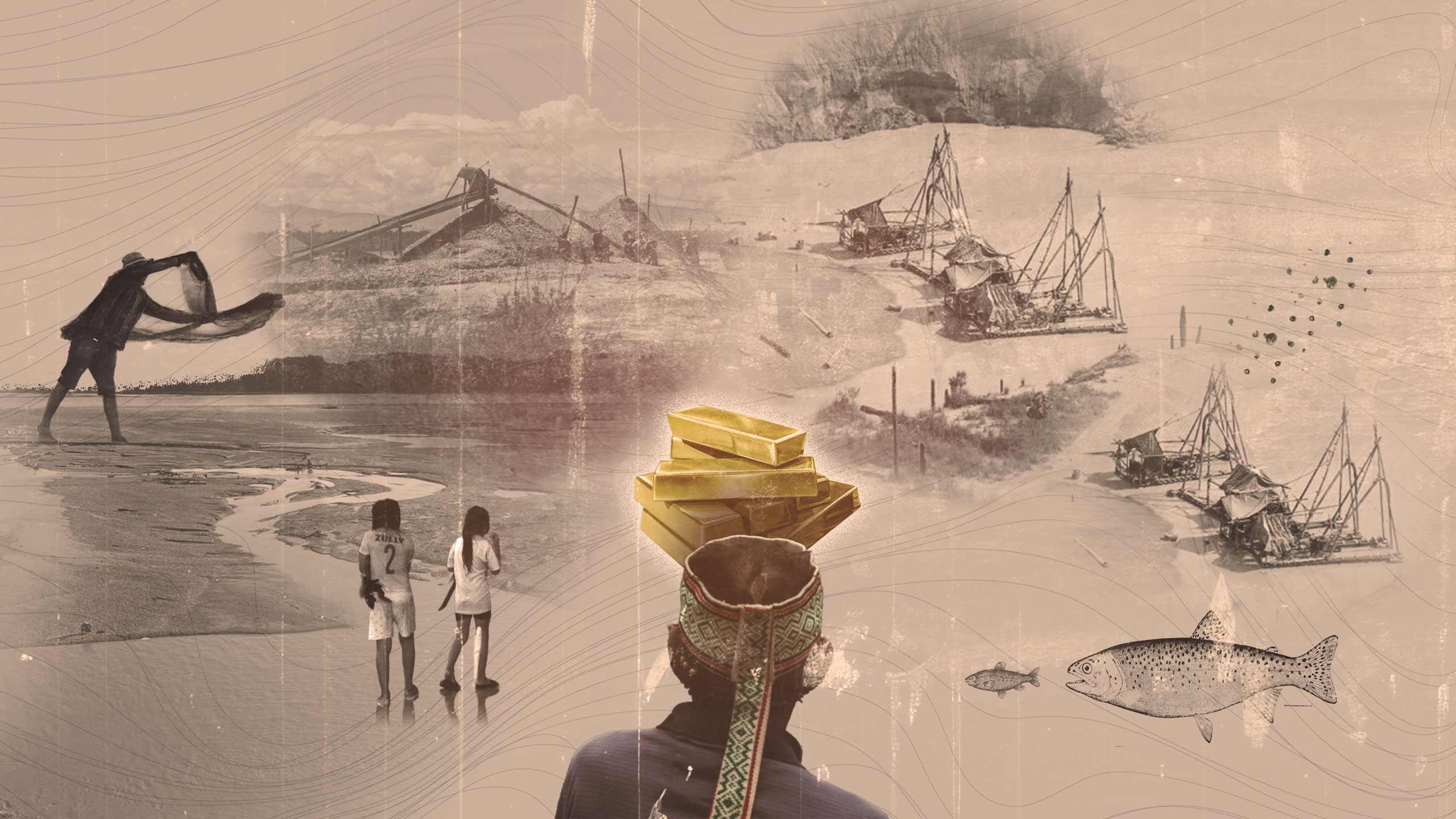
- For the first time, Mongabay Latam analyzed 39 scientific studies published between 1997 and 2024 that confirm that 249 Indigenous and riverside communities in Peru, Bolivia and Brazil have been exposed to mercury contamination.
- Nearly all of them exceed the limits considered safe by the World Health Organization. The stories reported by three journalistic teams in the field reveal the impact on schools, breastfeeding mothers and numerous Indigenous communities.
- Mongabay Latam followed the trail of mercury along 2,763 kilometers of three Amazonian rivers: the Madre de Dios (Peru), Beni (Bolivia) and Madeira (Brazil).
- The analysis by Mongabay Latam reveals that another 702 communities located less than two kilometers from the rivers analyzed are at risk and could be living the same situation, but remain uncertain because no assessments have been carried out.
“I had some tests done on my little daughter Bayolet when she was 5 years old. She had already fainted twice at school and we didn’t know why,” says Gladys Ordoñez, a resident of the Indigenous community of Shintuya, in the Peruvian Amazon.
A few kilometers beyond Shintuya, navigating the Madeira River, lies the Karipuna territory in Brazil. There, Adriano Karipuna, the community leader, tells a similar story. “[The children] are born with problems, with heart condition … There are young people and teenagers who already have trouble breathing.”
The same scenario is repeated in the Bolivian Amazon. “We are tired of asking for medical assistance,” says Limberth Miquere, the corregidor (local Indigenous community leader) of the community of Buena Vista.

These voices of desperation come from men and women living along the Madeira (Brazil), Beni (Bolivia) and Madre de Dios (Peru) rivers in the Amazon, testimonies inevitably marked by one word: Mercury. “I don’t know if my husband is sick or if I am. Who can explain that to us?” asks Iris Yante, a mother of three from the Peruvian Amazon.
Mercury is a heavy metal used in illegal gold mining, a violent, highly profitable illicit activity that is currently booming. In the Madre de Dios River basin, over a 27-year period (1997–2024), mining destroyed more than 95,000 hectares (234,750 acres) of forest, an area almost as large as the entire urban area of Lima, according to the MapBiomas satellite analysis platform. A similar situation is occurring in the Beni and Madeira basins, where the devastated area exceeds 9,000 and 28,000 hectares (22,000 and 54,000 acres), respectively. And the activity is expanding daily, driven by the rising price of an ounce of gold, which surpassed $5,000 in January 2026.
As gold increases in value on the international market, violence and the deadly impact of mercury are growing in the Amazon, where forest loss is only one of the serious consequences of this activity. The impact on the health of thousands of people is undoubtedly the most harmful effect. Mercury is used to separate gold from sediment and is dumped into rivers, irreversibly contaminating them. It contaminates the fish eaten by Indigenous communities, the water they drink and the areas where they bathe. The effects on health are devastating, ranging from memory loss and headaches to damage to the central nervous system.
The testimonies of Gladys, Iris, Adriano and Limberth, gathered in communities along the three Amazonian rivers by Mongabay Latam, show the helplessness of people living with ailments they cannot explain.
How widespread is mercury contamination in the Amazon? How many communities and residents have become victims of its impact? Despite the severity of the situation, no regional studies have been conducted to fully understand the scale of this enormous environmental and public health problem. What does exist are scattered studies conducted in some communities in the Amazon basin of these three countries.
To put a number on this problem and close this information gap, Mongabay Latam reviewed 39 scientific studies published between 1997 and 2024, which include measurements of mercury levels in people living along 2,763 kilometers (1,717 miles) of the Madeira, Beni and Madre de Dios rivers, as well as in the fish consumed there. This work involved processing different datasets and methodologies, as well as standardizing measurements to clearly establish the impact and obtain a comprehensive picture of the situation.
The result is a database containing 7,725 mercury samples from people and 5,939 fish tissue samples extracted from these publications, which involved at least 130 scientists. This analysis — conducted with the support and guidance of the Amazonian Scientific Innovation Center (CINCIA), affiliated with Wake Forest University in the U.S. — traces the path of contamination along three emblematic Amazonian rivers that are hydrologically connected and that carry mercury into the lives of hundreds of families.
The data analyzed is clear: At least 249 communities have been exposed to mercury over the past two decades. Of these, 220 — 88% — have levels of the heavy metal far above those considered safe by the World Health Organization (WHO).
But this is not the worst-case scenario. Mercury has spread through the currents of each river. In doing so, it has contaminated not only the 249 communities that have been sampled, but also those located downstream.
Mongabay Latam’s analysis has established that around 702 communities living along the banks of these three rivers, within a maximum distance of two kilometers (about 1 mile), and located between active illegal mining sites and contaminated communities, are at risk. In total, 951 communities have alarming mercury levels or live in a state of vulnerability. For years, thousands of people have been living alongside a silent threat, with little or no support to protect them from its effects.
“Mercury contamination is a silent genocide against Indigenous peoples,” says Eusebio Ríos Iviche, vice president of the Native Federation of the Madre de Dios River (Fenamad), a regional organization in Peru representing the Indigenous peoples of that basin.
Mongabay Latam visited 15 of the territories most affected by high mercury levels: Seven in Peru, five in Bolivia and three in Brazil. The stories include pregnant women and babies with extremely high mercury levels; school-age children with learning problems; and residents who depend on fishing or artisanal mining to survive, while, paradoxically, poisoning themselves by eating and working.
“We are all affected by mercury. And we are this way because we eat fish. But if we stop fishing, we could starve to death; we wouldn’t have money for anything,” says Dora Quispe, a resident of Puerto Motor, a small Indigenous community of 28 families in Bolivia’s Beni department, in the Amazon.
“Indigenous peoples have nothing to do with mining, but we are being contaminated and we are going to be wiped out by this metal,” Rios adds.

The victims of mercury
In Bolivia, a fisherman kneeling on a beach along the Beni River waits for a fish to bite the hook of his rudimentary fishing rod. This Esse Ejja resident is named Gilberto Vaca and follows the same routine every day, even though he knows that the fish he catches are contaminated with mercury. He has no other alternative, he says; he has to bring food home to his family.
Vaca lives in the community of Puerto Yumani, one of the Indigenous territories that stands out in the database for its high mercury levels. The WHO considers 2 micrograms of mercury per gram of hair to be the threshold above which health risks may arise. In Yumani, mercury levels are nearly four times higher than this threshold. This situation is repeated and worsens in several of the communities analyzed.
On the Madre de Dios River, for example, there are samples from residents that exceed the level considered safe by more than 20 times (44 μg/g), while in the Beni, there are cases exceeding the value tenfold (32 μg/g). Farther downstream, in the Madeira, the situation is extreme. Residents have reported mercury levels more than 75 times above the safe threshold (150 μg/g).

“These mercury levels are used to calculate risk. And that risk also refers to the potential for experiencing a negative health effect, such as symptoms of memory loss, headaches, effects on the central nervous system or cardiovascular system,” explains Claudia Vega, coordinator of CINCIA’s Mercury Program, who has experience conducting these assessments in Amazonian rivers. Vega also served as an advisor to this journalistic project.
The fear is that the damage may be irreversible, says Mariano Castro, Peru’s former vice minister of the environment and director of the Resilient and Just Amazon Initiative – GRADE. “It is damage to life, development and well-being that can be prevented. But, in severe cases, it is also irreversible,” he said. “The causes are right there: They are anthropogenic. Mercury may occur naturally, but levels above those recommended by the WHO are anthropogenic.” Castro represented Peru in the signing of the Minamata Convention, an international treaty that Peru joined in October 2013, more than 12 years ago, to prevent mercury contamination from spreading.
Unfortunately, the response from each of the three governments involved in this investigation — Bolivia, Brazil and Peru — has been insufficient across the three basins, as it has focused primarily on police operations, confiscated mercury and destroyed dredges that return to operation a few days later, experts say. Health has not been a priority.
There are victims who have been exposed to extremely high levels of this metal for more than 27 years, despite not having mining operations in their communities. As Óscar Campanini, director of the Center for Documentation and Information of Bolivia (CEDIB), explains, “many Indigenous peoples do not have mining in their territories, but the impacts documented in different studies are due to mining carried out hundreds of kilometers away.”
Antonio Vilca, corregidor of the Indigenous community of Carmen Soledad in Bolivia, says the waters of the Beni River carry mercury and other waste from mining camps downstream. “We see containers of El Español-brand mercury. We also see dirty water, like vehicle oil. We are practically the miners’ garbage dump; everything ends up here,” Vilca says.
Mercury can travel for kilometers regardless of national borders, especially when it involves interconnected river basins. Pollution generated in one country, such as Peru or Bolivia, is carried by currents until it affects other areas such as Brazil, and can even go farther.
“It is not only transported by the river; it also undergoes global transport and can move through the atmosphere all the way to the poles. That is why we need to look at it comprehensively, through its interconnections,” Vega explains.
A technical report by CINCIA and the Foundation for Conservation and Sustainable Development (FCDS), published in June 2025, illustrates some of these risks. In the community of Maizal, in the Madre de Dios basin, the study found mercury levels up to 12 times higher than recommended limits in people, with effects on memory, executive function and kidney and cardiovascular health. It also found that the Madre de Dios River and its tributaries — especially the Inambari, in areas such as La Pampa — carry up to 12 tons of mercury each year.
“We know that in our communities it is already affecting pregnant women, children in their growth and development. Mercury is already affecting future generations of Indigenous peoples. It is harm that humanity is leaving to Indigenous peoples,” Ríos says.

Poison on the plate
For more than 50 years, tucunaré and pintado were served at the table of Raimundo Nonato dos Santos and his wife, Maria Rogelina Soares da Silva. They caught the fish in Lake Puruzinho, one of the water sources closest to the riverside community of the same name in the Brazilian Amazon. That was the family’s routine until a series of scientific studies revealed that the fish, their main source of protein, contained high levels of mercury.
“It changed almost everything completely,” Soares da Silva says. “It’s as if we had been living in a kind of innocence, not knowing anything about what was happening,” adds her husband, who has participated in studies by the Federal University of Rondônia for at least 26 years. This institution has reported on more than one occasion that mercury concentrations among residents of the Lago Puruzinho community are some of the highest in the Madeira River basin, exceeding the level considered safe by the WHO by more than 12 times.

The situation is the same in the Karipuna territory in Rondônia, Brazil. Adriano Karipuna, the community’s Indigenous leader, explains that the shortage of fish must be added to the problem of contamination. “Ten years ago, in half an hour you could catch, without exaggerating, up to 500 kg of fish. But nowadays, if we catch four fish in six hours, that’s a lot. And the fish are already contaminated,” he says.
Upstream, in Puerto Motor in the Bolivian Amazon, corregidora Edith Guzmán Marupa sums up the situation in one sentence: “We know we have mercury in our bodies, but we can’t do anything.”
The 5,939 fish tissue samples collected between 1997 and 2024 and included in this investigation’s database show that the three rivers are home to several species with high concentrations of mercury: At least 19 in Brazil, 15 in Bolivia and two in Peru. Fish are central to this story, because they are the foundation of the diet of Indigenous and riverside communities. There is a direct relationship between the high mercury levels found in residents and the consumption of fish that accumulates the heavy metal in its tissues. And this is due to two phenomena: bioaccumulation and biomagnification.

Mercury released by mining can be transformed into methylmercury, its most toxic form, once it enters rivers. Plankton absorbs the metal, which is then passed up the food chain as small fish feed on plankton and larger fish eat those smaller fish. Every time one fish feeds on another that is contaminated, mercury becomes increasingly concentrated in its tissues (bioaccumulation) and its concentration increases from one level of the food chain to the next (biomagnification). As a result, predatory fish tend to have the highest mercury levels, posing a greater risk to the communities that rely on them for food.
Eduardo Bessa, a biology professor at the University of Brasília (UnB), explains that the part of the fish consumed most is the muscle, which, unfortunately, is also one of the most contaminated tissues. “And we don’t eat just one fish throughout our lives; we eat them several times,” he says. Much more so when it comes to an Amazonian community.
Research conducted since the 1990s had already warned of high concentrations of mercury in Amazonian fish and riverside populations. And the situation has not changed nearly 30 years later. As Vega of CINCIA explains, mining “has not stopped; on the contrary, it has accelerated, with expansion and contamination on a massive scale.” She adds: “It is not necessarily the communities closest to mining that have the highest mercury levels. Rather, it is those that are more isolated and depend primarily on fish protein.” Those farther away, Vega says, do not have access to another source of protein.
In places such as Puerto Salinas, Bolivia, where members of the Esse Ejja Indigenous people live, catfish were found to have some of the highest mercury levels. Other extreme values were found in fish from Puerto Maldonado (Peru), Rurrenabaque (Bolivia) and Porto Velho (Brazil).

The communities left behind
“We are tired of asking for medical assistance; we have to travel very far to receive care. We go to San Buenaventura, and they don’t know whether our pain is caused by eating contaminated fish, but it obviously is,” says Limberth Miquere, corregidor of Buena Vista, a Tacana Indigenous community located along the Beni River.
The municipal health official in San Buenaventura, Mario Chacón, told Mongabay Latam that they do not know how to address the problem. “We don’t know of a treatment for these cases; we can only provide generic medications” he says. The doctor acknowledges that the more fish they continue to eat, the higher the levels of contamination in the community members’ bodies will become. “We eat fish only occasionally; they eat it every day. It affects them.”
This problem extends across all three basins. Eusebio Ríos of Fenamad denounces that “the state agencies responsible for public health do not have the budget to address mercury contamination, and the communities lack infrastructure and specialized technical and medical personnel. They don’t even have medicines. We are practically abandoned.”

According to the Peruvian Ministry of Economy’s Economic Transparency portal, in 2026 the government allocated 477,455 soles (about US$142,523) to the Ministry of Health and 1,121,445 soles (around US$334,000) to the National Institute of Health for screening and treating patients affected by heavy metals, even though the government itself estimates that more than 10 million people are victims of this type of contamination.
Meanwhile, according to the data analyzed for this investigation, mercury levels among residents living along these riverbanks are alarmingly high.
In the Brazilian Amazon, the town of São Sebastião do Tapurú, on the banks of the Madeira River, has the highest values, with an average of 62.76 mg/kg and a maximum of 150 mg/kg. In Bolivia, the town of Santa Rosita stands out with 19.20 mg/kg, while in Peru, the Indigenous community of Infierno has 5 mg/kg. In all three cases, exposure is above the safe threshold and endangers the health of residents who depend on the river for food.


Tracing the scale of the problem
State indifference is not limited to the lack of healthcare for those experiencing problems associated with mercury contamination. None of the three countries is investigating the scale of this threat. Scientific measurements have so far covered only a very small population, but those samples offer a glimpse of reality.
Mongabay Latam sought to address this lack of information through two strategies. First, the team georeferenced each of the 249 communities sampled by scientists that were exposed to mercury. Mongabay Latam chose to work with hair samples rather than urine or blood samples because, in addition to being a measurement recognized by the WHO for assessing the presence of methylmercury, which is common in communities with higher fish consumption — hair samples make it possible to identify exposure over a prolonged period.
All the communities analyzed are located along the banks of the Madre de Dios, Beni, and Madeira rivers. It took the reporting team several months to locate the affected communities, since most of the studies provided only their names, not coordinates. Mongabay Latam gathered official geographic information and, in doing so, produced a first map showing the documented extent of mercury exposure.
This is a first effort to systematize the risk of mercury exposure using information contained in 39 scientific studies that employ different units of measurement. To build the database, the team had to use statistical formulas and models that allowed us to standardize the results reported in different publications. This process was carried out in coordination with and under the guidance of CINCIA’s scientific team.
Mongabay Latam then incorporated active mining sites across the three river basins into the analysis. Using information from the Instituto del Bien Común in Peru, the Fundación Amigos de la Naturaleza in Bolivia, and Ibama in Brazil, the team located the sources of immediate contamination affecting populations that tested positive for mercury.


Another goal of this investigation was to identify populations at risk that have not yet been assessed. As experts have explained, mercury contamination flows through rivers and extends far beyond active mining sites. This was evident from the scientific studies. But what about the communities located along these rivers, between those where contamination had already been documented?
“The Madre de Dios, Beni and Madeira rivers are hydrologically connected, so mercury released or mobilized in one part of the system can contribute to downstream contamination … This creates a plausible cross-border risk that justifies analysis at the basin scale,” explains Luis Fernández, a professor and researcher in biology at Wake Forest University in the U.S. and an adviser on this project.
Mongabay Latam counted all the communities located between illegal mining sites and those affected by the heavy metal along more than 2,700 km (1,677 mi). For this analysis, the team compiled all communities located within a maximum of 2 km (1.24 mi) from the riverbank, the distance separating the mercury-contaminated communities from the rivers.
“A two-kilometer buffer or distance is reasonable as an exploratory spatial-selection criterion because it is transparent and, in general terms, consistent with the distances between the rivers and many of the communities included in the sample,” explains Fernández. The expert, who is also a co-founder of CINCIA, adds that exposure to the heavy metal can even “occur beyond two kilometers through fishing activity, mobility, seasonal hydrology, and the movement of fish through food trade and exchange networks.”
This is how the team reconstructed a dramatic map. Mongabay Latam identified at least 702 communities at risk that are located between illegal mining sites and residents with high mercury levels.
“The geographic analysis identifies communities located in settings where exposure is plausible … I would describe them as ‘potentially at risk’ or as ‘within a mercury risk detection zone,’” Fernández explains.


The lists of all the communities at risk were sent to authorities in each country to confirm whether they had been assessed. In Peru, the National Center for Occupational Health and Environmental Protection for Health (CENSOPAS) confirmed that it had conducted screenings in six communities in Madre de Dios in 2024 and 2025 — Amaracayre, Tres Islas, Boca Unión, Sarayacu, Unión Progreso and Puerto Carlos. Authorities found that one-third of the people tested had mercury levels above the permitted limits. They also said they do not have medical follow-up records for those affected, nor a list of facilities authorized to provide them with care.
In Brazil, the Ministry of Health reported that over the past 20 years, 30 cases of mercury poisoning have been recorded in Amazonas state and 12 in Rondônia, without specifying the communities involved. Meanwhile, Bolivian authorities had not responded by the time of publication.
A future at risk for indigenous generations
“The situation is extremely serious,” Ríos says. “The communities [in Madre de Dios] have a high degree of mercury contamination, and this has especially affected pregnant women and children. Their nervous systems, their brains, their growth, their ability to learn and study.”
In Brazil, Adriano Karipuna, leader of the Karipuna Indigenous territory, says that health problems have increased in his community in recent years, including children being born with motor impairments. “They are born with problems, with heart conditions, with huge heads,” he says. “Within our ancestry, these things did not happen 50, 30 or 20 years ago.”
Since 1997, the scientific studies analyzed for this investigation have documented that mercury can pass from mothers to their children through the placenta, umbilical cord and breastfeeding. And the levels are not low.
In four studies analyzed, comprising 850 samples taken from mothers and pregnant women across the three Amazonian basins, the average mercury level in hair exceeded the WHO threshold (2 mg/kg) by more than tenfold, with peaks of up to 32.4 mg/kg.


In Madre de Dios, for example, samples taken from 198 mother-child pairs between 2017 and 2018 showed the presence of mercury in the umbilical cord. And 29% of the mothers tested exceeded the mercury levels recommended by the WHO. In Bolivia, a 2023 study sampled 119 women of childbearing age from communities near the Beni, Mamoré and Madre de Dios basins: nine out of 10 had concentrations above safe limits.
The situation among minors is even more severe. A study conducted among children aged 5 to 12 living around the Amarakaeri Communal Reserve in Madre de Dios found that acute exposure to the heavy metal affected the cognitive, motor and visual development of several of them. The analysis, led by researchers from Duke University, included hair samples from a total of 164 children, 32.9% of whom exceeded the WHO’s safe threshold for mercury exposure.
“I think the most important finding is that some communities have such high exposure to mercury that children and adults experience significant cognitive deficits, which can create long-term and intergenerational disadvantages,” says William Pan, a professor at Duke University in the U.S. who led the research. “Many of these communities with high exposure do not choose to participate in mining and do not benefit from its activities. This is the worst form of environmental injustice.”

The testimonies confirm that the problem affects all three river basins. “Pregnant women have had children with health problems,” says Ignacio Julio Monasterio, corregidor of Eyiyoquibo, an Ese Ejja Indigenous community on the banks of the Beni River.
Another problem compounds this situation: “Anemia and child malnutrition affect nearly 50% of the child population. And if you add mercury contamination to that, it is a critical situation that affects well-being and the future,” says Castro, Peru’s former vice minister of the environment.
The State and its failed plans
In the 1950s, hundreds of residents of Minamata, a small fishing town in Japan, began developing tremors, involuntary movements, loss of coordination, and difficulties speaking or hearing. Women who appeared healthy gave birth to children with severe neurological impairments. For years, a chemical company had discharged mercury compounds into the bay, contaminating the fish and shellfish people consumed. The tragedy, which left nearly 3,000 victims officially certified by the Japanese government, became a global symbol of the risks this toxic metal poses to human health and ecosystems. It also revealed that its effects can persist across generations.
Decades later, the lessons of that catastrophe — and the conclusion that “mercury and its compounds have significant adverse effects globally that justify the adoption of international measures” — led to the adoption of the Minamata Convention in October 2013. The global, legally binding treaty established strict regulations on the use, trade and production of mercury, with the aim of progressively eliminating the metal. The convention entered into force in August 2017.
Peru, Bolivia and Brazil have been parties to the Minamata Convention for more than 10 years. Yet, despite extensive scientific evidence and decades of warnings from communities on the ground, experts consulted for this investigation say that efforts to address mercury contamination in the three countries remain insufficient.
As José Alfonso Apesteguia, an expert in toxicology and chemistry, explains, “the Peruvian state is lagging behind in its diagnostic methods. Priority is given to measuring total mercury in urine, which only reflects occupational exposure or exposure through inhalation of vapors, but not methylmercury associated with fish consumption. Only then could we properly assess the real risk faced by Amazonian communities.”
Castro confirms this assessment based on his experience in government: “Peru is one of the few countries that uses urine, rather than hair, as the standard, which is incorrect.”

“Furthermore,” adds Ríos of Fenamad, “it is the state itself that has allowed mining concessions to proliferate across Indigenous territories. Even if Indigenous peoples do not want to get involved in mining, there are overlapping concessions and communities where mining is carried out within their territories.” The most regrettable thing, he insists, is that the impacts of mining are an issue that authorities “do not want to see.” “They focus on the economic side, on formalizing mining … but not on health. And that is very concerning.”
In Peru, Ministerial Resolution 1026-2020-MINSA establishes protocols for caring for people exposed to heavy metals, but does not mention any specialized medical centers. Those affected must be referred to Level II and Level III hospitals, which account for only 3% of all health facilities.
For former Vice Minister Castro, the central problem is that the health system is not prepared to respond. “Care for mercury or lead exposure requires a level of specialization in resources and capacities that is not available at the regional level. Not even for lead. And because an intervention is required in the territories, capacity must be strengthened not only at the national level, but also within the affected territories,” he says.
Bolivia remains the world’s largest importer of mercury, according to official statistics, and the metal continues to be used in alluvial mining. However, to date, there is still no concrete action plan to phase out its use. In mid-2025, the then Ministry of Environment and Water told Mongabay Latam that the National Action Plan (NAP) to reduce the use of mercury in gold mining — developed since 2023 by the Bolivian government and the United Nations Industrial Development Organization (UNIDO) — was being implemented.
In fact, the current vice minister of Environment, Biodiversity, Climate Change, and Forest Management and Development Jorge Ávila said that the plan to reduce the use of mercury in gold mining would be adjusted by May 2026 at the latest and that the Minamata Convention would be fully implemented. However, by the time this investigation was completed, that measure had not been implemented.
“We know we are contaminated with mercury, but what can we do? There is no money because of this crisis; we cannot farm because our plots have been affected by flooding. The soil is like it’s rotten,” says Grover Yumani, corregidor of the Puerto Yumani community.


In Brazil, where communities along the Madeira River have the highest hair-mercury levels in the entire database, 12 tons of mercury were officially imported in 2024. Although a new Ibama regulation, published in December of that same year, seeks to reduce that figure to zero as of Dec. 31, 2025, the government itself acknowledges that “mercury still reaches illegal garimpos through a clandestine market involving shell companies, falsified documents and smuggling.”
Furthermore, as Mongabay Latam found in the states of Amazonas and Rondônia, the Brazilian government has failed to implement restrictions on mercury use, and no date has been set for doing so, according to statements by the ministries involved in the Minamata Convention obtained through freedom-of-information requests.
“Brazil does not have a [current] sectoral plan for implementing the Minamata Convention on Mercury,” the Ministry of Environment and Climate Change said. It also added that it does not have studies, reports or analyses on mercury contamination in the Madeira, and that there are currently no measures or budget allocated to combat that contamination.
Mongabay Latam also confirmed that at least seven of the studies analyzed for this investigation had been shared with the relevant authorities in each country: Two in Peru, three in Bolivia and two in Brazil. Only one, in Peru, resulted in concrete action.
Castro proposes a place to start. “There needs to be an integrated, multisectoral presence in areas where reports of people contaminated with mercury exist. If an analysis conducted by a private entity, NGO or university needs to be verified, it should be done. And once those findings are confirmed, a multisectoral intervention should be planned in the territories,” he says. To date, however, none of the three countries has been willing to implement such a roadmap.
As mining advances along the Madre de Dios, Beni and Madeira rivers, residents continue to wait for answers. “We do not have a deep understanding of the contamination,” says Johnny Nayori, president of the native community of Puerto Luz, in Madre de Dios.
“I think the state should inform us and conduct new studies. Not only on the children, but also on the parents, because mining in the surrounding areas has advanced so much, and we don’t know what to do,” insists Gladys Ordoñez, a resident of Shintuya.
This story was reported by Mongabay Latam and first published here on Aug. 24, 2026.
This special report was coordinated by Mongabay Latam. General editors: Alexa Vélez and María Isabel Torres. Editors: Alexa Vélez, Antonio Paz Cardona and Alexandre de Santi. Reporters: Karla Mendes, Iván Paredes, Elizabeth Salazar, Daniela Quintero Díaz, Vanessa Romo and Alexa Vélez. Investigation: Vanessa Romo, Daniela Quintero and Alexa Vélez. Research assistance: Cristina Fernández Aguilar and Lourdes Fernández. Data and geospatial analysis: Gabriela Quevedo, Cristian Salas and Vanessa Romo. Scientific advisory: Luis E. Fernández and Claudia M. Vega, from the Amazon Scientific Innovation Center (CINCIA), the Sabin Center for Environment and Sustainability, and Wake Forest University. Coordination: Vanessa Romo Espinoza and Daniela Quintero Díaz. Translations: Lucas Berti, Karla Mendes and Roberto Cataldo. Visualizations: Eduardo Motta. Cover illustration: Alma Ríos. Graphic design and video: Richard Romero and Carlos Hernández. Audience engagement and social media: María Isabel Torres, Carlos Hernández and Dalia Medina Albarracín.
Citations:
Pan, W. K., Weinhouse, C., Ortiz, E. J., Berky, A. J., Fixsen, E., Mallipudi, A., … Miranda, J. J. (2021). CoNaMad—Cohorte de Nacimiento de Madre de Dios/Madre de Dios birth cohort to study effects of in-utero trace metals exposure in the Southern Peruvian Amazon. Annals of Global Health, 87(1), 69-69. doi:10.5334/aogh.3152
Reuben, A., Frischtak, H., Berky, A., Ortiz, E. J., Morales, A. M., Hsu‐Kim, H., … Pan, W. K. (2020). Elevated hair mercury levels are associated with neurodevelopmental deficits in children living near artisanal and small‐scale gold mining in Peru. GeoHealth, 4(5), e2019GH000222. doi:10.1029/2019GH000222

