


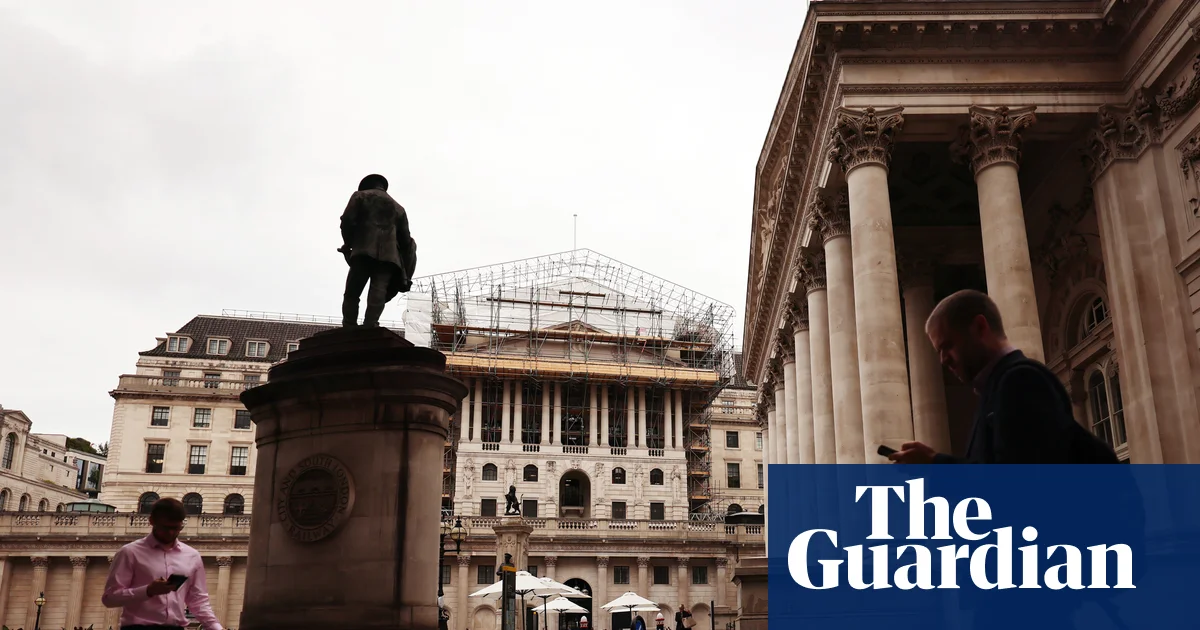
The UK government was forced to pay the highest interest rate for a 30-year bond since 1998 on Tuesday, underlining the fiscal challenges facing the chancellor, John Healey.
Echoing the global bond market sell-off that has driven up yields, or interest rates, on government borrowing across the main markets, the Treasury paid 5.82% to borrow £4bn.
That was the highest rate since the Debt Management Office, which is responsible for financing government borrowing, was established in 1998. Healey used a speech in Coventry on Monday to stress that he was determined to balance the books.
Markets have been spooked by fears of a fresh rise in inflation after the resumption of the Middle East conflict increased oil prices, and investors fretting about the risks of rising public debt.
When the Office for Budget Responsibility does its latest forecast before the budget on 28 October, higher interest rates on government borrowing are expected to wipe out at least half of the £24bn headroom that Healey’s predecessor, Rachel Reeves, built up at her spring forecast in March.
News of the costly debt auction came as the Bank of England governor, Andrew Bailey, told MPs the latest rise in oil prices were also putting pressure on inflation and interest rates.
“The risks, I’m afraid, are on the upside,” he said. “And that’s really the risks coming from energy prices.”
Bailey insisted there was no secret plan to raise interest rates, however, and stressed that higher borrowing costs had already had an impact on consumers without the Bank having to take action.
“UK mortgage rates now are typically at the moment about a three-quarters of a percent higher than they were at the point when the conflict broke out,” he said. “I think with the possible exception of Japan, although that’s a little hard to map, that’s the largest increase in mortgage rates in the G7.”
after newsletter promotion
Brent crude was trading at about $97 a barrel on Tuesday. Bailey said the oil price could be higher still with the strait of Hormuz still largely closed to tanker traffic and Ukraine attacking refineries in Russia.
The governor was appearing at the Commons Treasury select committee alongside three fellow members of the Bank’s monetary policy committee, which will meet next week to set interest rates.
Megan Greene, who was in the minority voting for a rate rise in July, said she remained concerned about the risks of acting too late against inflation, but Dave Ramsden and Alan Taylor, who didn’t back a rate rise, suggested prices had risen less than feared as a result of the Iran war.
