


“Medicare for All” has once again become a rallying cry for progressives on the 2026 midterms campaign trail. Picking up on a theme that Sen. Bernie Sanders elevated in Democratic politics during his 2016 primary run, the idea that Medicare—a program that provides hospital and physician insurance to elderly Americans should be expanded to cover everyone has considerable popular appeal.
The best way to deal with the healthcare crisis, progressives argue, is to expand an existing program that has proven to be enormously popular: Rather than starting from scratch, why not just build on the program that already works so well?
Medicare for All has received strong support across the progressive spectrum, from Sanders to Rep. Alexandria Ocasio-Cortez to Michigan Senate candidate Abdul El-Sayed, who wrote a book on the subject and has made the idea a centerpiece of his campaign. Meanwhile, House Minority Leader Hakeem Jeffries, who has supported previous Medicare for All proposals, is now distancing himself from such legislation.
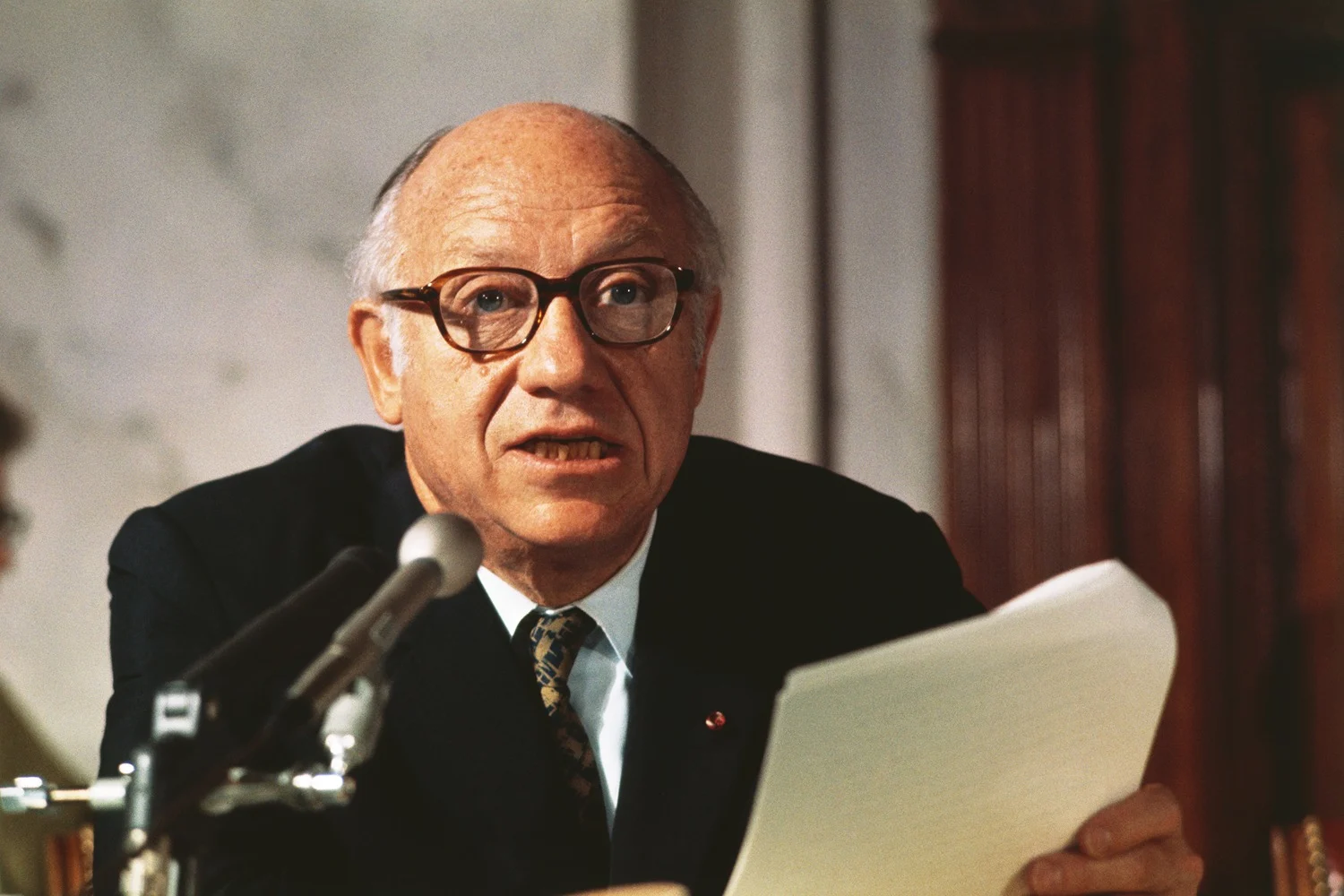
Yet what many Americans do not know is that Medicare for All actually has Republican roots. In 1970, when the Republican Party was very different than it is today and U.S. politics had not yet shifted so far to the right, New York Republican Sen. Jacob Javits advanced a proposal that gave birth to the idea.
When Congress created Medicare in 1965, many of its supporters saw it as a first step toward universal coverage for every American regardless of age. The original proposal to provide hospital insurance for older Americans through Social Security emerged out of liberal frustration with President Harry Truman’s failure to enact national healthcare insurance. Truman, the first president to propose such a policy, had faced intense opposition. The American Medical Association (AMA) conducted a fierce campaign against his proposal, warning that it would lead to “socialized medicine.” As Princeton sociologist Paul Starr showed in his Pulitzer Prize winning book, The Social Transformation of American Medicine, the doctors’ association tapped into the deeply rooted belief, dating back to the rise of modern medicine in the early 20th century, that the doctor-patient relationship was sacrosanct and should remain free of government interference. Physicians found crucial political support in the conservative coalition of southern Democrats and Midwestern Republicans.
During the 1950s, liberals shifted course. Instead of pursuing health insurance for all Americans,
liberal organizations and legislators adopted a narrower strategy, focusing on elderly Americans, who were widely viewed as particularly deserving of government assistance, especially after a lifetime of work. Liberal advocates also sought to place the program within the Social Security system, which by then had become enormously popular with both Democratic and Republican voters. Beginning in 1957, Democrats such as Rhode Island Rep. Aime Forand repeatedly introduced legislation to provide hospital insurance for those who were 65 or older. The effort won strong backing from organized labor. Yet the AMA continued to denounce it as socialized medicine and House Ways and Means Chairman Wilbur Mills of Arkansas refused to allow the bill to move through his committee. President John F. Kennedy, who made a major push for the legislation, grew increasingly frustrated by its inability to gain traction.
Eventually, there was a historic breakthrough. Following Arizona Sen. Barry Goldwater’s landslide defeat in the 1964 presidential election, which discredited right-wing conservatism and was accompanied by massive Democratic majorities in a Congress that leaned to the left, the political landscape shifted dramatically. Mills, who could read the writing on the wall, shifted from being the chief obstacle to national healthcare reform to the architect of legislation much grander than previous supporters had imagined. In 1965, Congress passed legislation creating Medicare Part A, which provided hospital insurance funded through payroll taxes; Medicare Part B, which offered voluntary physician insurance financed through general tax revenues and beneficiary premiums; and Medicaid, which provided health coverage for low-income Americans who fell outside of Medicare’s social safety net.
Javits played an important role throughout the Medicare debates. Born into a poor family in New York’s Lower East Side, Javits was part of a liberal Republican coalition that, before the conservative turn of 1980s, exerted significant influence within the party on issues like healthcare and civil rights. Javits saw himself as a legislator capable of building bipartisan and inter-regional bridges to break the deadlock that had stalled healthcare reform throughout the 20th century. Javits was particularly important in shaping a number of key features of the final legislation, including the decision to use private insurance to administer the program rather than concentrating authority wholly in a centralized government bureaucracy
The liberal proponents of Medicare (a term supposedly created by a newspaper editor who needed a name that would fit neatly into headlines), including Wilbur Cohen and Robert Ball, both veterans of the Social Security Administration, always envisioned that the program would be a first step toward broader national health insurance, just as Congress had gradually expanded Social Security after 1935 to include more people and benefits. The vision was not some kind of conspiratorial plan. As more Americans saw the benefits of Medicare and understood that federal intervention would not destroy the virtues of the private system—and instead serve as a complement—elected officials anticipated finding the political space to do more.
The closest the nation came to Medicare for All was with Javits’ proposed legislation in 1970. In April, he introduced the National Health Insurance and Health Services Improvement Act, which would have gradually expanded health insurance coverage to all Americans. “Medicare For All is Asked by Javits,” read the New York Times headline. He found support from several like-minded Republicans.
Javits pushed the proposal at a moment when policymakers across the political spectrum had become increasingly concerned about the deep structural problems of the nation’s healthcare system, including the fact that tens of millions of Americans lacked any insurance and that medical costs were continuing to rise. For Javits and his allies in Washington, these challenges underscored the need for a more active federal role in guaranteeing access to good healthcare.
The plan languished, however, as it faced the traditional attacks from the AMA and conservatives as threatening socialized medicine. Javits also struggled to build a coalition as a result of competing proposals. While some liberal legislators, such as Sen. Ted Kennedy of Massachusetts, continued to champion the creation of a new national health insurance system modeled on those established in European social democracies, and conservatives promoted tax credits to subsidize private coverage, Javits believed a basis for the best solution was already on the books. In his view, Congress could achieve universal coverage by gradually expanding Medicare to additional group coupled with improvements in benefits. He proposed paying for the program through payroll taxes and general revenues, as Medicare was funded. Private insurance carriers would continue to serve as administrative intermediaries. His proposal included increased reliance on prepaid group practices (later called health maintenance organizations, or HMOs) and other reforms to improve efficiencies in the delivery of care. President Richard Nixon, who agreed that the nation’s healthcare system badly needed reform, proposed a limited update of the system in 1971 and then advanced a bolder proposal in 1974: the Comprehensive Health Insurance Plan, which relied on a mix of improved Medicare benefits, employer mandates, federal insurance for poor Americans, and incentives to expand HMOs.
In the end, nothing happened. The proposal that had the best odds of passing, Nixon’s plan, fell victim to the turbulent politics of the era. Watergate, the economic pressures of stagflation and the oil crisis, and Mills’ own scandal involving a stripper, combined to derail the legislation and extinguish what had become a strong bipartisan push for national health insurance.
In 1993 and 1994, President Bill Clinton moved the national debate further away from the Medicare for All vision when he advanced a healthcare plan that looked more like Nixon’s, built around employer mandates, regional healthcare alliances, new insurance regulations, and federal subsidies for those who fell outside the private system. (The administration rejected a proposal from Democrat Pete Stark to expand Medicare.) Clinton’s plan failed and opened the door to the Republican takeover of Congress in 1994—which pushed national politics, including on healthcare, further to the right. The public’s problems worsened, as Jonathan Cohn argued in his 2009 book Sick, leaving middle class Americans even more vulnerable to the consequences of illness.
When President Barack Obama successfully moved the Affordable Care Act through Congress in 2010, he largely built on the framework that Clinton had championed, though backing away from some of the bolder reorganization his Democratic predecessor wanted and abandoning serious cost-control measures with the hope of encouraging private stakeholders to buy into the proposal. In 2006, Massachusetts Republican Gov. Mitt Romney signed into law a healthcare program that revolved around using mandates to incentivize healthy people to buy insurance, a free-market framework Obama later incorporated into his bill. Obama also agreed to remove the public option, a government-run insurance plan that supporters viewed as the closest the nation had come to Medicare for All since Javits’ 1970 proposal.
Today, Medicare for All is associated with the left wing of the Democratic Party. The fact that so many Americans view the proposal in that light reflects how dramatically the political boundaries of the debate have shifted since 1980s. During the decades before Ronald Reagan’s presidency, proposals to expand government-sponsored health insurance were supported by a broad range of liberal Democrats and moderate Republicans. A plan that a Republican senator could proudly champion in 1970 would today be seen as radical.
The shift also reflects how much the Republican Party has changed since then. The liberal northeastern wing of the GOP, which once proudly boasted of New York governors Thomas Dewey and Nelson Rockefeller, has vanished. By the late 20th century, conservatives had supplanted the party’s liberal and moderate factions. Since the 2010s, Tea Party and MAGA Republicans have left no room for the kind of policymakers Javits represented.
As a result, efforts to reform the healthcare system have suffered. For all the progress achieved with the Affordable Care Act—including its prohibition on insurance companies discriminating against people with preexisting conditions, as well as expanding Medicaid—the practical considerations created by Tea Party Republicans required Obama to work within limited boundaries. The final legislation left many big problems unaddressed, including weakly regulated costs and ongoing gaps in coverage.
The origins of Medicare for All serve as a reminder that there was a time in U.S. history, not so long ago, when members of both parties saw merit in expanding the nation’s largest universal health insurance program to ensure that no American would have to confront illness and fear financial disaster. Javits’ vision rested on the belief that no American should have to worry that basic medical services would be out of reach.
