


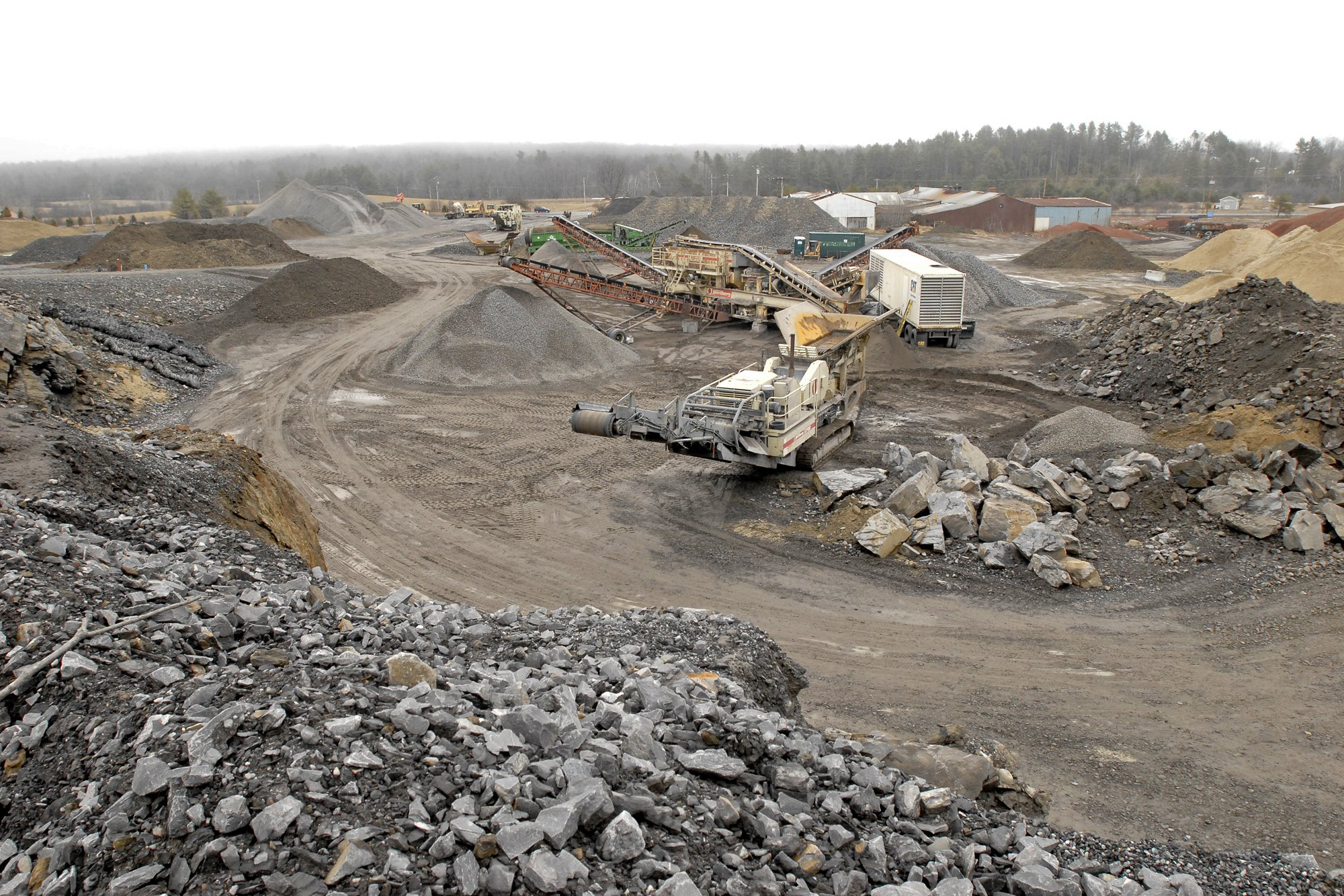
GORHAM, Maine—Supersonic shockwaves shook the bones of Charlie Hamblen’s historic Maine farmhouse more than a dozen times last year, travelling over half a mile from blasts at a nearby quarry.
The quarry is one of two active in Gorham, a vibrant and growing town of nearly 20,000 residents a few miles west of Portland, and its frequent blasts are emblematic of a broader trend spanning Maine in recent years: The state’s construction aggregate industry is booming, thanks at least in part to climate change, as property owners erect or repair stone walls to protect against sea level rise, flooding and erosion.
The number of permits to develop new quarries have more than tripled in Maine over the past five years compared to the prior decade, according to the Maine Department of Environmental Protection (DEP). Meanwhile, quarry owners in Gorham and beyond are looking to expand their existing pits, potentially bringing more Maine residents into the pathway of the quarries’ shockwaves.
“If they expand this quarry, we figure it’s going to impact at least another 300 existing houses, let alone the new houses being built,” said Hamblen.
The growth in quarries coincides with trends in Maine and elsewhere in New England, including steady increases in construction and recurring annual road maintenance needs, but also the climate-amplified boom in stone walls.
After a trio of destructive winter storms inundated the central Maine foothills and slammed into the coast two years ago—illuminating the state’s vulnerability to similar climate change-fueled storms—the number of permit applications for seawall projects skyrocketed, expedited by an emergency permitting provision in state statute and a slew of federal disaster funds.
“They had a window in there for a while and you were able to just go and do an emergency repair,” said Skip Murray, owner of the family construction company L.P. Murray & Sons on the southern Maine coast. “I did a lot of work in municipalities in that time frame, and then that was still when you could get reimbursed” by the Federal Emergency Management Agency.
According to a rough analysis of state permit data by the Maine DEP, the number of applications for shoreline stabilization permits nearly tripled from 118 in 2022 to 313 in 2024. Department spokesperson David Madore said the state could not precisely differentiate between projects with sea walls and those without, however, he added that “most applications were for riprap stabilization”—the stone slabs and crushed rock that form the walls.
There are few state regulations on quarries in Maine, critics say, and following the recent surge, more and more towns are considering local moratoriums on new quarries, strengthened ordinances that greatly restrict the activity of existing ones, and even local restrictions on new rock sea walls.
Similar clashes among residents, quarry owners and municipal officials are unfolding beyond Gorham as towns contend with this growth and determine how best to plan for climate change and the state’s mineral needs.
A Booming Industry
There are roughly 780 active mining facilities across Maine, each excavating a unique combination of minerals and often refining or processing them on-site into sand, rock, gravel and riprap for a variety of construction purposes.
From 2015 to 2021, the state saw a consistent average of three new quarry registrations per year, according to DEP mining coordinator Michael Clark, which then shot up to roughly 10 per year between 2022 and 2025, not counting a handful of expansions at existing quarries.
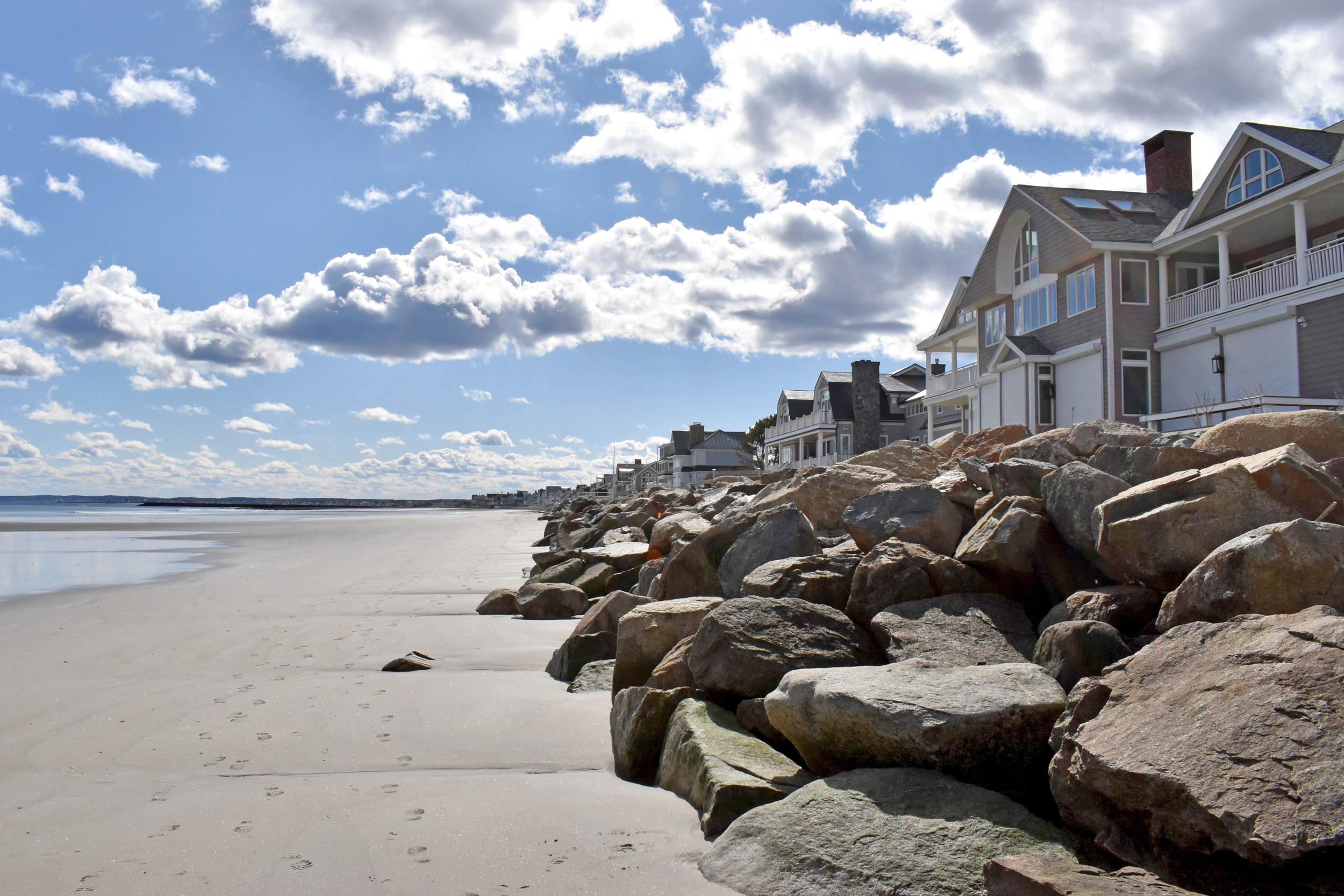
Clark said that he can’t be sure what’s specifically driving that trend but thought that riprap demand could be some part of it, whether it’s used for sea walls or other common uses, such as culvert construction.
Data published by the U.S. Geological Survey shows the value of crushed rock, gravel and sand produced at Maine quarries has doubled over that same period—hovering around $100 million in 2021 and a few years prior, then ballooning to more than $220 million last year.
There isn’t accompanying data on the weight or amount of construction material generating that value, but there is evidence that Maine isn’t the only New England state seeing a surge in aggregate activity.
The Massachusetts islands of Nantucket and Martha’s Vineyard have received a 125 percent increase of construction aggregate that’s been barged over the past 10 years as well as a variety of new coastal resilience projects, according to reporting from The New Bedford Light, while sand excavation sites crop up on the mainland.
Most Maine quarries are concentrated away from the coast, in towns like Gorham or Bridgton, and the state doesn’t closely regulate them beyond their pit size, blasts, dust emissions and equipment exhaust. The amount of blasting or rock crushing varies from quarry to quarry and often depends on whether there’s an obstacle of solid bedrock called ledge.
“There’s generally not blasting unless there’s a ledge,” Clark with the DEP said. “So most pits don’t have ledge. I’ve encountered some, but most do not.”
Despite that variety, many quarry neighbors have similar complaints about the quarries that do use explosives or intensive rock crushing. They describe plumes of dust and disruptive blasting operations they suspect are damaging their homes. They also complain about empty promises from quarry contractors who often refuse to share analysis of the blasts’ seismic data from their property lines. Meanwhile, there is limited oversight from municipal officials, the neighbors say.
More Blasting in Gorham?
In Gorham, Charlie Hamblen was motivated to run for town council last year by Gorham’s weak quarry ordinances and an ongoing proposal by local aggregate company Shaw Brothers Construction to expand its Brickyard Quarry near Hamblen’s home. He won the election in November 2025.
“The town was not willing to listen to the [quarry] neighbors and work on ordinances to make it a safer place for people, so I got crazy and I ran for town council,” Hamblen said.
Gorham is one of at least five Maine towns in the past two years that have received proposals for new or expanded quarries or considered adopting new ordinances to regulate them.
The town issued Shaw Brothers a permit for its 6.7-acre quarry back in 2008 that allows for industrial rock crushing and an average of roughly 10 to 11 blasts per year.
Under a permit application submitted last year, the company proposed expanding the quarry to the majority of a 26-acre parcel adjacent to the existing pit and capping the number of blasts at 18 per year.
The Gorham town council rejected it in February 2025, and Shaw Brothers withdrew a subsequent request to rezone the area for industrial development, putting the project partly on hold until the company resubmitted its rezoning request earlier this summer. The Gorham planning board then unanimously recommended that the town council approve the request in early August. Now it is up to councilors to decide.
Hamblen saw the pause as the perfect opportunity for the town to explore amendments to its current mineral extraction ordinance, which has no annual limit on the number of blasts a quarry can execute so long as they meet a set of criteria. The blasts must be approved by the town, and accompanied by detailed blasting reports with seismic data made available for public view.
At the August rezoning meeting, Shaw Brothers owner Dan Shaw told the Gorham planning board that between the town’s ordinances and state regulations, the company is already “regulated to the hilt” and has addressed some environmental concerns by powering quarry operations from the energy provided by a nearby solar farm.
Maine is growing, Shaw argued, and the construction material fueling that development has to come from somewhere.
“We need quarries,” for construction in Maine, Shaw added. “We need concrete. We need hospitals. We need roads.”
Shaw Brothers Construction did not respond to an interview request ahead of publication.
Hamblen and other municipal officials have been looking to the central Maine town of Winthrop for inspiration after it adopted some of the most stringent mineral extraction regulations in the state when confronted with a quarry development application in 2023. Under its updated ordinance, Winthrop now restricts the number of blasts per year, has size-caps on quarry expansion requests and heightened monitoring requirements.
Voters in South Thomaston adopted similar provisions earlier this June in the aftermath of a since-rescinded expansion request from a local quarry, whose owner sits on the town planning board.
As some towns wrap up their responses to new or expanded quarry proposals, either approving restrictive ordinances or denying development permits outright, others are still receiving applications for new pits and starting from the beginning.
This story is funded by readers like you.
Our nonprofit newsroom provides award-winning climate coverage free of charge and advertising. We rely on donations from readers like you to keep going. Please donate now to support our work.
Residents in the town of Berwick near the New Hampshire border in southwest Maine are the latest to grapple with a new quarry proposal, this time for a 62-acre sand and gravel pit that would dispatch an average of 20 truckloads of material each day for six days a week.
Meanwhile, just 20 miles north in Alfred, the town planning board rejected a quarry proposal in August from prominent southern Maine construction and excavation company Gorham Sand & Gravel.
Each new proposal catches some towns off-guard and sets others down monthslong deliberations over their comprehensive plans or zoning ordinances.
Stonewalls or Wetlands
Whether this recent uptick in Maine quarries continues could be undercut by converging market forces developing outside of the aggregate industry. Earlier this summer, the Maine Department of Transportation—a massive buyer of construction aggregate of all types—announced it would be dropping up to $400 million in road construction projects after a steep budget shortfall.
Maine’s environmental agency, meanwhile, has since updated its permitting process for shoreline erosion projects to prioritize “nature-based” solutions that use plants or biodegradable materials and adds more stringent requirements for hard infrastructure like sea walls.
The rule changes respond to years of research demonstrating the collateral damage sea walls and other hard infrastructure can have on neighboring stretches of shoreline. That’s because wave energy doesn’t magically dissipate when it thrashes into plates of stone or concrete armor on the shore. Instead, the force ricochets up or down the coast and collides with beaches, bluffs or marshes that absorb the blow instead, hastening erosion in some places.
After the rush of more than 300 sea wall permits following the 2024 winter storms, the number of permits dropped back down to around 190 in 2025—close to levels before the storm.
Craig Coolidge, principal engineer and president of Maine consulting firm Summit Geoengineering, said that could be due to the additional hurdles added by the permitting rule changes, many of which now take up to nine months for approval after historically taking only six.
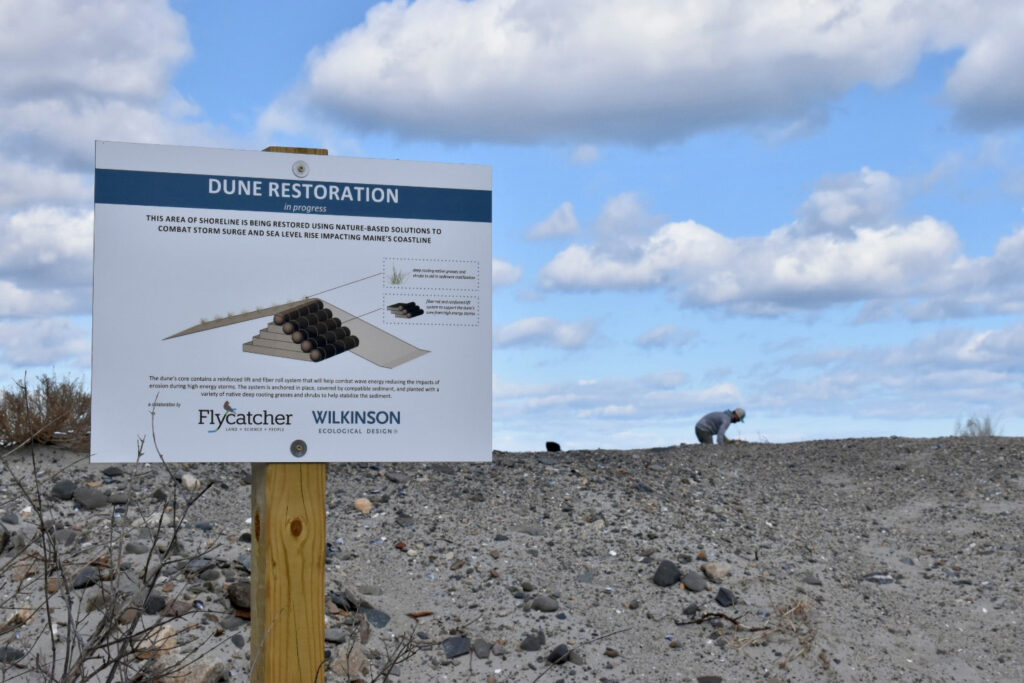
Since the rule changes went into effect earlier this year, Coolidge’s firm is incorporating more plantings and regenerative sediment that fills in shorelines carved away by erosion. However, he said, those “soft” approaches can’t always meet the engineering demands that armored infrastructure projects can, resulting in continued sea wall construction at a slower permitting pace.
“The vision was good, but the execution is just not there yet,” Coolidge said of the permitting changes.
Sea Wall Begets Sea Wall
Twelve miles up the coast from South Thomaston, voters in the tourist hub of Camden went a step further than the Maine DEP when they approved a 180-day moratorium on all coastal shoreline armoring projects this June in a landslide referendum.
The ban grew out of the proliferation of sea wall projects following the 2024 winter storms, said Camden planning and development coordinator Jeremy Martin, which rocked Camden especially hard due to the town’s high exposure to strong winds and storm surges.
Similar to some municipalities’ lack of quarry ordinances, Camden doesn’t have any codes on the town’s books that guide responsible sea wall development, Martin said, and the ban gives officials time to develop best practices to keep properties safe and protect the shoreline.
The current gap in oversight has led to one especially fortified stretch of riprap on a slope overlooking Sherman Cove, a scenic inlet with deep blue waters just north of Camden’s downtown. Martin said that the sheer amount of stone trucked in to build it wore down the road leading to a public boat launch.
Meanwhile, sea wall begets sea wall, causing a domino effect of Camden residents armoring their shores to protect their properties from the waves sent cascading up or down from their neighbors’ walls, according to Martin. Camden beaches and coastal habitat rely on a stable pattern of erosion to backfill the sand lost from tidal forces, but sea walls can halt erosion altogether—both good and bad.
“It impacts the natural environment, abutting property owners, and public infrastructure, and that’s why I think voters overwhelmingly approved the moratorium ordinance,” Martin said.
Martin said he understands why coastal property owners feel compelled to protect their homes and shorelines. The ordinances he and Camden officials are considering will keep that vulnerability in mind. They are likely to be modelled after another Camden ordinance Martin spearheaded that requires rigorous review for private piers and wharfs to ensure they’re built for longevity and cohesion.
Camden’s goals overlap with those of the towns seeking moratoriums and revised regulations on quarries. Both sets are trying to wrap their arms around statewide trends unspooling in their backyards before new projects are permitted and developed. Otherwise, whether it’s a quarry or sea wall, it will only have to meet the state’s requirements for permitting.
“I think the people here have decided … if there’s going to be a problem or impacts, we need to address them,” Martin said.
About This Story
Perhaps you noticed: This story, like all the news we publish, is free to read. That’s because Inside Climate News is a 501c3 nonprofit organization. We do not charge a subscription fee, lock our news behind a paywall, or clutter our website with ads. We make our news on climate and the environment freely available to you and anyone who wants it.
That’s not all. We also share our news for free with scores of other media organizations around the country. Many of them can’t afford to do environmental journalism of their own. We’ve built bureaus from coast to coast to report local stories, collaborate with local newsrooms and co-publish articles so that this vital work is shared as widely as possible.
Two of us launched ICN in 2007. Six years later we earned a Pulitzer Prize for National Reporting, and now we run the oldest and largest dedicated climate newsroom in the nation. We tell the story in all its complexity. We hold polluters accountable. We expose environmental injustice. We debunk misinformation. We scrutinize solutions and inspire action.
Donations from readers like you fund every aspect of what we do. If you don’t already, will you support our ongoing work, our reporting on the biggest crisis facing our planet, and help us reach even more readers in more places?
Please take a moment to make a tax-deductible donation. Every one of them makes a difference.
Thank you,
