


- The world needs to move from fossil fuels to renewable ones, but the narrative pushed by powerful financial, political, and environmental institutions — that it’s necessary to massively scale up mining of “transition” or “critical” minerals to achieve this — is false, a new op-ed argues.
- Not only do these minerals’ extraction cause countless environmental and community harms, the numbers cited about how they are used — and the number of new mines needed — don’t add up, a recent report has shown.
- “The vast majority [of critical minerals] are used in industries that are either unrelated — or in direct opposition — to the clean energy transition,” the author writes.
- This article is a commentary. The views expressed are those of the author, not necessarily of Mongabay.
There is an insidious lie that has taken root in the energy transition narrative pushed by the world’s most powerful financial, political, and environmental institutions: we need to massively scale up “critical mineral” mining to secure a green future.
The World Bank claims that production of key minerals will need to increase by 500% by 2050 for the energy transition. According to the United Nations Conference on Trade and Development (UNCTAD), 250 new mines are needed to meet emissions targets (80 new copper mines, 70 new lithium mines, 70 new nickel mines, and 30 new cobalt mines). WWF says we need to dramatically increase the supply chain for a wide range of materials, including “transition minerals” as they’re also sometimes called.
We are told that mineral extraction’s countless environmental harms — the streams contaminated by toxic runoff, the razed forests, the degraded air quality, the dying wildlife — are the necessary costs of the transition to renewable energy.
But as we at the Oakland Institute show in a new report, “transition minerals” are misnamed. The vast majority are used in industries that are either unrelated — or in direct opposition — to the clean energy transition. This trend shows no signs of changing: artificial intelligence and heightened military spending are, in fact, increasing the demand for these minerals in industries driving ecological destruction.
Scaling up mining as recommended by international organizations would enact unprecedented violence, dispossession of Indigenous and local communities, and environmental devastation. The narrative serves only to misinform the public, laundering harmful practices of the mining industry into an ostensible social and environmental good. To truly secure a sustainable future, we must interrogate and ultimately undo this lie.
Building global acceptance for mining
A 2023 GlobeScan survey spanning 32 countries found that the public consistently rates mining as the economic sector with the worst impact on society. Faced with this widespread rejection, mining firms have sought to turn the climate crisis into a branding opportunity, promoting themselves as indispensable to the green transition while burying their decades of environmental and social harm.
Thus, the energy transition narrative has become a useful tool, creating a unique situation in which international institutions mandated to defend the common good appear to be in vehement alignment with those planning to destroy it.
Take, for example, the World Bank’s Climate Smart Mining Initiative, which claims to ensure that mining is managed in a way that “minimizes the environmental and climate footprint.” Among its members is Rio Tinto, the mining behemoth responsible for decades of environmental and human rights abuses. Still, in its annual report, Rio Tinto asserts, “The world needs mining, and it needs mining done the right way … we’re committed to providing these materials safely, sustainably, and in a capital disciplined way.” Whereas it was accused just months ago of contaminating Madagascar’s water with uranium and other radioactive elements, Rio Tinto retains the World Bank’s stamp of approval.
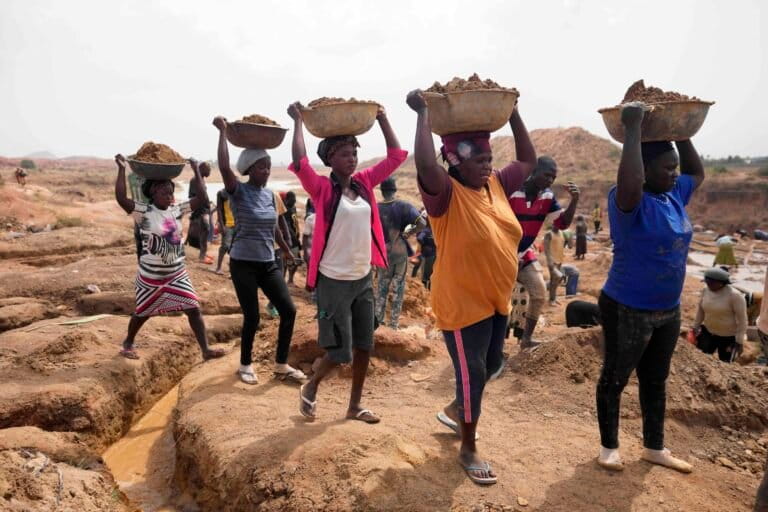
In Madagascar, Rio Tinto’s actions have severely harmed surrounding villagers. “It’s killing our children and killing everything around the mine,” one fisherman told the Financial Times. This disproportionate toll on local communities can be observed in mining operations across the globe: an estimated 69% of current transition mineral projects are located on or near Indigenous or local communities’ lands in the Global South.
The consequences have been devastating. In the Democratic Republic of Congo, mineral extraction has fueled the deadliest conflict since World War II; in Chile’s Salar de Atacama, lithium mining has consumed more than 65% of the region’s water supply. It is this record of violence and environmental destruction that Rio Tinto’s branding, and the World Bank’s legitimization, obscure.
This greenwashing effort is in no way unique to Rio Tinto. Every major mining corporation has dressed up its endless pursuit of control over other peoples’ land in the language of sustainability, and the effort appears to be working: In 2025, the largest 50 mining firms saw a jump of close to $900 billion in their capitalization, a 70% increase in only one year.
Reframing the narrative
The world does not need to increase mineral mining to secure a green future. Our analysis of the International Energy Agency (IEA) data reveals that more than 70% of all critical minerals end up in products and infrastructure wholly unrelated to the green transition. We find that only one-fifth of projected mineral demand is actually needed to scale up wind, solar, and energy storage for a net-zero future. Intelligent policy choices would reduce this already small need: a 2023 University of California, Davis, report found that, if widely implemented, transit- and recycling-focused policies could reduce U.S. lithium demand by 92% by 2050.

While many defend the expansion of mineral extraction in the name of the energy transition, the Trump Administration in the U.S. has stripped away that pretense. In remarks during its February 2026 critical minerals ministerial, Secretary of State Marco Rubio asserted that “critical minerals are vital to the devices that we use every single day. They power our infrastructure, our industry, and our national defense.” Jacob Helberg, undersecretary of state for economic affairs, expanded on that, saying, “The AI revolution we’re living through is leading to record historic demand for … virtually every element on the periodic table.”
During the opening remarks of that ministerial — a major summit that brought together representatives from more than 50 countries and launched a $10 billion U.S.-led critical minerals initiative — neither sustainability nor the energy transition were mentioned a single time.
When U.S. leaders admit that they intend to pillage the world’s lands and contaminate its waters for industry, national defense, and artificial intelligence, we should take their word for it. When mining corporations and international institutions continue to maintain the false justification of environmental necessity, we must not let them.
Nothing good can come of a lie. If we truly hope for a livable planet and a sustainable future, debunking this false narrative is among the most urgent tasks of our time.
Shaan Sood is a political science major at Vassar College and an intern scholar at the Oakland Institute, a U.S.-based think tank.
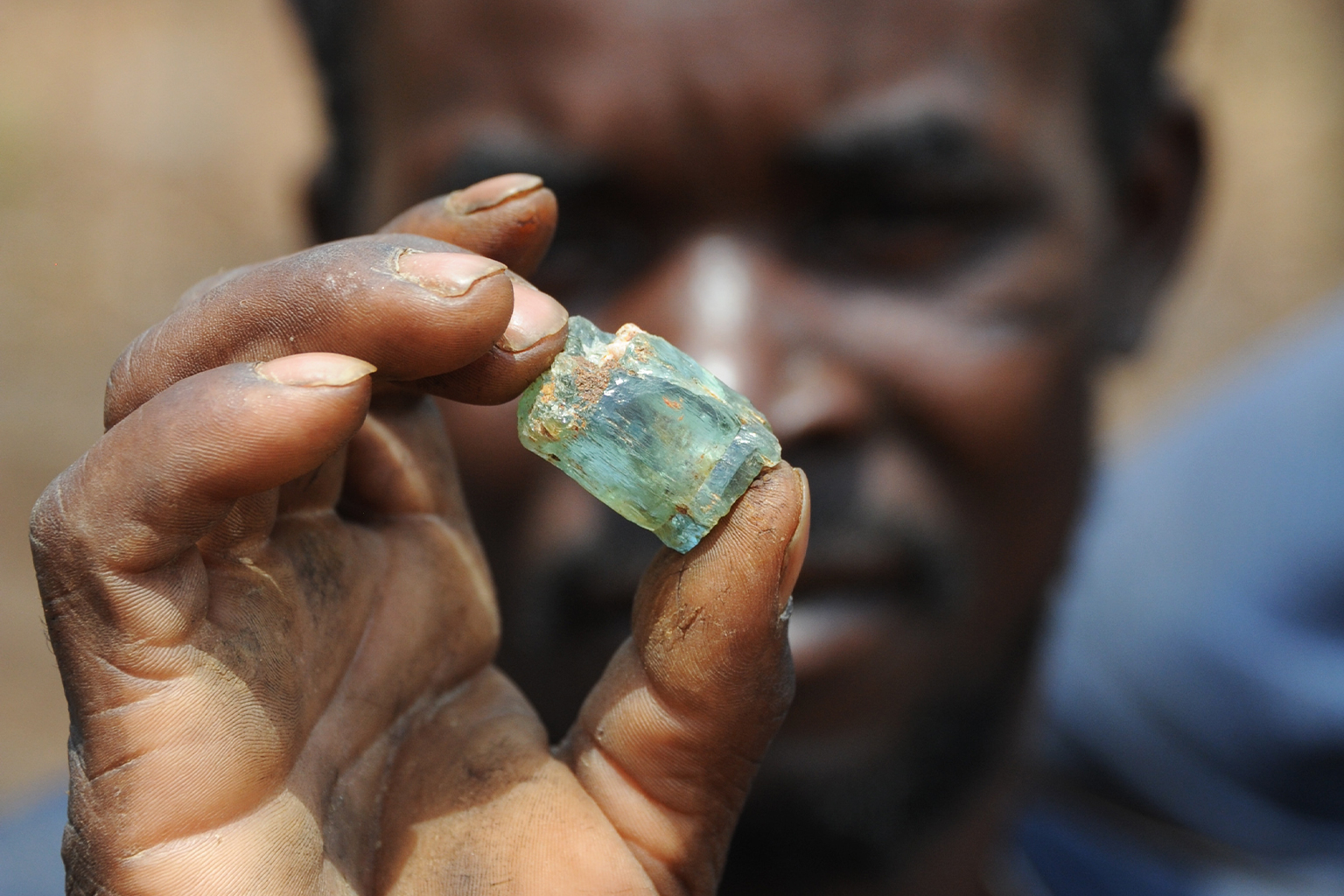
Banner image: An artisanal miner holds up a fragment of copper-bearing ore. Image by Leo Klemm via Flickr (CC BY-NC-ND 2.0).
See related coverage:
Philippines fast-tracks critical minerals, raising Indigenous, environmental concerns
Consent and costs are key questions on extraction of ‘energy transition’ minerals
U.S. defense spending on critical minerals surges in the last decade
Citation:
Owen, J. R., Kemp, D., Lechner, A. M., Harris, J., Zhang, R., & Lèbre, É. (2022). Energy transition minerals and their intersection with land-connected peoples. Nature Sustainability, 6(2), 203-211. doi:10.1038/s41893-022-00994-6
Cite this article
Shaan Sood (2026). On renewable energy, it’s time to debunk the ‘transition minerals’ narrative (commentary). Mongabay Conservation news. DOI: https://doi.org/10.66709/news-328582

