


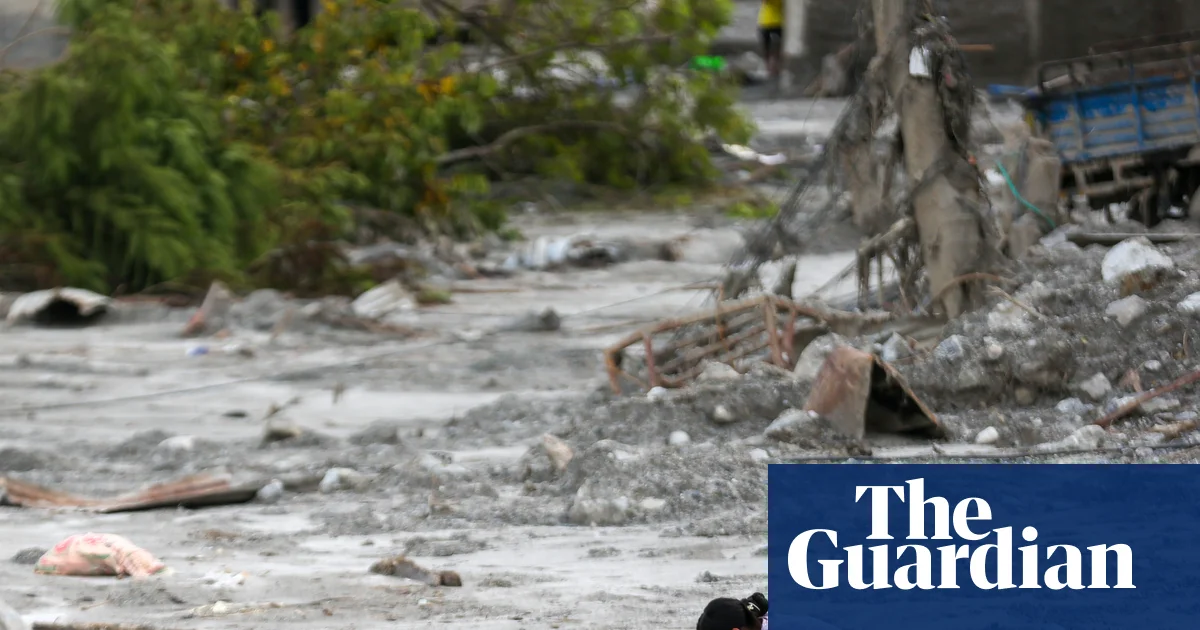
The recent glacial collapse and catastrophic floods in Nepal and Tibet are not isolated tragedies (Report, 28 August). They reflect accelerating climate disruption that disproportionately affects the countries and people that are least responsible for global emissions.
As climate change intensifies, glaciers around the world, including in the Himalayas, are melting at unprecedented rates, destabilising ecosystems and causing glacial collapse and ice-and-rock landslides, destroying settlements, villages and livelihoods in minutes. No one died when a Swiss glacier collapsed last year, owing to early-warning systems that were in place. But a lack of early-warning systems means that the disaster in Nepal and Tibet has led to hundreds of deaths and thousands missing.
Events like these are not “natural disasters”. They are due to global warming and climate injustices, and also flawed development policies, including rampant property developments on vulnerable floodplains. They call for better disaster preparedness and investment in early-warning systems. Most importantly, they require global action.
The UK has long positioned itself as a leader in international development and climate action. Yet recent UK commitments have fallen far short of what is required – including the decision to raid the diminished aid budget to switch international climate finance grants to loans, to fund a bus-fare cap.
The foreign secretary, Ed Miliband, recently spoke compellingly about the need to put the climate crisis and overseas development at the heart of UK international relations. These words must now translate into action. The UK must step up its development commitments and funding for climate adaptation, and loss and damage, to support those living on the frontlines of climate change.
The recent glacial floods remind us that climate disruption is global, and highly unequal. The UK must act urgently. Anything less is a failure of responsibility.
Prof Lyla Mehta
Institute of Development Studies
Sunil Acharya is correct when he states: “The countries that benefited most from fossil fuel-driven growth have a responsibility to cut emissions rapidly” (Nepal-Tibet flood: this is the cost of not acting in the face of the climate crisis, 28 August).
This was the founding principle of the global “contraction and convergence” framework, tabled by India, China and the African Group of Nations in Kyoto at Cop3 in 1997.
Had we enacted this, we would now be on a safe, and equitable, 30-year contraction path, avoiding the worst of the climate crisis and ensuring our survival. Instead, we remain adrift, with no viable solution or plan. Is it really too late to adopt this framework?
Lynda McDonald
Portaferry, County Down
The key question is: who should pay for this disaster? Yes, the rich world should pay, but the bills should be sent to all the fossil-fuel companies that have known this risk for at least half a century and have ignored it. If they refuse to pay, all of us in countries that have profited from the fossil-driven benefits of “progress” should, through our governments, pay a progressive tax on all things based on fossil fuels, to cover the past, present and future costs of climate change.
Jan Bengtsson
Uppsala, Sweden
