


U.S. President Donald Trump has made coercion a central element of American statecraft—and not just against Washington’s adversaries. In his second term, Trump has liberally wielded sanctions, tariffs, trade policies, and other threats to pressure allies and partners. Attimes, he’s even demanded that they set aside critical legal and institutional commitments.
There are, however, limits to Washington’s coercive leverage. The United States retains enormous advantages over its allies in finance, technology, markets, and security. But those advantages become most powerful when allied governments leave their own citizens, companies, and institutions to face Washington alone.
U.S. allies cannot eliminate the structural advantages Washington possesses, but they can reduce the vulnerabilities that constrain their own foreign-policy choices. They have more agency than their often-hesitant responses suggest. By acting collectively, changing the incentives facing their own private companies, and building credible alternatives for essential services, they can raise the cost of Washington’s coercive diplomacy and protect the institutions and commitments that underpin the rules-based order.
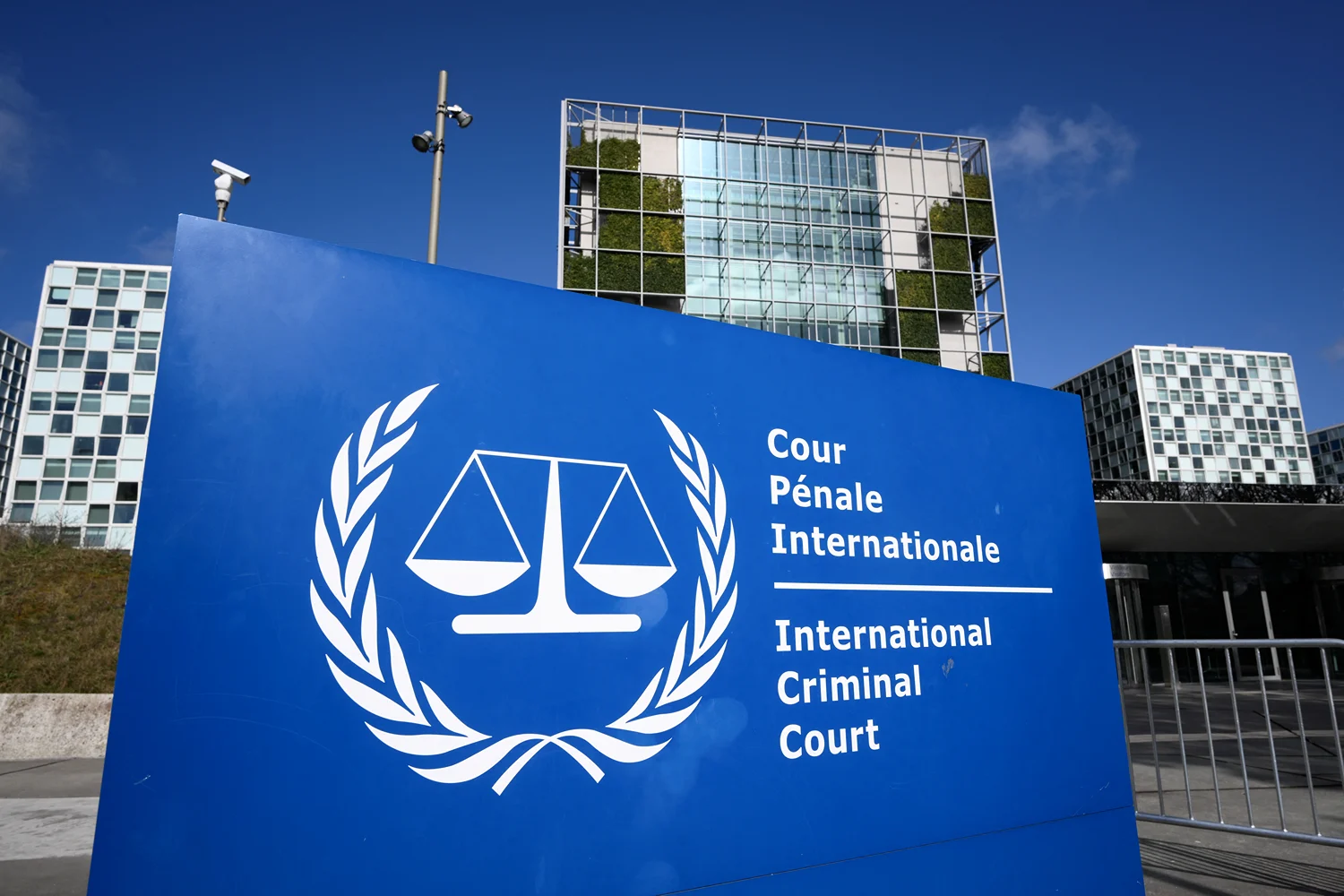
One striking example of Washington’s coercive diplomacy is U.S. Secretary of State Marco Rubio’s campaign to “systematically dismantle” the International Criminal Court (ICC). The United States has now sanctioned 13 ICC staff members, including nine judges. After former chief prosecutor Karim Khan, a British citizen, was designated for sanctions, he lost access to his official email and his bank accounts were blocked. Kimberly Prost, a Canadian judge, lost her credit cards and even her Amazon devices stopped functioning normally. Contractors and nongovernmental organizations have curtailed cooperation with the ICC.
The consequences of these designations extend far beyond the individuals targeted. They have disrupted not only the Palestine investigation that provoked the current U.S. campaign, but also the ICC’s work on atrocities in Sudan, Ukraine, and other situations.
However, the United States cannot dismantle the ICC on its own. It is not a party to the Rome Statute, it contributes nothing to the ICC’s regular budget, and it has no vote in the Assembly of States Parties. Rubio does not need parties to the Rome Statute— such as Japan, Germany, or France—to formally sign on to his campaign to dismantle the ICC. But he does need their banks and companies to fear U.S. sanctions.
By leveraging access to the American economy and the threat of enforcement, Washington can pressure private actors abroad to make U.S. sanctions felt far beyond U.S. territory. In other words, to make those sanctions truly “bite,” it needs surrogate enforcers: entities such as non-U.S. banks, payment providers, insurers, airlines, and technology companies.
These surrogate enforcers are often not located in countries hostile to Washington. As in the ICC case, it’s quite the opposite; they operate largely within the economies of Washington’s closest allies and partners. Fearing the consequences of violating U.S. sanctions, surrogate enforcers often choose to comply.
Under Trump’s 2025 executive order on the ICC, designated officials may have property within U.S. jurisdiction blocked, and U.S. persons may not provide them with funds, goods, or services. Foreign entities can also face designation if Washington concludes that they have materially assisted a blocked person. Even when a transaction has little or no connection to the United States, a bank or company must still ask whether serving the target could jeopardize its dollar clearing, U.S. operations, investors, or future dealings with U.S. firms.
For risk-averse businesses, therefore, the safest choice is usually to cut the sanctioned customer off. U.S. authorities do not need to bring a case against every foreign bank to be effective. The memory of past enforcement—including the nearly $9 billion penalty imposed on France’s BNP Paribas in 2014 for routing prohibited transactions through the U.S. financial system—acts as a deterrent. Few companies are willing to jeopardize their access to the U.S. market or financial system for the sake of a single sanctioned client, no matter how high-profile. Because companies often over-comply rather than risk U.S. penalties, the practical reach of U.S. sanctions extend far beyond its formal jurisdiction.
Washington’s reach rests on the central role that the United States still plays in the financial and technical infrastructure of allied economies. The U.S. dollar accounted for 89.2 percent of all foreign exchange trades in April 2025. It accounted for around 57 percent of disclosed global reserves in the first quarter of 2026. More than half of international banking claims and liabilities are denominated in dollars. Similar dependencies exist in technology. Three U.S. firms—Amazon, Microsoft, and Google—still provide roughlg two-thirds of the European Union’s cloud services. Japan is similarly exposed: As late as 2024, Amazon Web Services alone accounted for 97 percent of deployed systems on Japan’s government cloud.
Washington clearly has the sovereign authority to regulate U.S. persons and the U.S. financial system. The harder question is whether that authority should, in practice, determine what Japanese, French, British, or German firms may do when their own governments have made the sovereign choice to support the ICC. Yes, Washington can block an ICC judge from using their credit cards. But it cannot, by itself, withdraw Japan’s assessed contribution to the ICC, change the votes of 125 parties, or erase their obligations under the Rome Statute.
Converting those advantages into policy change becomes harder when allies refuse to supply legitimacy, commercial compliance, and policy concessions that make coercion effective.
Trump’s threats to annex Greenland created anxiety across Europe, but they also demonstrated the limits of American coercive leverage. European governments rallied behind Denmark, prepared a package of retaliatory tariffs worth 93 billion euros, and discussed using the EU’s Anti-Coercion Instrument. The European Parliament suspended work on a U.S.-EU trade agreement. Trump ultimately withdrew the tariff threat four days after announcing it, showing that a coordinated response with credible economic consequences can raise the costs of coercion and alter Washington’s calculations.
Greenland could inform a strategy of greater resistance, and the ICC would be a useful test case. Shielding an entire economy from U.S. sanctions, as Brussels discovered after it tried to protect its trade with Iran in 2018, may be unrealistic. Ensuring that a court and a handful of judges can bank, communicate, travel, and buy insurance is not. The ICC’’s operational needs are identifiable, making it possible for allied governments to support providers located outside U.S. jurisdiction.
The European Union already has a Blocking Statute designed to counter the extraterritorial effects of foreign sanctions, but enforcement is left largely to member states and has been uneven, and it does not eliminate the underlying commercial asymmetry. Faced with uneven or uncertain penalties in Europe and the possible loss of the U.S. market, most large companies still choose Washington.
Responses to U.S. coercive leverage on the ICC have been weak. Japan called the sanctions against Tomoko Akane, a Japanese citizen and ICC president, “very unfortunate” while reiterating its support for the court. European leaders have spoken up to defend the court’s independence but have not taken robust measures to counter U.S. pressure.
Their response to Washington’s coercive diplomacy needs to go beyond rhetoric alone.
As a first order of business, U.S. allies should be clear that they will oppose measures that seek to force them to violate a treaty obligation, abandon an international institution they support, or change a sovereign policy choice. The European Union, the United Kingdom, Japan, Canada, Australia, South Korea, Norway, Switzerland, and other willing democracies should create a standing consultation and mutual-support mechanism. When one member or a rules-based institution it supports faces coercion, the group would rapidly assess the measure, coordinate legal and diplomatic responses, and decide what costs it is prepared to share.
Europe already possesses part of this architecture. Its Blocking Statute is designed to prevent certain foreign sanctions from being imported into European commercial transactions, while its newer Anti-Coercion Instrument gives Brussels broader powers to respond when economic pressure is used against EU public authorities to force a change in European policy.
European governments must give their blocking rule real power and credibility. The EU should add Trump’s ICC sanctions order to the Blocking Statute without further delay. Australia, Canada, Japan, South Korea, and the U.K. should also prohibit entities under their jurisdiction from terminating essential services in response to the U.S. sanctions unless a domestic regulator authorizes the decision.
The U.K. also has a law similar to the EU’s Blocking Statute on the books. Canada’s Foreign Extraterritorial Measures Act gives Ottawa powers to counter measures that intrude on Canadian sovereignty, whereas Australia has a legal instrument that allows for blocking certain exercises of foreign jurisdiction, though it falls short of having an EU-style blocking statute.
South Korea and Japan currently lack such implements but could introduce them. Governments should find ways to insure and otherwise protect firms that provide essential services and face demonstrable losses for following domestic law. By working together, they can minimize the risk posed by potential U.S. enforcement measures to their commercial entities, which will be confronted with complying with two contradictory sanctions regimes.
Protecting a handful of officials and a court with an annual budget measured in hundreds of millions of euros should be a feasible proposition. Governments should ensure that sanctioned individuals retain access to banking, payments, communications, and travel, potentially through indemnification or designated providers. That could entail implementing measures such as: a publicly backed bank or payment provider able to operate in euros, yen, pounds, or other non-dollar currencies without U.S. correspondent accounts; locally controlled email and cloud services; insurance and travel arrangements; and an emergency legal-defense fund.
ICC parties could put together a sanctions protection package, guaranteeing basic services for sanctioned officials and their families, and requiring the Court to maintain non-U.S. alternatives for critical systems. Japan and Europe should jointly pledge that sanctions will not reduce their contributions or staffing.
Allies also need to reduce their most harmful dependencies on the United States over time. Europe’s efforts to deepen its capital markets, expand euro-denominated payments, develop sovereign cloud capacity, invest in semiconductors, and rebuild defense industries are often discussed in terms of defense capabilities. But they will also help Europe preserve the ability to make political choices without needing Washington’s permission, thereby protecting the rules-based order. Japan, South Korea, and other advanced democracies should be partners in these efforts.
To be sure, such resistance carries risks. Washington could escalate against a protected bank, impose tariffs, restrict intelligence, or exploit disagreements among partners. China and Russia could exploit a rupture with Washington. Defanged U.S. sanctions could also mean bad actors, who make up a vast majority of individuals sanctioned by the United States, could benefit. And collective action will be a difficult proposition.
Those risks are real, but this should not stop states from trying. The ICC is a favorable test case. Its state parties have clear legal commitments. The services at issue are identifiable, and the financial cost of protection is manageable.
Resisting a particular U.S. policy is not the same as abandoning the trans-Atlantic or transpacific relationship, and allies and partners should be careful to maintain lines to segments of the U.S. government and public who want to preserve the rules-based order. After all, even some conservative members of Congress such as late Sen. Lindsay Graham have previously defended the ICC’s work. U.S. courts have heard challenges to the ICC sanctions. And a future administration could reverse Trump’s order, as President Joe Biden did with the first Trump administration’s ICC sanctions.
But states cannot make policy decisions hoping that Washington will soon revert to “normal,” especially after Trump won a second term. The question for U.S. allies and partners is not whether they can eliminate their dependence on the United States. It is whether they can stake out sufficient autonomy to make their own sovereign choices when Washington turns to coercive diplomacy. Returning to the ICC, Japan and the United States’ European allies chose to join the Rome Statute. They should now ensure that Akane and her sanctioned ICC colleagues can bank, communicate, travel, and carry out their duties.
