


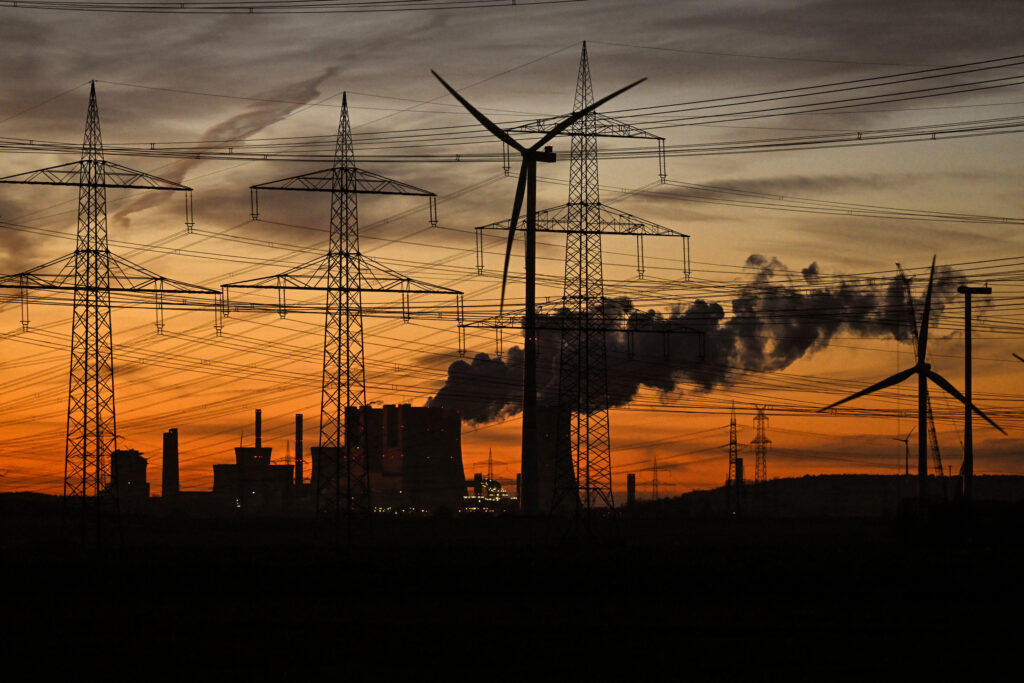
Fossil fuel emissions are pushing Earth’s climate toward a dangerous new phase of climate “overshoot,” scientists warned Wednesday in a new report from the United Nations Environmental Programme.
The report, Limiting Overshoot, projects that global temperatures will exceed the 1.5-degree Celsius (2.7 degrees Fahrenheit) warming threshold identified in the Paris Agreement within a few years, intensifying deadly climate impacts. It says the best chance of restoring a safe climate is to begin cutting greenhouse gas emissions immediately, halve them by 2035, and figure out ways to remove billions of tons of carbon dioxide from the atmosphere before the end of the century.
The 1.5 degrees of warming identified in the report and the Paris pact refers to the increase in global temperatures since the preindustrial period of 1850 to 1900, before humans altered the atmosphere and climate with billions of tons of fossil fuel emissions and other industrial and agricultural pollution.
Under the 2015 agreement, more than 190 countries pledged to keep the global temperature below that level because they knew warming above that would mean even greater intensification of extreme weather events, ecosystem losses and the potential submersion of small island countries.
Multiple scientific studies, including global assessments from the Intergovernmental Panel on Climate Change, project that warming of more than 1.5 degrees Celsius will cause severe damage to human health, food and water supplies, as well as infrastructure and economies.
Scientists have calculated that at the current pace of emissions, warming could reach a catastrophic 2.7 to 3 degrees Celsius by 2100. If all the measures promised by governments under the Paris Agreement are implemented, warming could be limited to about 1.7 or 1.8 degrees Celsius, which would make it easier to return below the 1.5-degree Celsius threshold.
If Earth’s fever stays in the ‘overshoot’ zone too long, it could push ice sheets and key heat-carrying ocean currents past tipping points “that become difficult or impossible to reverse on human timescales,” the report concludes.
“We must make the overshoot as small and short as possible, limiting how high temperatures rise and how long they remain above 1.5 degrees Celsius,” said United Nations Secretary-General António Guterres.
The new report, he added, identifies a triple play of climate action: accelerating the phaseout of fossil fuels and the transition to renewable energy, slashing methane pollution and protecting climate allies, such as lands, forests and oceans, that take heat-trapping carbon dioxide out of the atmosphere.
“We’ve failed to act on the options that were available 15 or 20 years ago to reduce emissions rapidly,” said report co-author Joeri Rogelj, a climate scientist at the International Institute for Applied Systems Analysis in Austria and a professor at Imperial College London. “The reality is that we have failed in that endeavor, and it needs to be acknowledged.”
The new report does just that, and it is alarming because the climate impacts projected for warming above 1.5 degrees Celsius are “unacceptable or unbearable for at least the poorest and the most vulnerable communities around the world,” he said. This summer, with heatwaves that killed thousands in Europe and burned parts of towns in North America, showed that developed countries in the Global North are not immune, he added.
“We need to face the consequences of this failure by dealing with the unavoidable impact,” he said. He added that there is a wide gap between doing nothing by allowing warming to continue for the rest of the century, and acting now to limit the peak temperature and the length of time the global temperatures remain above the threshold.
Co-author Carl-Friedrich Schleussner, another climate researcher at IIASA, said the report doesn’t just document the state of the global climate. Given the climate impacts happening at about 1.4 degrees Celsius warming, he said the report is “more about what it means for us here now, and what the response needs to look like.”
As warming heats the planet at the rate of half a degree Celsius every 20 years, he said “extreme events and climate-driven natural disasters are increasingly exceeding the capacities of ecosystems and of human systems.”
This summer’s extremes show this happening now, not in the distant future, he said, with extreme heat in Europe hitting places where it’s been rare and overwhelming the adaptive capacity of hospitals, schools and retirement homes. Extreme heat contributed to about 15,000 heat-related deaths in Germany, one of the most developed countries in the world.
“We are seeing what it entails to adapt to climate change, and we are seeing that we have an enormous gap,” Schleussner said. “We are really lagging behind. We are not prepared for what’s coming.”
About This Story
Perhaps you noticed: This story, like all the news we publish, is free to read. That’s because Inside Climate News is a 501c3 nonprofit organization. We do not charge a subscription fee, lock our news behind a paywall, or clutter our website with ads. We make our news on climate and the environment freely available to you and anyone who wants it.
That’s not all. We also share our news for free with scores of other media organizations around the country. Many of them can’t afford to do environmental journalism of their own. We’ve built bureaus from coast to coast to report local stories, collaborate with local newsrooms and co-publish articles so that this vital work is shared as widely as possible.
Two of us launched ICN in 2007. Six years later we earned a Pulitzer Prize for National Reporting, and now we run the oldest and largest dedicated climate newsroom in the nation. We tell the story in all its complexity. We hold polluters accountable. We expose environmental injustice. We debunk misinformation. We scrutinize solutions and inspire action.
Donations from readers like you fund every aspect of what we do. If you don’t already, will you support our ongoing work, our reporting on the biggest crisis facing our planet, and help us reach even more readers in more places?
Please take a moment to make a tax-deductible donation. Every one of them makes a difference.
Thank you,

Reporter, Austria
Bob Berwyn is an Austria-based reporter who has covered climate science and international climate policy for more than a decade. Previously, he reported on the environment, endangered species and public lands for several Colorado newspapers, and also worked as editor and assistant editor at community newspapers in the Colorado Rockies.
