

Close Menu
NCIJ Network NCIJ Network
    What's Hot

    U.S. Launches Strikes in Iran Targeting IRGC

    September 1, 2026

    Listening to households: expectations, behaviour and monetary policy

    September 1, 2026

    Sonos Ace Ultra, Beam Ultra, Sonos Fabric, and a New App: Everything Sonos Just Announced

    September 1, 2026
    Facebook X (Twitter) Instagram
    Trending
    • U.S. Launches Strikes in Iran Targeting IRGC
    • Listening to households: expectations, behaviour and monetary policy
    • Sonos Ace Ultra, Beam Ultra, Sonos Fabric, and a New App: Everything Sonos Just Announced
    • 13 Malicious Packagist Packages Target Unpatched iPhones to Steal Crypto Wallet Seeds
    • 21 Financial Giants Form Venture for G7 Stablecoins
    • The universe may have been building rocky planets almost from the start
    • Eagle LNG draws $30M Datacentrex bet as US space launch boom accelerates
    • Your Right to Know: Let the public copy court records
    • About
      • Our Team
      • Editorial Policy
      • Editorial Independence
      • International Support
    • Trust & Standards
      • AI Usage Policy
      • Conflict of Interest Policy
      • Corrections Policy
      • Ethics Policy
      • Fact-Checking Policy
      • Source Protection
    • Get Involved
      • Guide for Sources
      • Support Independent Journalism
    • Legal
      • Cookie Policy
      • Privacy Policy
      • Terms of Use
    Facebook X (Twitter) Instagram
    NCIJ Network NCIJ Network
    Tuesday, September 1
    • Home
    • World
    • Ai
    • Business
    • Politics
    • Health
    • Crypto
    • Science
    • Technology
    • Cybersecurity
    • Defense & Security
    • Economy
    • Energy
    • Europe
    • More
      • Fact Check
      • Investigations
      • Opinion & Analysis
      • Environment
    NCIJ Network NCIJ Network
    Home»Science

    The universe may have been building rocky planets almost from the start

    NCIJ NETWNCIJ NETWORKBy NCIJ NETWNCIJ NETWORKSeptember 1, 2026 Science No Comments3 Mins Read
    Share
    Facebook Twitter LinkedIn Pinterest Email

    The universe’s first rocky planets may have gotten their start astonishingly early — perhaps only 100 million years after the Big Bang.

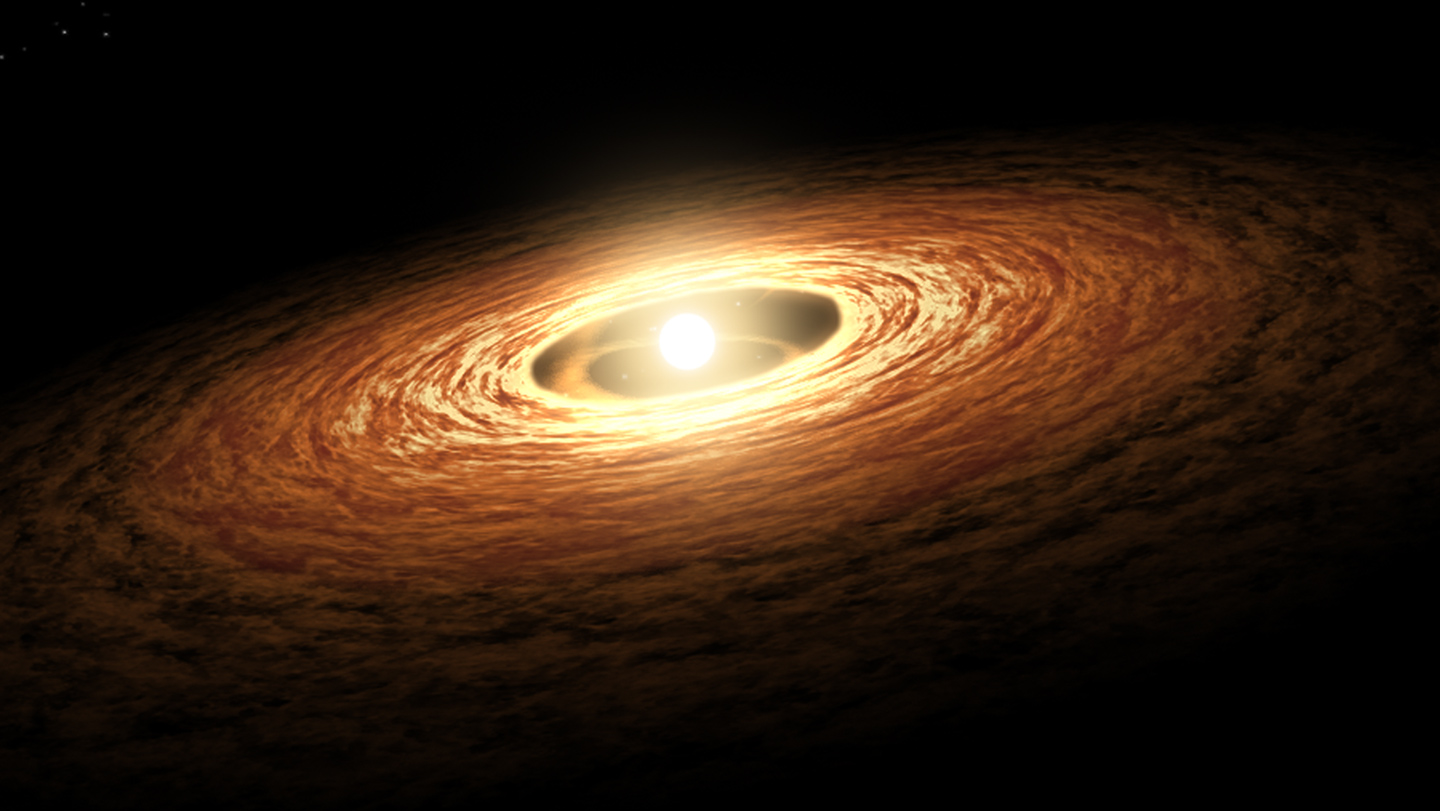
    Explosions of some of the universe’s first massive stars could have created isolated pockets rich enough in dust and elements like iron and carbon to form the building blocks of planets, a new computer simulation suggests. The simulation produced enough rocky building material to potentially make several Earth-sized planets, and there was water available in the young stellar system that could have made it to the planet just a bit later, researchers report August 19 in Astrophysical Journal Letters.

    Sign up for our newsletter

    We summarize the week’s scientific breakthroughs every Thursday.


    “Habitable worlds, in principle, could have formed billions of years earlier than previously thought, even before the first galaxies formed,” says astronomer Daniel Whalen, of Portsmouth University in England. “These simulations really go to the real true origin of life in the universe.”

    Researchers had previously tried to understand when planets formed using large-scale computer simulations to figure out when enough of the heavy elements — such as carbon, oxygen, and iron — would have accumulated. But Whalen and colleagues wanted to take a more detailed look at the most element-enriched regions in the early cosmos — debris fields left behind after the universe’s first giant stars exploded as supernovas. Because these regions would have had higher heavy element content than the universe overall, maybe they could have formed planets much earlier, the astronomers thought.

    The researchers used the simulations to track the evolution of debris from a type of supernova called a pair instability supernova, which can create 100 times the sun’s mass of heavy elements. The simulations showed the debris mingled with gas in the early universe, eventually collapsing to form a small new star surrounded by a dusty disk. In the disk, the researchers found planetesimals — small rocky bodies a few meters to kilometers across that are the embryos of planets. Notably, some planetesimals formed at the right distance from the star to have liquid water.

    “The study would indicate that all the way up back almost to the very beginning there may have been conditions for life being set in place,” says astrophysicist Jarrett Johnson of the Los Almos National Laboratory in New Mexico who was not involved with the new study. “Just because there are planets forming doesn’t mean there’s life, of course, but the ingredients are being put in place pretty much as early as they possibly could be.”

    It’s possible that some of these earliest planets could still exist, Whalen says. The star that formed in the simulation was around 70 percent the mass of the sun, making it very long lived. If one of those such systems made it into the Milky Way, they could easily be identified as ancient systems based on their chemical makeup.

    “[Finding one] is well within the realm of possibility,” Whalen says.

    He and his colleagues are now working to simulate the next stage of the planetesimals growth to see what types of planets they ultimately form. They’re also interested in looking at what might happen around a different type of supernova thought to be more common in the early universe. But even the first results are inspiring astronomers to ask new questions.

    “I think it opens up the window to think about what could have happened in the 13 billion years plus since those first planets formed,” Johnson says. “The studies suggest that we probably should consider that more carefully.”

    building planets Rocky start Universe
    NCIJ NETWNCIJ NETWORK
    • Website

    Keep Reading

    A massive plume deep beneath Africa is pulling the continent apart

    Reaching 90 without dementia doesn’t mean you’re in the clear

    Scientists discover why snake embryos twist into spirals

    Mindfulness may lower blood pressure in just 8 weeks

    Hackers Start Exploiting Critical Langflow Vulnerability

    A cancer therapy put severe rheumatoid arthritis into remission

    Add A Comment
    Leave A Reply Cancel Reply

    Editors Picks

    U.S. Launches Strikes in Iran Targeting IRGC

    September 1, 2026

    Listening to households: expectations, behaviour and monetary policy

    September 1, 2026

    Sonos Ace Ultra, Beam Ultra, Sonos Fabric, and a New App: Everything Sonos Just Announced

    September 1, 2026

    13 Malicious Packagist Packages Target Unpatched iPhones to Steal Crypto Wallet Seeds

    September 1, 2026
    Latest Posts

    Bitcoin Only Makes Up 1% Of Legendary Investor Ray Dalio’s Portfolio

    July 30, 2026

    AI Harnesses Burst With Potential Exploit Opps

    July 30, 2026

    LinkedIn actually adds a ‘seems like AI slop’ button

    July 30, 2026

    Subscribe to News

    Get the latest sports news from NewsSite about world, sports and politics.

    NCIJ Network is an independent digital news platform delivering trusted investigative journalism, European and global news, in-depth analysis, and fact-based reporting with accuracy, transparency, and integrity.

    Facebook X (Twitter) Instagram Pinterest YouTube

    U.S. Launches Strikes in Iran Targeting IRGC

    September 1, 2026

    Listening to households: expectations, behaviour and monetary policy

    September 1, 2026

    Sonos Ace Ultra, Beam Ultra, Sonos Fabric, and a New App: Everything Sonos Just Announced

    September 1, 2026

    Subscribe to Updates

    Get the latest creative news from FooBar about art, design and business.

    Type above and press Enter to search. Press Esc to cancel.