


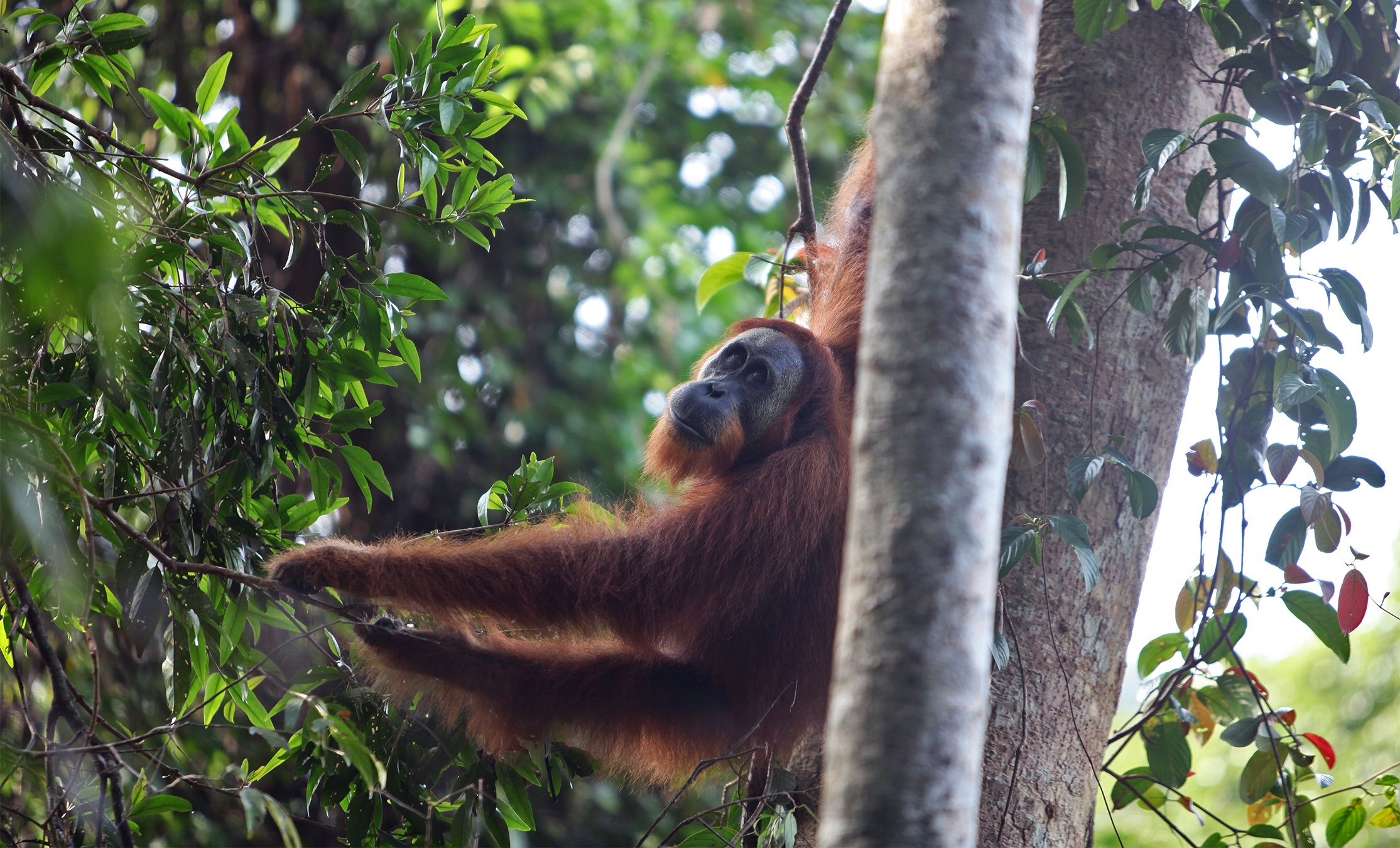
- New analysis by Indonesia’s largest environmental pressure group shows illegal goldminers have encroached Indonesia’s Jantho forest reservation, a vital reintroduction site for the charity workers and state biodiversity officials trying to save the critically endangered Sumatran orangutan from extinction.
- Global investors have rushed to buy gold to maintain wealth against inflation and political instability, exacerbated by the Trump administration and Russia’s invasion of Ukraine.
- The total area damaged by goldminers in Indonesia’s Jantho reservation according to satellite analysis exceeds 14 hectares (around 35 acres), equivalent to approximately 20 football pitches.
- A traditional administrator for the Jantho area in Aceh, a semiautonomous province of Indonesia, said 13 local villages had united against mining in the area, and had reported the miners to local authorities.
JANTHO, Indonesia — Illegal gold miners in Indonesia’s Aceh province have breached a crucial reintroduction forest for critically endangered Sumatran orangutans rescued from the illegal wildlife trade.
“The result of our monitoring indicates that maybe dozens of excavators are suspected of operating in the Jantho forest area,” said Afifuddin, campaign and advocacy lead at the provincial chapter of the Indonesian Forum for the Environment (Walhi), the country’s largest environmental pressure group.
The Indonesian government established the Jantho orangutan reintroduction area more than 15 years ago within the wider protected forest known as the Jantho Nature Reserve. Jantho is located in Aceh province, on the northern tip of Sumatra.
There were no Sumatran orangutans (Pongo abelii) living in what is now the Jantho reintroduction forest when conservationists began releasing animals there in 2011.
Since then, the Sumatran Orangutan Conservation Programme (SOCP), which works with the Indonesian government on the reintroduction effort, has released nearly 200 orangutans into the forest. It remains one of the country’s most successful release sites for the critically endangered great apes.
The Jantho sanctuary was chosen for reintroduction due to its habitat of fig trees, a key food source for orangutans, and proximity to the Leuser Ecosystem, which is home to most of the Sumatran orangutans that remain in the wild.
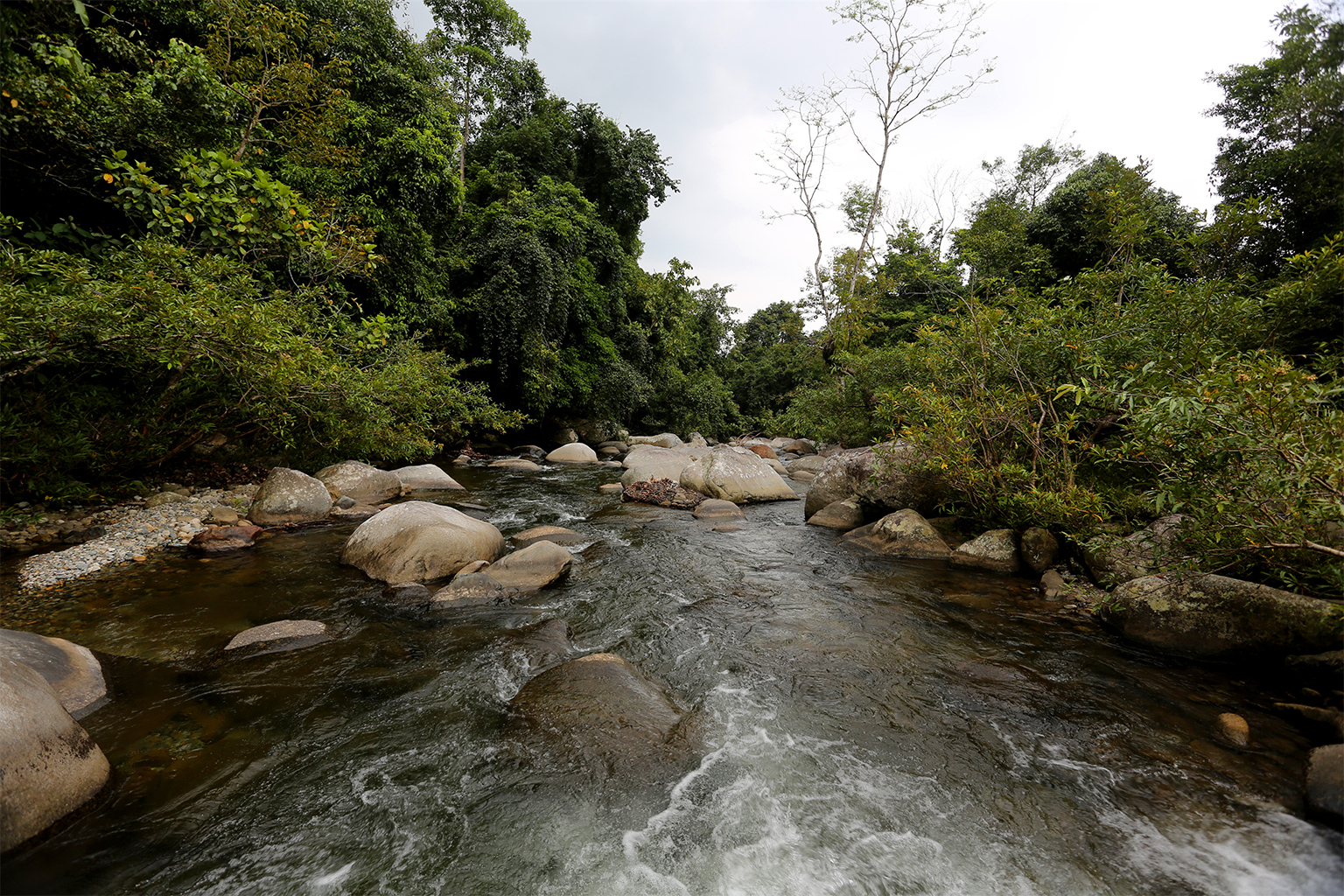
However, new analysis by Walhi’s Aceh chapter found that approximately 14 hectares (35 acres), of the Jantho Nature Reserve had been damaged by illegal gold mining between 2023 and May 2026 — a period in which the price of gold more than doubled, from around $1,928 an ounce in early 2023 to more than $4,600 in May 2026.
The surge in the price of precious metals has accompanied a global rush for gold as investors seek to insulate wealth from inflation and geopolitical instability, including tensions intensified by the U.S. government, and Russia’s full-scale invasion of Ukraine.
Biodiversity at risk
The most recent conservation assessment by the IUCN, the global wildlife conservation authority, estimated that 13,846 Sumatran orangutans remained in the wild. But that assessment was conducted in 2017.
Orangutans brought into rescue programs often arrive having suffered trauma from both capture and prolonged captivity.
The goal of the Jantho reintroduction site is to return healthy animals to protected forest where they can reproduce and establish self-sustaining wild populations. But the forest these animals are being returned to is itself under pressure.
Hanif, spokesperson for a coalition of local activist groups known as the Jantho Bergerak Alliance, said illegal mining has increasingly damaged the Jantho reserve over the last three years.
Community sources said access to the illegal mining sites likely originated from the Tangse area of Aceh’s Pidie district, located to the east of Jantho.
“We urge the government to immediately stop the illegal gold mining taking place in the upstream of the Krueng Aceh Basin, as well as in the Jantho Nature Reserve,” Hanif said.
Many here worry that the impact of mining pollution in the watershed of the Krueng Aceh River could cause lasting contamination of a crucial water source, potentially threatening a range of development indicators from child stunting to educational attainment through to adulthood.

“The impact isn’t only felt at the mining site, but also in the communities who use the river as a source of clean water, irrigation for farming, and fisheries,” Afifuddin said.
Darwin, Jantho’s imum mukim, an Acehnese traditional community leader, said the community stance against illegal mining had been decided after a meeting of 13 villages in Jantho.
“We have held discussions with village heads, community leaders, youth leaders, and youth representatives. As a result, we agreed to reject all illegal mining activities and illegal mining in the upstream area of the Krueng Aceh,” Darwin said on June 29.
Darwin said pollution meant many residents had experienced difficulties catching fish, while households relying on river water faced new problems in obtaining drinking water
In April, the community reported illegal mining to the Aceh Besar district police and the provincial conservation department, the BKSDA.
From June 16-20, a joint operation by the police, the BKSDA, the forestry ministry’s law enforcement division (Gakkum), and the local community conducted spot inspections of the. suspected mining sites.
Ujang Wisnu Barata, head of the BKSDA, said illegal mining had damaged the Jantho Nature Reserve. The damaged areas are “split across three sites that are close to each other,” Ujang said on June 30.
However, the search found no heavy equipment operating in the nature reserve. Instead, the team put up warning signs and razed a mining encampment in addition to destroying some light equipment found at the scene.
Illegal mining is a particularly dangerous vocation, with long-term health risks caused by exposure to mercury in addition to the risk of injury or even death in an accident. The Walhi chapter in West Sumatra province has recorded 48 deaths among miners there over the last 15 years.
Deforestation over decades and major wildfires have fragmented orangutan habitat across Sumatra, driving steep population declines.
Species recovery is hampered by an exceptionally slow reproductive rate, with Sumatran orangutans typically giving birth to a single offspring nine years apart, which is the longest interbirth interval of any of the apes.
“Significant areas of the orangutan’s range are seriously threatened by logging, mining concessions and agricultural plantations, while new roads are continuously being cut through the habitat,” the IUCN noted in its 2017 assessment.
“If the rate of decline observed since 1985 and predicted continues unabated, the population decline will exceed 80% over a three-generation period,” the IUCN warned.

The area is also home to siamang gibbons (Symphalangus syndactylus), sun bears (Helarctos malayanus), and dozens of rare bird species.
For orangutans and the conservationists working to support them, the Jantho reintroduction forest is a place of hope: On May 22, fieldworkers confirmed that Bulan, a female orangutan rescued from traffickers and returned to the wild seven years ago, had given birth in the Jantho reservation. This was the 11th live birth recorded by the charity managing the reintroduction in partnership with the Indonesia government.
The discovery, which Mongabay reported on earlier this month, presented fresh hope that reintroduced Sumatran orangutans can establish viable breeding populations. The government says it will increase security to the support the reservation.
“Monitoring of conservation areas will continue to be tightened through routine patrols and coordination with law enforcement and local governments to prevent the resumption of illegal mining activities,” said Ujang from the Aceh conservation department.
Banner image: A Sumatran orangutan. Image by Rhett A. Butler/Mongabay.
This story was first published here in Indonesian on July 22, 2026.
Rescued from traffickers, reintroduced orangutan becomes mother in the wild
Palm oil clearing advances in Bornean orangutan habitat despite red flags

