

Close Menu
NCIJ Network NCIJ Network
    What's Hot

    Ransomware extortion gets personal as attackers target employees’ families

    October 15, 2026

    At the White House, crypto policy vacancy looms large

    October 15, 2026

    Eating late at night linked to up to 30% higher risk of liver disease

    October 15, 2026
    Facebook X (Twitter) Instagram
    Trending
    • Ransomware extortion gets personal as attackers target employees’ families
    • At the White House, crypto policy vacancy looms large
    • Eating late at night linked to up to 30% higher risk of liver disease
    • Climate Change Is Increasing Simultaneous Exposure to Heat Waves and Wildfire Smoke
    • Alaska Ad Criticizing Sullivan’s Votes Leaves Out Context, Makes False Suggestion
    • School headscarf ban sparks rare protests in Azerbaijan and row with Turkey
    • France drops opposition to UK being included in ‘Made in Europe’ legislation | European Union
    • Burnham asks for ‘manual trawl’ of records for former Man City links
    • About
      • Our Team
      • Editorial Policy
      • Editorial Independence
      • International Support
    • Trust & Standards
      • AI Usage Policy
      • Conflict of Interest Policy
      • Corrections Policy
      • Ethics Policy
      • Fact-Checking Policy
      • Source Protection
    • Get Involved
      • Guide for Sources
      • Support Independent Journalism
    • Legal
      • Cookie Policy
      • Privacy Policy
      • Terms of Use
    Facebook X (Twitter) Instagram
    NCIJ Network NCIJ Network
    Thursday, October 15
    • Home
    • World
    • Ai
    • Business
    • Politics
    • Health
    • Crypto
    • Science
    • Technology
    • Cybersecurity
    • Defense & Security
    • Economy
    • Energy
    • Europe
    • More
      • Fact Check
      • Investigations
      • Opinion & Analysis
      • Environment
    NCIJ Network NCIJ Network
    Home»Opinion & Analysis

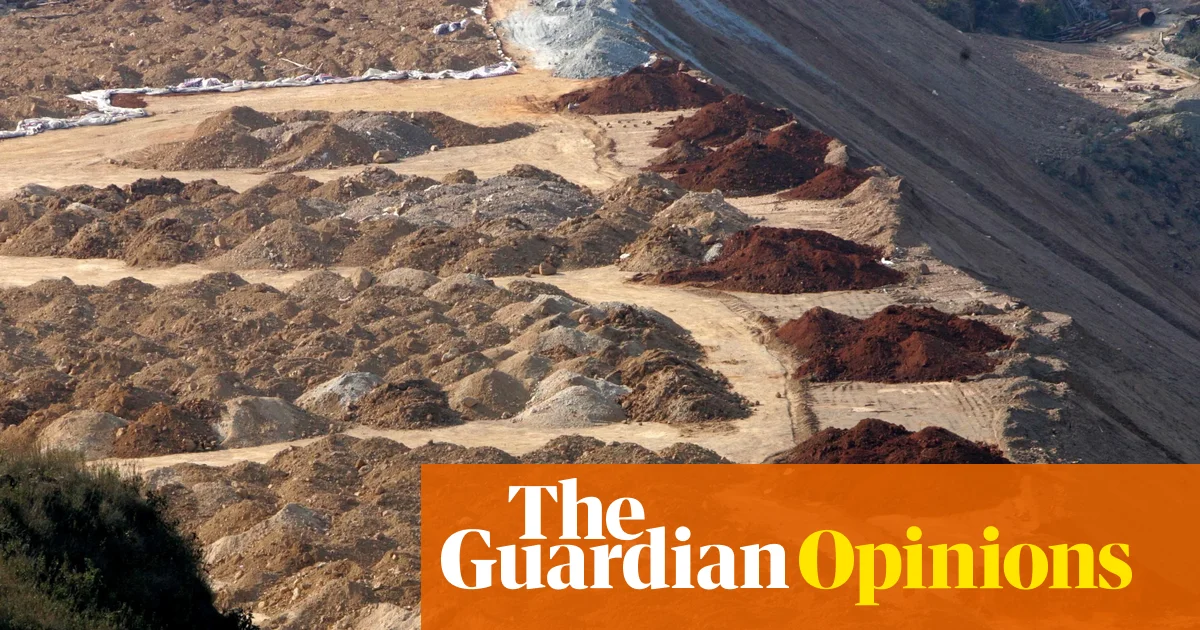
    The Guardian view on rare earths: it’s common sense to secure essential supply chains | Editorial

    NCIJ NETWNCIJ NETWORKBy NCIJ NETWNCIJ NETWORKAugust 30, 2026 Opinion & Analysis No Comments3 Mins Read
    Share
    Facebook Twitter LinkedIn Pinterest Email

    The alarm sounded 16 years ago. In 2010, China blocked exports of key rare earths to Japan in a row over disputed islands in the East China Sea. The critical minerals are essential to everything from advanced weaponry and iPhones to electric vehicle batteries and wind turbines, so the rest of the world took note. But it didn’t take much action. China still accounts for about 70% of rare-earth mining globally and 90% of separation and processing.

    Then, last year, Beijing forced Donald Trump to back away from his trade war – not with its retaliatory tariffs, but the curbing of rare-earth exports. A scramble for new supplies began in earnest. The year-long trade truce is due to expire in November. The price of erbium, an element essential to communications infrastructure, has already jumped because of fears that export controls will soon be renewed.

    The 17 metals known as rare earths are far from rare; their name refers to the low concentrations in which they are found. Extraction and processing are costly, complex and often dirty, while returns are low. That’s why the US – which dominated the industry in the 1980s – and others outsourced production to China. Any plan to diversify supply chains must somehow build in predictable demand and pricing to succeed. Even now, US rare earths are reportedly flowing to Asia because of the lack of domestic demand. While “Big shovel” is becoming the new driver of geopolitics, rare earths are a tiny slice of the critical minerals market – worth less than $6bn globally last year.

    Efforts to diversify supply chains had already begun. But the US-China standoff accelerated them. Last autumn, the Pentagon became the single largest investor in the US firm MP Minerals. In February, the Trump administration announced that it would spend $12bn to create a critical minerals reserve, focusing initially on rare earths. US officials have reportedly described their plan to create new supply chains as a “Manhattan Project” for rare earths. Others question the strategy behind the splurge of money and projects.

    China, which imports rare earths for processing and has seen them affected by the war in Myanmar, also wants to diversify its supplies. Washington and Beijing are looking to South Africa, Greenland and, in particular, Brazil, raising grave concern about the ecological impact. Innovation, particularly in finding ways to recycle rare earths or extract them from mining waste or runoff, could help meet demand and reduce environmental damage. But it will not stop the extraction drive.

    Earlier this year, the US launched a critical minerals coalition with 54 partners, including Australia, the European Commission and the UK. A multilateral approach is essential. But Europe and others know it would be extremely risky to count on Washington solely, given the unreliability of the Trump administration, its wild use of trade weapons and its threats to invade Greenland. Stockpiles of essential rare earths, serious investment and stronger partnerships with likeminded allies will be central to a solution. The 2025 European Critical Raw Materials Act set targets for reducing import dependence by 2030. France is already home to the biggest facility outside China to process all 17 rare earths, and a deal for Brazilian minerals is under discussion. But many fear that European countries are moving too slowly. That must change.

    Chains common Earths Editorial Essential Guardian rare secure sense supply view
    NCIJ NETWNCIJ NETWORK
    • Website

    Keep Reading

    School headscarf ban sparks rare protests in Azerbaijan and row with Turkey

    Power Up: Roll Out Solar Arrays Boost Space Station Power Supply

    Nepal Lost Flood-Detection Tools After USAID Was Destroyed

    Many American diets may not include enough of this essential nutrient

    Spanish Foreign Minister Albares on Trump, Ukraine, NATO, and Gaza

    Algeria’s New Bid for Regional Influence

    Add A Comment
    Leave A Reply Cancel Reply

    Editors Picks

    Ransomware extortion gets personal as attackers target employees’ families

    October 15, 2026

    At the White House, crypto policy vacancy looms large

    October 15, 2026

    Eating late at night linked to up to 30% higher risk of liver disease

    October 15, 2026

    Climate Change Is Increasing Simultaneous Exposure to Heat Waves and Wildfire Smoke

    October 15, 2026
    Latest Posts

    Early release scheme risks more serious crimes, probation chief warns

    August 12, 2026

    UK heatwave live: Met Office issues extreme heat warning as government convenes emergency Cobra meeting | Extreme heat

    August 12, 2026

    Rybakina defeats Osaka, advances to Canadian Open semifinals to play Gauff | Tennis News

    August 12, 2026

    Subscribe to News

    Get the latest sports news from NewsSite about world, sports and politics.

    NCIJ Network is an independent digital news platform delivering trusted investigative journalism, European and global news, in-depth analysis, and fact-based reporting with accuracy, transparency, and integrity.

    Facebook X (Twitter) Instagram Pinterest YouTube

    Ransomware extortion gets personal as attackers target employees’ families

    October 15, 2026

    At the White House, crypto policy vacancy looms large

    October 15, 2026

    Eating late at night linked to up to 30% higher risk of liver disease

    October 15, 2026

    Subscribe to Updates

    Get the latest creative news from FooBar about art, design and business.

    Type above and press Enter to search. Press Esc to cancel.