


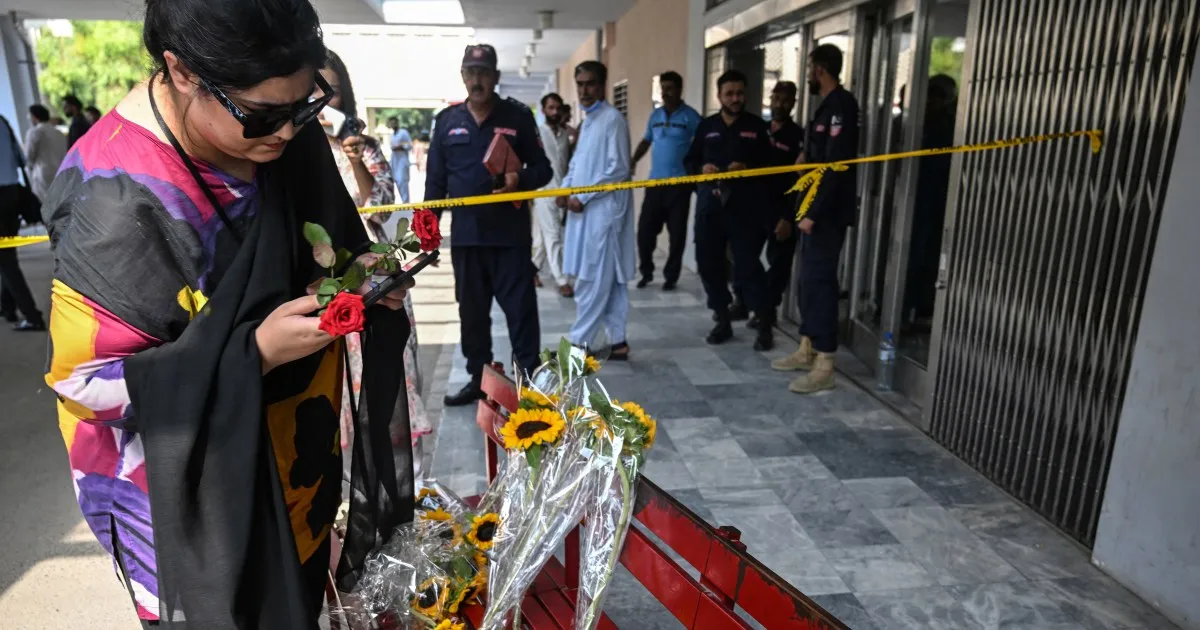
This week, three newborns died in an NICU (neonatal intensive care unit) fire at a government hospital in Amravati, in the western Indian state of Maharashtra. Two days later, 14 newborns were killed in a fire that broke out in the maternity ward at one of Pakistan’s most prominent state hospitals. The reported causes of the fire were different – a faulty ventilator in Amravati and an exploding air conditioner in Islamabad – but the harrowing stories of the parents on both sides of the border are identical.
On both sides, parents stand outside a government hospital, trying to make sense of this state-inflicted cruelty. In Amravati, one father was still distributing sweets to celebrate the birth; he had not yet seen the baby’s face. In Islamabad, a family was celebrating the first baby boy in years. The circumstances are different, but the institutional failures and official response followed a familiar pattern. Rescue teams arrived late, while emergency evacuation was hampered by basic fire-safety failures. Politicians were quick to express their sorrow. High-level inquiries were announced, along with financial compensation and fire safety audits. As the dust settles, the two tragedies expose the same indecent truth: lives of poor, vulnerable families are expendable in both nations.
The two countries are rivals in cricket, military posturing and diplomatic rhetoric, but united when it comes to spending lives of ordinary citizens like pocket change.
Over the past 26 years, as a health reporter, I have watched hospital fires in India and Pakistan result in significant and frequent loss of life, without a jot of difference in regulating these institutions. In India, the AMRI Hospital fire of 2011 in which 89 people died and the SUM Hospital fire in Bhubaneswar in 2016 in which 24 people died were traumatising to write about. Not a single person was convicted.
In Pakistan too, a fire at Services Hospital in Lahore killed 10 newborns in 2012 and another 11 infants died at Sahiwal Teaching Hospital in 2024.
I dredge these memories because the latest fires – in Amravati and Islamabad – cannot be reduced to stories about faulty equipment or individual negligence. The hospital fires did not happen in the boondocks, but in India’s wealthiest state and Pakistan’s capital. They are stories about government priorities.
The longer you look at government data, the more grisly it gets. Year on year, both nations sacrifice their citizens to fire like medieval societies trying to appease indifferent gods. India and Pakistan are not poor or war-torn countries without knowledge or wealth to do what is needed. The refusal to make any meaningful improvements is a political choice. An unforgivable one at that.
India and Pakistan have spent decades convincing their citizens that the highest form of security is protection from each other. The truth is that the greatest co-morbidity citizens of both nations live with is our own careless governments.
Fires in large buildings such as factories, shopping centres and hospitals are frequent in India and Pakistan, often due to poor compliance with safety laws and lax enforcement of building codes. These repeated incidents raise questions about our political system, the judiciary, our newsrooms and civil society all in one sweep. What they expose is the very core of these two democracies – what they prioritise and who they value. And all the questions raised are being answered in one voice – not the vulnerable or the sick or the poor.
Earlier this month, both nations marked 79 years of independence. Both have, for 79 years, reminded each other of the pride they take in their complicated histories and their fabled cultures, languages and cuisines. Yet, on both sides of the border, we are governed with careless barbarity. What we have right now are nations that have the trappings of procedural democracies but refuse to concern themselves with bringing change to the poorest. We are taught to sacrifice – wealth, family members, dignity – everything in the service of our nation, and must forage for our own safety without expecting anything from the governments.
This week, as I watched newborns utterly unable to protect themselves die in an inferno on both sides of the border, I wondered if the men leading both states are filled with some shame. Shame over the fact that women who had just given birth had to run down several flights of stairs and climb out of windows and down ladders to escape. Or that families found to their horror that the ward’s water spray system failed to function when the fire broke out. Or that these families will spend the rest of their lives recovering from the horror of seeing charred babies, their bodies covered in black ash.
I wondered what the military might and nuclear arsenal mean to Prime Minister Narendra Modi and Prime Minister Shehbaz Sharif as they stand facing a mother crying outside a neonatal ward. This is not polemic or rhetoric, simply a sober assessment of our incompetent leadership that has no love for its own people. Because countries that can spend billions preparing for war cannot plausibly claim that a functioning sprinkler system or fire safety regulation in a hospital is an unreasonable expectation.
Fire safety is not a luxury. It is not a Western or colonial aspiration. It is not even an infrastructure of affluence – like, say, bullet trains – that a country acquires once it has become sufficiently rich, sufficiently modern or sufficiently powerful. It is the floor. The floor beneath which a government cannot allow its people to fall repeatedly and remain shamelessly indifferent every single time.
Seventy-nine years is a long time for a country to become itself. Long enough to build armies, send satellites into space, build a nuclear arsenal and to flex them at neighbours. But what good is national security if a newborn cannot survive the building in which she was born? Or does security only mean the ability of the state to protect itself from another state – while its citizens die like insects in unpredictable ways.
The parents in Amravati and Islamabad did not need a nuclear arsenal to defend their babies. They needed the fire alarm to work and emergency exits to not be blocked. Nations that cannot guarantee such a basic amenity must have no right to national pride.
The views expressed in this article are the author’s own and do not necessarily reflect Al Jazeera’s editorial stance
