


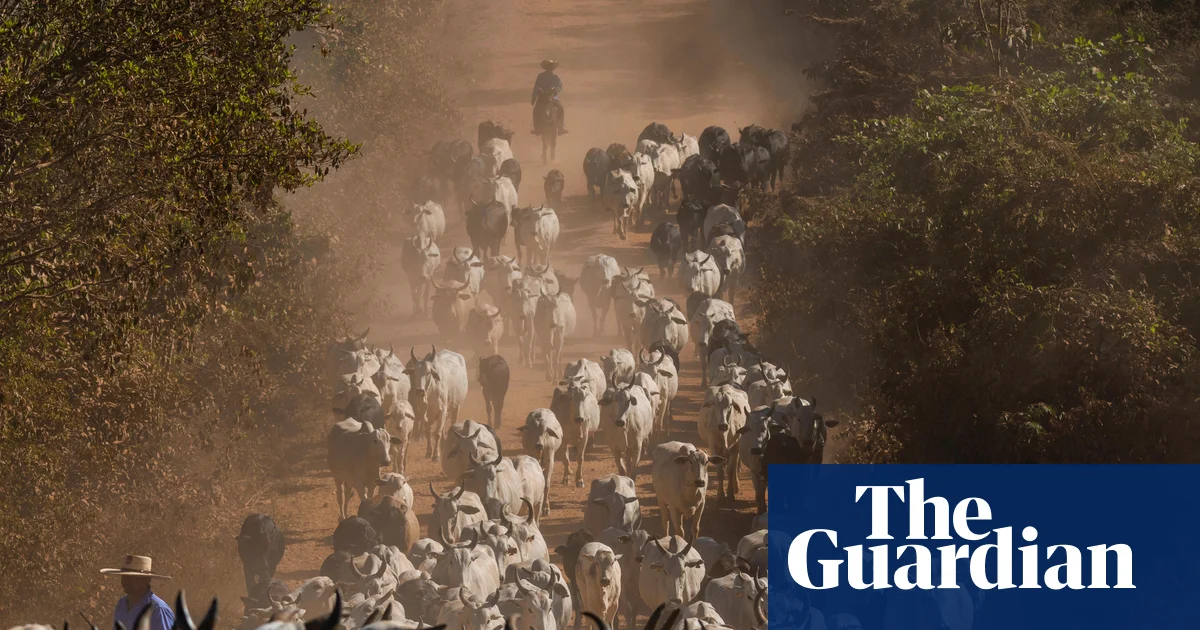
The UK’s leading farming organisations and animal health experts have called for an urgent ban on imports of Brazilian meat, in light of concerns over the safety of imports.
The National Farmers’ Union in England and its sister organisations in the devolved administrations wrote to the government on Friday warning that public health was at risk.
Brazilian cattle and poultry are feared to be frequently reared with the routine use of antibiotics, after the country failed to demonstrate compliance with EU rules on the issue despite a tightening of some regulations by the government.
The overuse of antibiotics in farming is a leading cause of the growth of superbugs, which are resistant to antibiotic medicines critical for human health.
Next week, the EU will ban imports of Brazilian beef and chicken over the same concerns, but Brexit means the UK can refuse to follow suit. Imports to the UK from Brazil have risen strongly since Brexit, from about £3bn in 2021 to £5bn in 2025, of which meat is a big component. In 2024 Brazil accounted for about an eighth of UK chicken imports.
Farmers, who are already concerned about falling meat prices while input prices for feed and energy have risen, fear that with the closure of the EU market to Brazilian meat exports, more will be diverted to the UK.
Although Brazil has moved to restrict the routine use of antibiotics on farms, an investigation published last year by the Irish Farmers Journal and the Irish Farmers’ Association found that Brazilian farmers had easy access to antibiotics classified as highest-priority critically important in human medicine, without a veterinary prescription, and that traceability rules were not being applied.
Cóilín Nunan, of the Alliance to Save Our Antibiotics, said: “The rise of antibiotic resistance is a global health crisis. Each year it is directly responsible for about 1.14m deaths and associated with 4.71m deaths.
“We know that resistant pathogens can spread internationally on food. So why are we still importing meat from countries like Brazil that are allowing the irresponsible use on intensive farms of even the most critically important antibiotics?”
Tom Bradshaw, the president of the NFU, which represents farming businesses, in July met the secretary of state for the Department for Environment, Food and Rural Affairs (Defra), Angela Eagle, to demand a ban but the government has so far refused one.
A spokesperson for Defra told the Guardian: “Our experts have sought urgent information and assurances from Brazil as part of a rapid assessment of beef and poultry production systems to ensure our high food and animal welfare standards are being met, while closely monitoring market impacts of the EU ban. This government will always act to protect our farmers and the public with our world-leading robust import controls which are in place to protect animal and public health.”
In their letter to Eagle, the NFU’s presidents said: “Ensuring the health and safety of the nation is a core responsibility of any government and the UK has long recognised the risks posed by AMR [antimicrobial resistance]. UK farmers have worked hard to cut antibiotic use and maintain some of the highest production standards in the world – we should demand the same of our imported food. Failure to act will not only expose the nation to a public health risk, but damage consumer confidence in beef and poultry as a whole.”
The government is already under pressure on food safety, after an outbreak of salmonella in imported eggs that killed at least one person and made more than 200 people ill earlier this month. Previous investigations have also found poor monitoring of meat and farm products entering the UK since Brexit.
The UK’s failure to follow the EU’s lead in banning Brazilian meat imports will also further complicate the status of intra-UK trade with Northern Ireland, which under post-Brexit agreements follows EU rules on food and farming. Farmers said it would also hamper efforts to realign the UK with the EU for ease of trade, which the prime minister, Andy Burnham, is seeking as an economic boost.
Liz Webster, a beef farmer in Wiltshire and campaigner against Brexit, said: “This is a test of whether Britain genuinely intends to rebuild Europe’s shared food-safety perimeter or preserve Brexit divergence.”
The Brazilian government was contacted for comment.
