


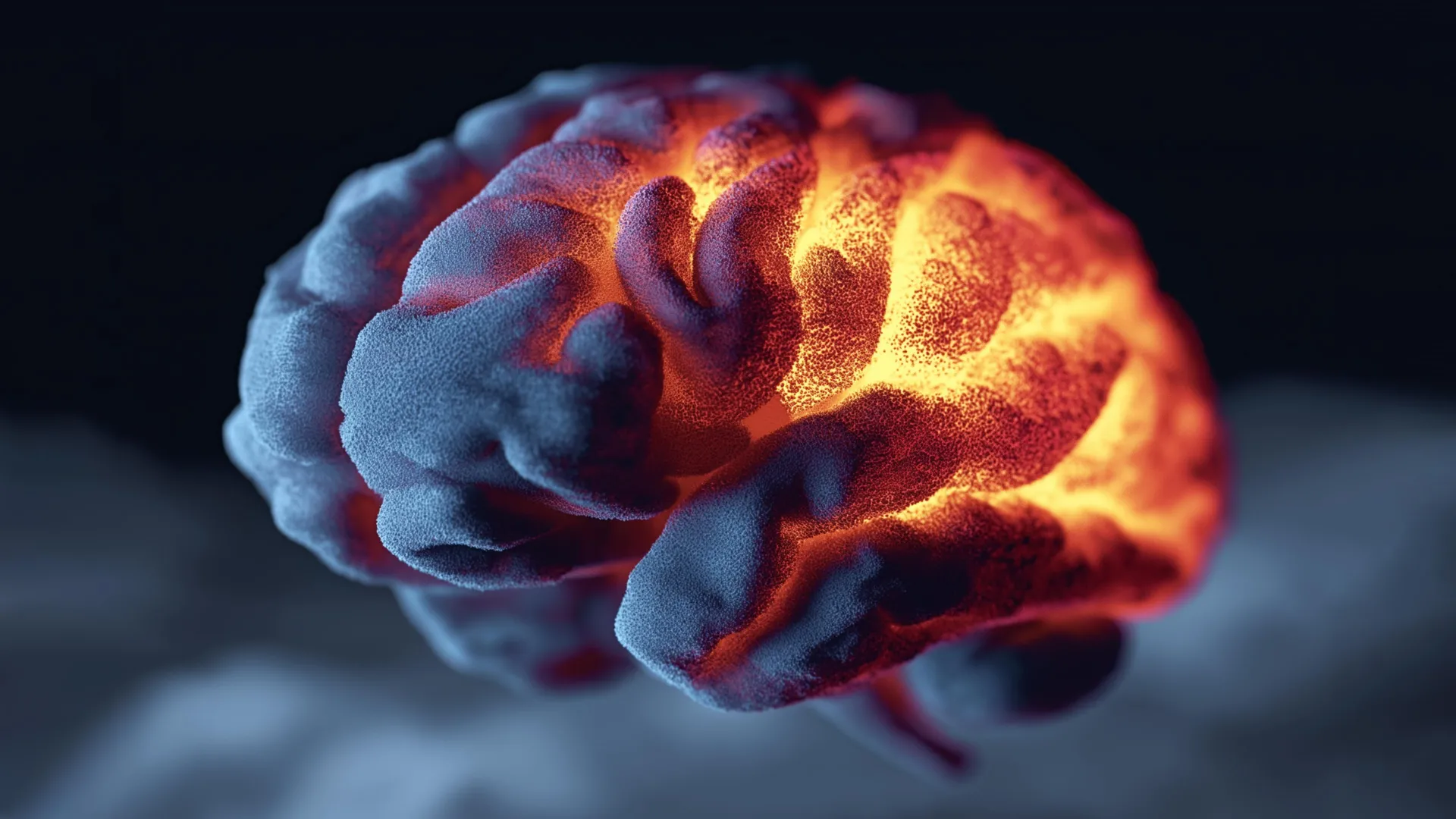
Deep inside the brain, a small group of nerve cells helps control how strongly pain signals are felt. Under normal conditions, this system can suppress pain traveling through the spinal cord. After nerve damage, however, the same circuitry can become overactive and help sustain chronic pain.
Researchers at Washington University School of Medicine in St. Louis have now identified a mechanism that helps explain this switch and may offer a way to reverse it. In mice, they found that receptors on cells in the brain’s main alert and stress center can act as biological brakes that restrain pain. These receptors were already known for their role in stress, but the new findings suggest they can also quiet a pain-producing circuit and reduce chronic neuropathic pain caused by nerve injury.
The study, published Aug. 17 in Current Biology, points to the locus coeruleus as a possible target for future pain therapies designed to act more precisely within the brain.
“Millions of adults live with chronic neuropathic pain caused by nerve damage,” said Jordan McCall, PhD, an associate professor in the Center for Clinical Pharmacology in the WashU Medicine Department of Anesthesiology and the study’s senior author. “The pain is difficult to treat, and traditional opioid medications bind to receptors throughout the entire body and brain, often leading to side effects, tolerance and addiction risk. Understanding how localized receptors in the locus coeruleus act as gatekeepers could lead to more targeted, effective pain therapies with fewer risks.”
How Nerve Damage Can Turn Up Pain
Neuropathic pain develops when injured nerve fibers repeatedly send abnormal signals to the brain. Those faulty messages can produce shooting, stabbing or burning sensations. Diabetes, viral infections and nerve compression are among the conditions that can lead to this type of pain.
To investigate how the process might be stopped, McCall’s team, including co-first authors Chao-Cheng Kuo, PhD, a postdoctoral research associate, and Makenzie R. Norris, a former graduate student, focused on the locus coeruleus, a brain region already known to help regulate pain.
The researchers first confirmed that nerve injury can transform the locus coeruleus into an active source of pain. When they temporarily silenced cells in this region in mice, animals modeling neuropathic pain became less sensitive to touch and heat compared with healthy mice.
Opioid Receptors Act as a Biological Brake
The team then examined opioid responsive receptors on cells in the locus coeruleus, focusing especially on mu opioid receptors.
Mu opioid receptors are found throughout the brain and spinal cord. When naturally produced opioids in the body, or synthetic opioids such as morphine and fentanyl, bind to these receptors, pain signaling across the nervous system is reduced. Because the locus coeruleus contains many of these receptors, the researchers investigated whether they play a particularly important role in controlling pain there.
They removed mu opioid receptors specifically from locus coeruleus brain cells in mice with neuropathic pain. Without those receptors, the animals became even more sensitive to touch and heat than mice whose locus coeruleus cells still had mu opioid receptors.
When the researchers restored the receptors to the same neurons, that increased sensitivity was reversed, effectively switching off the heightened pain response.
A More Precise Target for Chronic Pain
The findings suggest that chronic pain may interfere with the ability of mu opioid receptors to restrain activity in locus coeruleus brain cells.
The researchers are now investigating ways to alter activity in the locus coeruleus without affecting opioid receptors throughout the rest of the nervous system. Their goal is to develop therapies that engage mu opioid receptors specifically within this brain region, potentially delivering strong relief from chronic neuropathic pain while reducing the risks associated with drugs that act more broadly across the brain and body.
Kuo CC, Norris MR, Dunn SS, Becker LJ, Kim JR, Vazquez CR, Borges G, Thang LV, O’Brien JT, Parker KE, McCall JG. Mu opioid receptors gate the locus coeruleus pain generator. August 17, 2026. Current Biology.
This work was funded by the National Institutes of Health, grant numbers R01NS117899, R01NS135401, F31NS124301 and F31DA065440; the National Science Foundation, grant number DGE-2139839; the McDonnell Center for Systems Neuroscience; a Collaboration Support initiative for Translational Anesthesiology Research (COSTAR) award from the Department of Anesthesiology at Washington University School of Medicine; and the Rita Allen Foundation with added financial help from the Open Philanthropy Project. The content is solely the responsibility of the authors and does not necessarily represent the official view of the NIH.
