


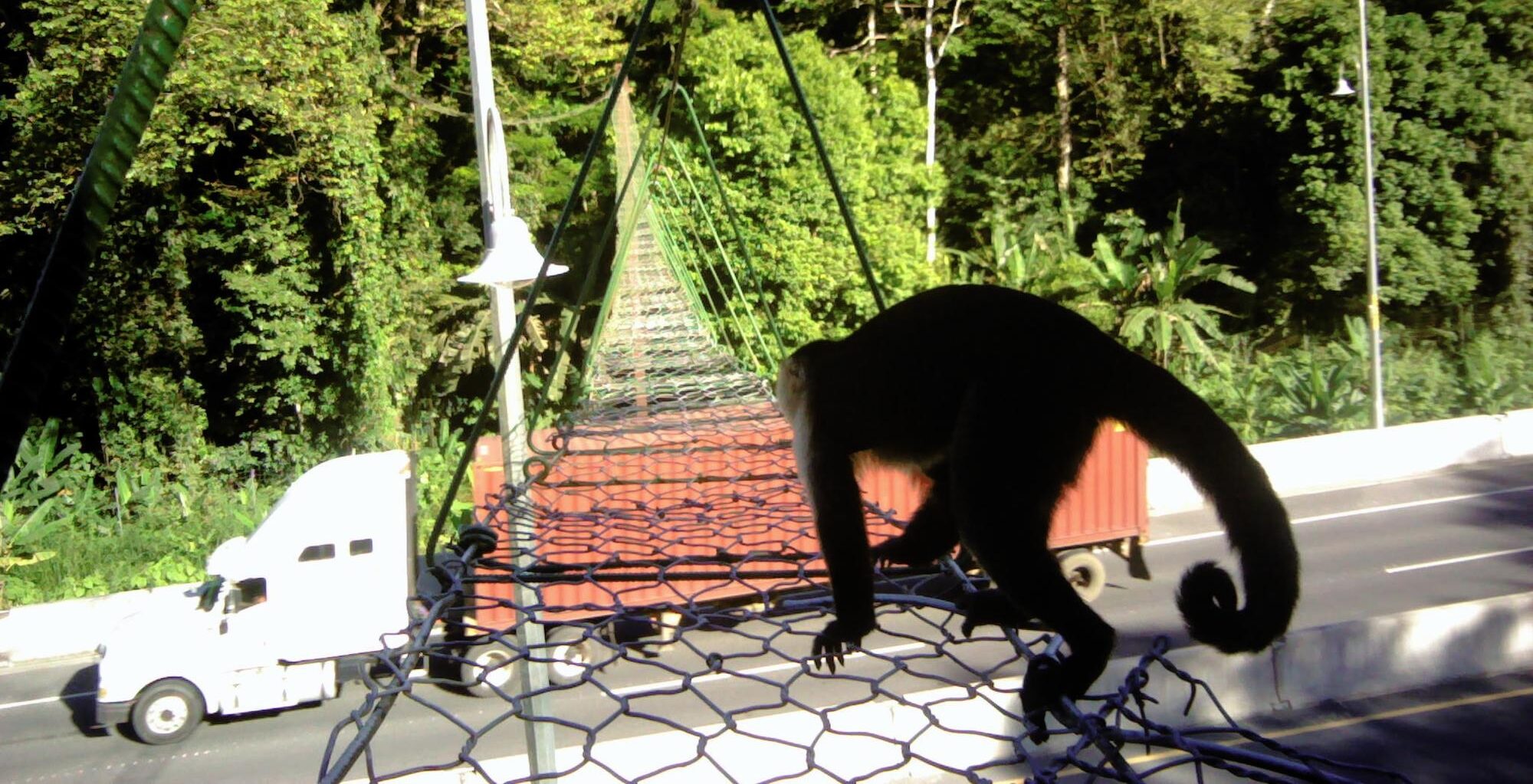
Costa Rican lawmakers unanimously voted to require wildlife crossings for new and existing road infrastructure when evidence shows the infrastructure interrupts natural connectivity and threatens wildlife safety. The measure, approved in August 2026, will help wildlife avoid being struck by cars while crossing roads and connect habitat, the regulation notes.
Once signed into law by the president, the regulation will require that new infrastructure projects must include wildlife crossings in the earliest stage of development and budgeting. Costa Rica’s National Environmental Technical Secretariat will be responsible for confirming such plans are sufficient and appropriate before they grant approval for new projects.
Existing roads may also require new wildlife crossings if the government is presented with information showing they are necessary.
“Anyone can contribute scientific data to show that a bridge is needed,” Rebecca Cliffe, the founder and director of the Costa Rica-based Sloth Conservation Foundation, told Mongabay in a video call.
Cliffe is planning a citizen science project to compile data from rescue centers and community reports in the South Caribbean and request bridges where they are needed.
Costa Rican roads are dotted with bright yellow wildlife crossing signs featuring sloths, tapirs and coatis. But a 2025 study from Brazil found such signs do little to actually slow down drivers.
Cliffe said these signs amount to “greenwashing” in Costa Rica. “No one’s slowing down when they see those signs.”
In contrast, wildlife crossings — which can include bridges, culverts, tunnels and ropes for arboreal species — are known lifesavers. Beyond saving animals, and drivers, from a collision, wildlife crossings also connect habitat. Without them, roads and development can fragment forests and prevent wildlife from accessing necessary space, mates and food.
At least 59 species have already been documented using wildlife bridges in Costa Rica. The most common users include monkeys, sloths, kinkajous (Potos flavus), and opossums.
The type of wildlife crossing can vary depending on the environment and local wildlife. For example, in some coastal areas of Costa Rica, crabs migrate annually from land to sea to lay their eggs. Many get killed while crossing roads on the way.
“When I first came here, 17 years ago, there were so many crabs that you couldn’t drive along the road. You had to dodge the crabs and there were just crabs everywhere for a few weeks of the year. Now there’s none,” Cliffe said.
A tunnel could help avoid casualties in areas where crabs still migrate, Cliffe said.
Costa Rica is a global biodiversity hotspot, and each year millions of ecotourists flock to the country, driving on the roads that imperil the wildlife they’ve come to see.
“Coexistence is so important for Costa Rica because it relies so heavily on ecotourism. So getting this balance right between development and conservation is essential,” Cliffe said.
Banner image: A white-faced capuchin (Cebus imitator) using a wildlife crossing. Image courtesy of Panthera/MOPT.
