


Shortly after taking office last year, Defense Secretary Pete Hegseth polled the nation’s top commanders about cutting a program designed to protect civilians during U.S. military operations.
Hegseth had bet senior officers would endorse his view that focusing on civilian security was “woke” and out of step with “maximum lethality,” current and former defense officials told ProPublica.
Instead, every commander rebuffed the idea.
The poll from early 2025, which has not been previously reported, cemented top-level military support for Civilian Harm Mitigation and Response, a relatively new program adopted after years of heavy civilian tolls in Iraq, Afghanistan and elsewhere. As part of its mission, CHMR (pronounced “chimmer”) stationed personnel within major regional commands. Officials tried to develop a picture of life on the ground in combat zones to aid decision-making on military strikes and avoid or minimize civilian harm.
In the poll, Hegseth gave commanders three options: cut 65% of staff but keep the effort operational, continue with only a small centralized office in Washington, or eliminate the program.
Nine commanders chose the first option to preserve the enterprise as much as possible, according to a memo reviewed by ProPublica. Leaders of two commands, one overseeing the nuclear arsenal and the other focused on cyber threats, declined all three options, asking to maintain the full program.
Leaders at U.S. Central Command, the Tampa, Florida-based center that oversees military action in the Middle East, pressed to keep its full CHMR staff of 16. Eliminating or scaling back the effort would “result in decreased efficiency of U.S. lethal operations due to an increased risk of target misidentification and reduced battlespace awareness,” a memo reviewed by ProPublica said.
Retired Army Gen. Erik Kurilla, who was then in charge of Central Command, and several other senior officers directly involved in combat operations had appealed to Hegseth to keep the program. They explained that it was a valuable tool, another retired general said — but “that intent was overridden.”
Hegseth gutted the effort, leaving only a handful of people to carry out the mission. It was stripped of almost all of its funding, even as the U.S. launched new campaigns in Somalia, Yemen and Iran. One official summed up the Hegseth approach as: “Bombs away!”
Hegseth’s early exchanges with the generals made clear that the civilian harm program had no future in his reimagined “Department of War.”
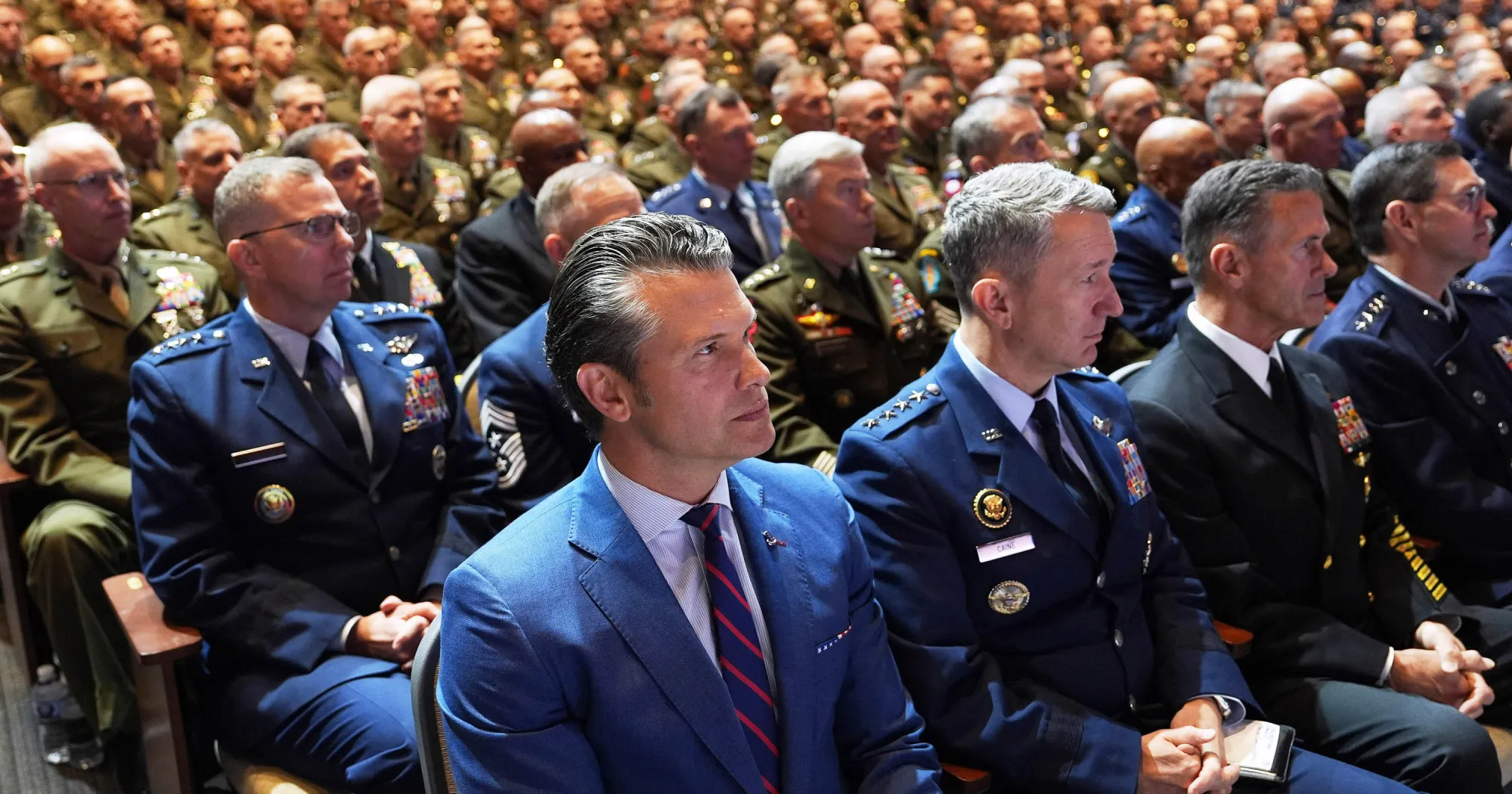
“No more politically correct and overbearing rules of engagement,” Hegseth would later tell a gathering of hundreds of generals and admirals.
But now, after U.S. missile strikes have killed hundreds of civilians in Iran and Yemen, episodes that drew global criticism and questions from Congress, the program could soon be partially revived.
The about-face would mark a rare reversal in a department that hasn’t tolerated dissent under Hegseth and President Donald Trump. Last year’s military memos detail a delicate pushback that may preserve at least the framework of the civilian security campaign.
Current and former defense officials described the evolution of the civilian security program on condition of anonymity for fear of retaliation from the Trump administration.
The Pentagon did not respond to requests for comment about the poll or the program’s revival.
Casualties, Outrage
The first major military operation of Hegseth’s tenure — an air campaign in Yemen in the spring of 2025 — killed 153 civilians and wounded 243 others. The majority of the deaths came from just two strikes, ranking them among the deadliest for civilians the Pentagon has acknowledged in modern warfare, said Airwars, a British watchdog that tracks civilian harm from military operations. The toll was confirmed in the Pentagon’s 2025 annual report for civilian casualties, The Washington Post first reported.
Hegseth described the Yemen operation at the time as a “clear, limited mission executed with ruthlessness, full stop.”
By the time the U.S. began attacking Iran the next year, the Pentagon’s civilian protection program was down from a little under 200 people to around two dozen, some working only part time, the current and former defense officials said. Central Command, which said it needed a minimum of nine of its 16 staffers to function, was left with one person.
On the first day of the U.S. and Israel’s war on Iran, a U.S. airstrike hit a school in Minab, a city near the Strait of Hormuz, killing more than 100 children and igniting international outrage.
Hegseth and the commander in charge of the Iran operation, Adm. Brad Cooper, were questioned about the strike before Congress. Hegseth said the U.S. does not target civilians and would investigate. Early reports on that investigation, yet to be publicly released, have said outdated U.S. intelligence led to the attack on the school.
Democratic senators and humanitarian groups questioned whether the cuts to the civilian protection personnel also contributed to the school tragedy.
In a letter to Hegseth in April, 11 senators said the school strike, as well as other deadly attacks on civilians in Iran, reflected “the administration’s broader disregard for the strategic, legal, and moral imperative to minimize civilian harm,” noting the dismantling of civilian harm reduction efforts. “This is a concerning pattern and raises questions about whether the administration is upholding international law and the laws of war,” it said.
Previously, a Pentagon spokesperson declined to answer questions from ProPublica about the letter, saying it would “respond directly” to Congress.
Concerns were voiced by military leaders before Hegseth largely eliminated the operation. One exception is the Department of the Army, headed by a civilian appointee, which agreed with getting rid of CHMR entirely.
Leaders at Central Command told Hegseth’s top staff in a memo that CHMR “enhanced our precision and accuracy, making us more lethal.” The memo added, “The operational and strategic value of this work is widely recognized.”
At the same time, the Joint Staff echoed the commanders’ sentiment. According to correspondence reviewed by ProPublica, the Joint Staff disagreed with the Army acting secretary, who said in a February 2025 memo that the program was redundant and recommended Congress repeal the law that set it in motion.
As pressure has built from both Congress and within the military to restore the program, the Defense Department appears to have backpedaled.
In April, Elbridge Colby, the Defense Department’s under secretary of policy, sent a follow-up memo about the civilian protection enterprise to Hegseth. This time, there was only one proposal on the table: reboot the program, albeit at reduced staff levels with 70 full-time people.
In that memo, Colby wrote that maintaining 35% of CHMR would address investigations into civilian harm, reports to Congress and payments to those harmed.
The same commanders Hegseth polled earlier endorsed the move, several defense officials told ProPublica.
The proposal would allow all regional commands to reconstitute their civilian harm reduction staff, and the Virginia-based Civilian Protection Center of Excellence for training, data and research would move from under the Army to the Joint Staff. The move, officials say, gives the mission more heft and eases collaboration with the Navy and Air Force, which are at the forefront of the administration’s campaigns.
“If not for the combatant commanders,” one defense official said, the program would be “dead.”
The harm mitigation effort makes up a tiny fraction of the Defense Department’s billions in spending. The center near the Pentagon had an annual budget of $7 million, officials said, with the cross-command total for all civilian security work estimated at around $80 million before the cuts. Officials expect a refashioned program to operate on a smaller budget.
Military leaders steeped in lessons learned from the post-9/11 “forever wars” repeatedly have affirmed harm mitigation as an asset on the battlefield. Civilian casualties undermine U.S. objectives and help boost insurgent recruiting, analysts say.
The Pentagon had formalized CHMR in 2022, detailing steps to protect noncombatants and investigate reports of casualties. Commanders had publicly championed the program in congressional testimony and defense journals. The current head of European Command, Gen. Alexus Grynkewich, co-wrote a paper calling it a “watershed” development.
In some cases the staff acted as a “red team” pushing back on strikes and the possible collateral damage. The center of excellence focused on institutionalizing best practices, training service members and collecting data on civilian harm.
Those efforts and “operational effectiveness are the same thing,” one retired general told ProPublica. “They’re two sides of the same coin.”
