


- On July 28, Peru inaugurated its new leader, Keiko Sofía Fujimori Higuchi, from the Popular Force Party.
- Fujimori says she will expand fossil fuel production and mining across the country, as well as road, rail and port networks to facilitate extractive and productive projects.
- Mongabay spoke with legal experts, environmentalists and Indigenous leaders about the government’s plans and what it might mean for the country’s energy transition commitments and the environment.
Keiko Sofía Fujimori Higuchi from the Popular Force Party was sworn in as the new president of Peru on July 28. Fujimori, who has pledged to tackle insecurity using greater force and militarization, narrowly defeated her left-wing opponent Roberto Sánchez by fewer than 50,000 votes on June 7.
The new president has promised to expand fossil fuel production and mining across the country, raising concerns among environmentalists and Indigenous leaders about the future of the Peruvian Amazon, as well as its international commitments to reduce greenhouse gas emissions through its Nationally Determined Contributions (NDCs) — a national climate action plan under the Paris Agreement.
The country submitted its first NDC in 2016, which was then updated in 2020 and 2025. In its plan, it has committed to diversify renewable energy sources, strengthen sustainable transportation, reduce deforestation, protect natural areas and support Indigenous and local communities, among other mitigation priorities.
Experts, environmentalists and Indigenous leaders expressed concerns about the government’s plans, particularly Fujimori’s promise to expand the exploration and exploitation of energy resources, such as the promotion of new lots in the Amazon and the northern coast.
“The current government is a bit pragmatic in its decisions because they are really driven by wanting development without considering the consequences for the Amazonian peoples,” Matsés Indigenous leader Leo Chuma Teca Beso told Mongabay during a video call. “They only want development projects — [to take] the natural resources that give them wealth, which are inherent to the Indigenous communities, originate directly from Indigenous people.”
Sources say Fujimori’s plans would represent a setback in environmental protection, leading to more pollution, deforestation and Indigenous rights violations.
Environmental concerns
So far, Fujimori has signaled a strongly pro-investment and pro-extractive-sector approach, but there have been relatively few environmental policy changes since she took office less than a month ago. Her government has appointed Vladimiro Huaroc Portocarrero as the new environment minister and Guillermo Shinno Huamaní as the new minister for energy and mines.
In her inaugural address on July 28, she said her two immediate priorities would be mitigating an intense El Niño event — a climate phenomenon that causes changes in rainfall and temperature patterns — which experts have predicted for later this year, and combating insecurity. She announced a national contingency plan for El Niño, including extraordinary resources for climate-related emergencies.
While no environmental policies have been implemented yet, during her presidential campaign, Fujimori promised to expand mining and improve the logistical infrastructure needed to make that happen, including new routes to transport minerals to ports, markets and urban centers. She also promised to implement the Interoperable System for Small and Artisanal Mining (SIPMMA), a digital platform created by the Ministry of Energy and Mines (MINEM) to monitor, formalize and regulate small-scale and artisanal mining operations across the nation, and improve mineral traceability, combat illegal activities and remediate environmental liabilities.
Vladimir Pinto, the coordinator of the nonprofit Amazon Watch in Peru, told Mongabay via WhatsApp that any infrastructure development project needs to involve a thorough assessment of the context of each area, its specific needs and how to minimize risks. “It could represent a tremendous violation of Indigenous rights if [affected communities] are not included in the discussion, if their rights to consultation and participation in any infrastructure development or protection policy — any policy related to the Amazon, where their ancestral territories are located — are not respected.”

In her government plan, Fujimori also promised to promote the exploration and exploitation of energy resources, including new lots in the Amazon and north coast. According to a data set published in December 2025 by the Stockholm Environment Institute, Peru has the most oil and gas projects heading into production in the Amazon, with 85 blocks in pre-production. Oil and gas lease blocks cover 48 million hectares (119 million acres) of forest, or more than a third of the country’s total area.
During a recent visit to the Matsés Indigenous Reserve in the northeastern Peruvian Amazon, community members expressed concerns about how the reactivation or expansion of hydrocarbon projects within their territory might impact food security, the availability of clean water and the health of Indigenous people.
“We consume water directly from the source,” Pepe Fasabi Rimachi, a former Matsés leader from the San Mateo community, told Mongabay in an interview. “When a company comes and contaminates, it impacts our food,” he added. “Diseases can also occur. It’s not just that animals die, but also the noise and pollution caused by the technology drives the animals away. There would be a lot of suffering.”
On Fujimori’s second day in office, Mongabay received reports from concerned lawyers and environmentalists that Fujimori was preparing a bill requesting Congress for legislative powers. The proposal included environmental measures, such as the creation of expedited approval mechanisms for energy projects and hydrocarbon exploration and exploitation.
Augusto Duran Duran, coordinator of the Energy Transition area at MOCICC (Citizen Movement against Climate Change), told Mongabay via WhatsApp that “these powers she has requested are precisely to eliminate, to the absolute minimum, all the red tape, these so-called environmental barriers to investment.”
“In a country like Peru, where the few existing environmental regulations often fail to achieve their purpose, and where prior, free, and informed consultation is frequently just words on paper, now, with this request for powers, even the smallest guarantees we had, at least to be able to do something, could potentially be repealed,” he said.
Fujimori has also proposed a restructuring of the state-owned oil company Petroperú. Rather than upstream exploration and production, she wants it to concentrate exclusively on refining and distribution. In addition, she wants to sell all of its non-strategic assets and transfer the management of the Norperuano Pipeline, a 1,106-kilometer (687-mile) crude oil transport system which Petroperú previously managed, to a specialized, unspecified operator.
Crime and energy infrastructure
Fujimori explicitly mentioned illegal mining in her inaugural speech. To combat organized crime, narcotrafficking and illegal mining, she said she will tackle them using the constitutional tools available. In her government plan, she promised to strengthen state presence in affected areas, including setting up permanent bases in criminal hotspots in the Amazon.

The plan also mentions the implementation of advanced technological tools, including artificial intelligence (AI), for predictive analysis, geospatial monitoring and facial recognition, as well as the use of drones to carry out aerial patrols.
“In a context where many socio-environmental conflicts are going to erupt, a measure like this — granting permission, if we want to put it that way, for the Armed Forces to use force indiscriminately — is extremely dangerous,” Duran explained. “It will lead us to a context of criminalization, at the very least. But beyond that, it could even lead to the loss of many lives.”
Fossil fuels accounted for around 79% of Peru’s energy consumption in 2024, followed by hydropower at 11%. Sources highlighted contradictions in the new government’s proposed renewable energy strategy. While the president pledged to boost clean energy investment, she simultaneously has promised to accelerate hydrocarbon exploration and extraction — a policy that, according to Duran, directly undermines her stated energy transition goals.
Duran also raised concerns about the types of projects Fujimori has in mind, which include large energy megaprojects, such as a large generation and distribution energy hub in northern Peru (Polo Energético del Norte). These projects can generate significant social and environmental impacts. Without thorough social and environmental impact assessments, sources fear a repeat of the many, well-documented cases of environmental damage and rights violations across Peru.
“That doesn’t really guarantee a just energy transition because it will generate an impact again,” Pinto said.
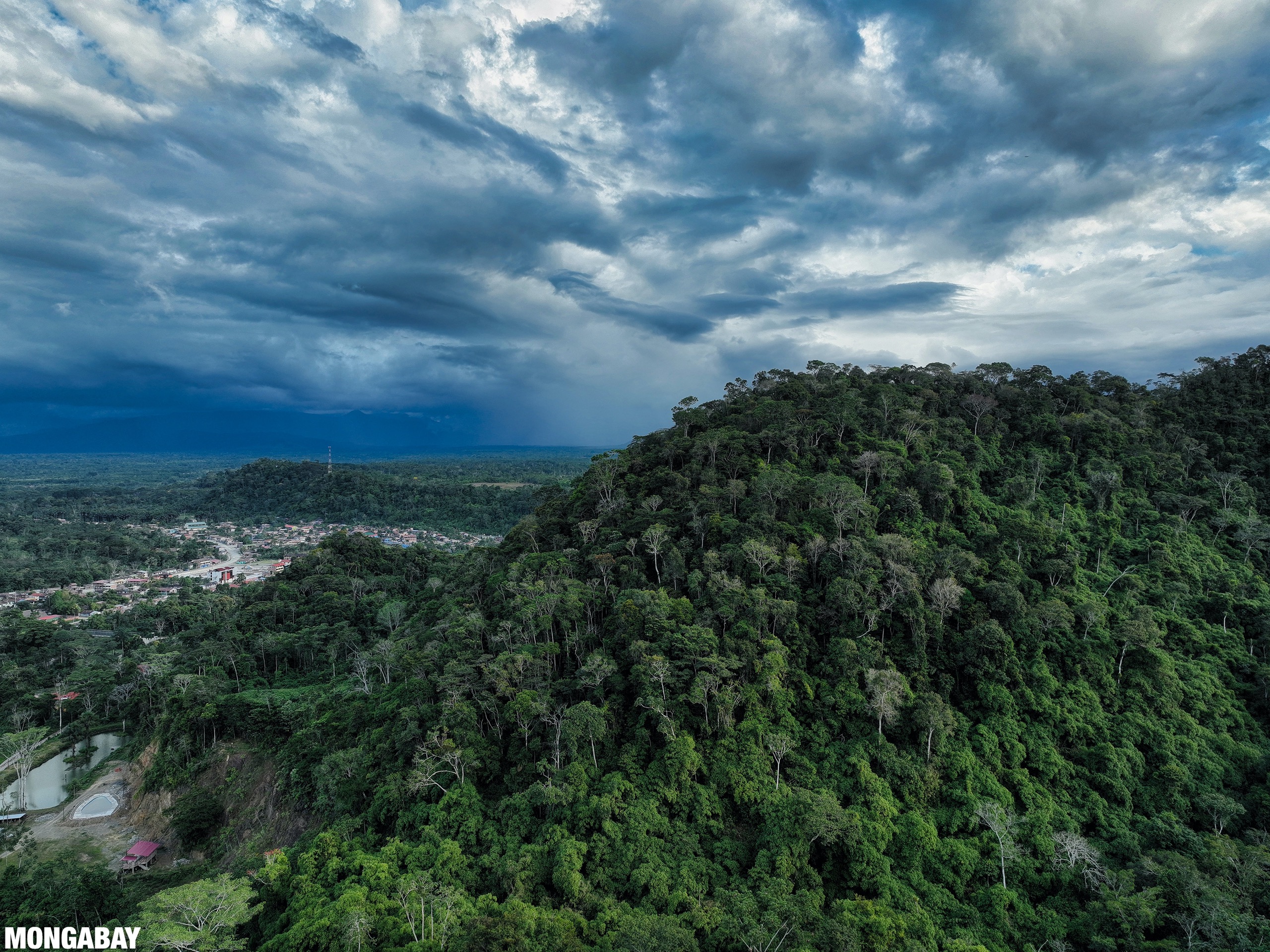
Banner image: Rainstorm over Pillcopata in the Peruvian Amazon, which under the Fujimori administration could see new exploitation for oil and gas. Photo by Rhett Butler/Mongabay.
FEEDBACK: Use this form to send a message to the author of this post. If you want to post a public comment, you can do that at the bottom of the page.
Cite this article
Aimee Gabay (2026). Plans of Peru’s new administration spur concern among environmentalists. Mongabay Conservation news. DOI: https://doi.org/10.66709/news-327225

