


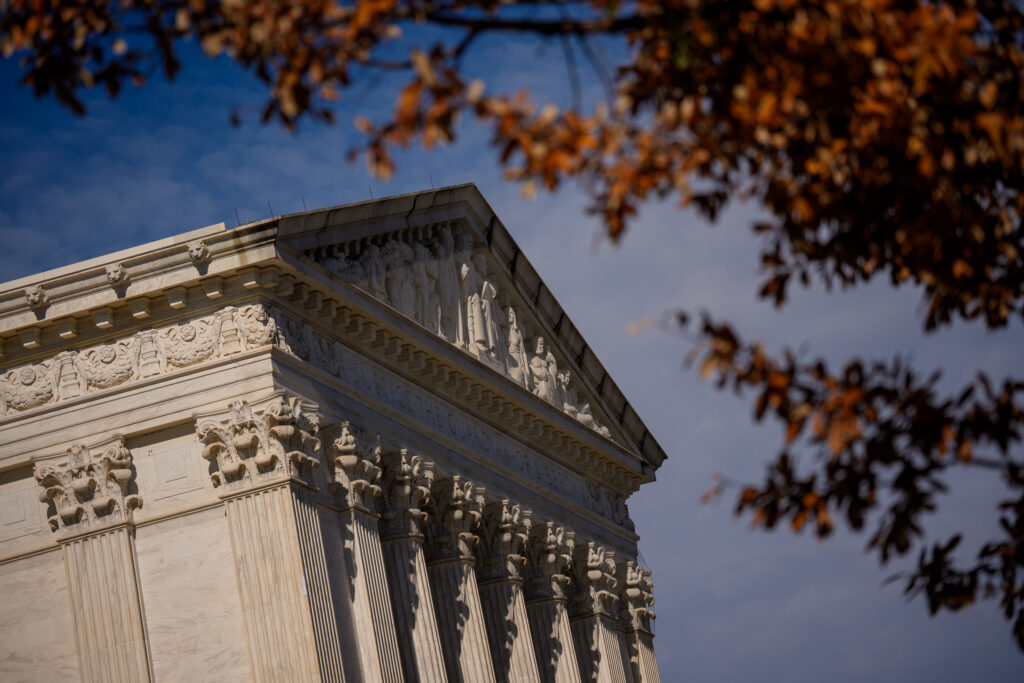
Local and state governments across the United States have turned to state courts over the past nine years, filing lawsuits reminiscent of those against the tobacco industry in the 1990s against major fossil fuel companies, aiming to hold them accountable for climate change damages and alleged deception.
The cases are still in preliminary stages and none have yet made it to trial. But now, a significant cloud of uncertainty hangs over them as the U.S. Supreme Court has decided to get involved, at the request of oil company defendants. With the court slated to hear one of the cases at the start of its fall term, the fate of many, if not all, of these climate accountability lawsuits could be on the line, legal experts say.
The court is scheduled to hear oral arguments on Oct. 5 in Suncor Energy v. County Commissioners of Boulder County, a petition from oil companies Suncor and ExxonMobil that seeks to quash a climate change tort suit filed by the city and county of Boulder, Colorado, against the companies. The case will be the very first the justices hear in their new term—a case that raises significant constitutional questions around federalism and state authority, with potentially enormous stakes.
“It could be incredibly consequential,” said Pat Parenteau, emeritus law professor and climate law expert at Vermont Law and Graduate School. The ramifications of the court’s ruling, he noted, could extend “way beyond climate.”
A slew of stakeholders have weighed in on both sides, with nearly 70 amicus briefs, including from members of Congress, the Trump administration, states, local governments, Native American tribes, former federal officials, former military leaders and more. Everything from energy and national security to state and tribal sovereignty could be at stake in the litigation, these parties warn.
Boulder first sued ExxonMobil and Suncor in 2018, seeking to recover monetary damages associated with costs of adapting to localized climate impacts like extreme heat and wildfires. The suit alleges that these impacts stem from a decades-long campaign of deception on the part of the oil companies to misrepresent the climate risks of their products.
Boulder’s case is among several brought against oil companies that are inching closer to trial. In 2025, the Colorado Supreme Court issued a ruling allowing Boulder’s suit to advance toward trial, and it is this ruling that the companies are now challenging in the nation’s highest court. They are hoping that the justices will deliver a broad ruling in their favor that would put an end to not only Boulder’s climate case, but all other climate cases pending against their industry. The justices agreed earlier this year to take up the companies’ petition.
A Question of Preemption
The question presented by the petitioners is framed in remarkably broad terms: “whether federal law precludes state law claims seeking relief for injuries allegedly caused by the effects of interstate and international greenhouse-gas emissions on the global climate.”
If the court sides with the oil companies and answers that question in the affirmative, it could have potentially sweeping repercussions for state climate laws and lawsuits. And it would likely be a death knell for the climate accountability cases brought under state law against major oil and gas companies. “In the end, if the oil companies win, that’s the end of the cases,” Parenteau said.
In a twist, the justices added their own question as to whether they even have the authority to hear the case at this time. This threshold question on jurisdiction could provide an off-ramp for the court to avoid determining the fate of the dozens of pending state climate cases before any of them have even gone to trial, legal experts say.
“It’s possible they will rule that the case is just too early to decide, since there hasn’t been a trial yet,” said Michael Gerrard, founder and faculty director of the Sabin Center for Climate Change Law at Columbia Law School.
The heart of the dispute comes down to whether state law can be applied to remedy harms from climate change by making large fossil fuel companies pay for some of the damage caused by their products.
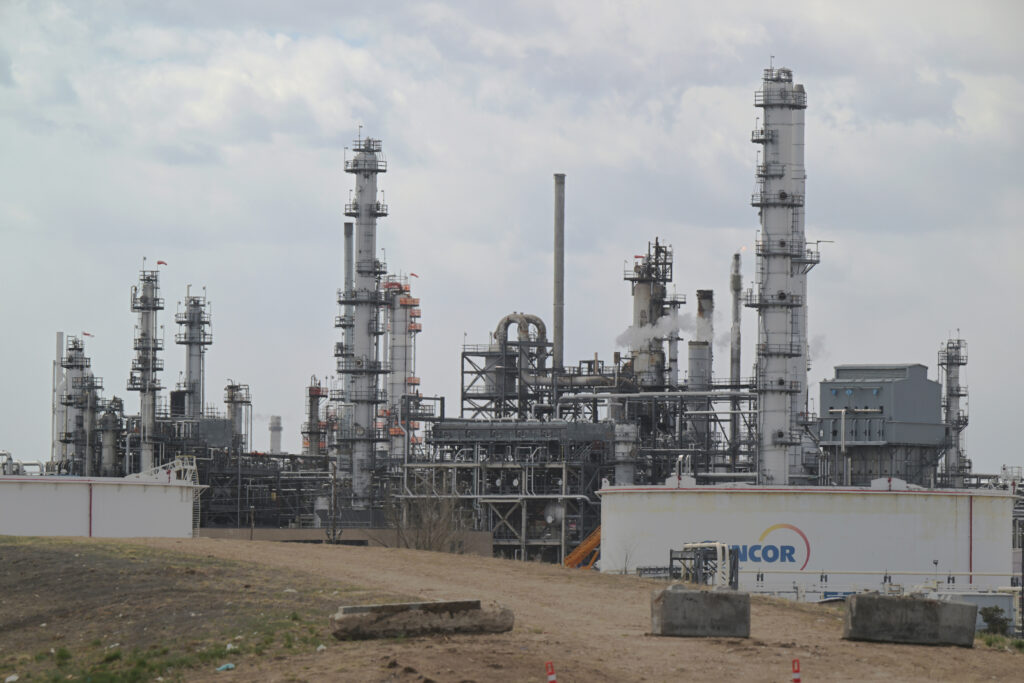
Exxon and Suncor say that climate change is a global problem that reaches well beyond the limits of state law. They argue that because Boulder’s case involves interstate greenhouse emissions, federal—not state—law must govern. Federal law, including the Clean Air Act and the Constitution, override or preempt Boulder’s state law claims against them, the companies say.
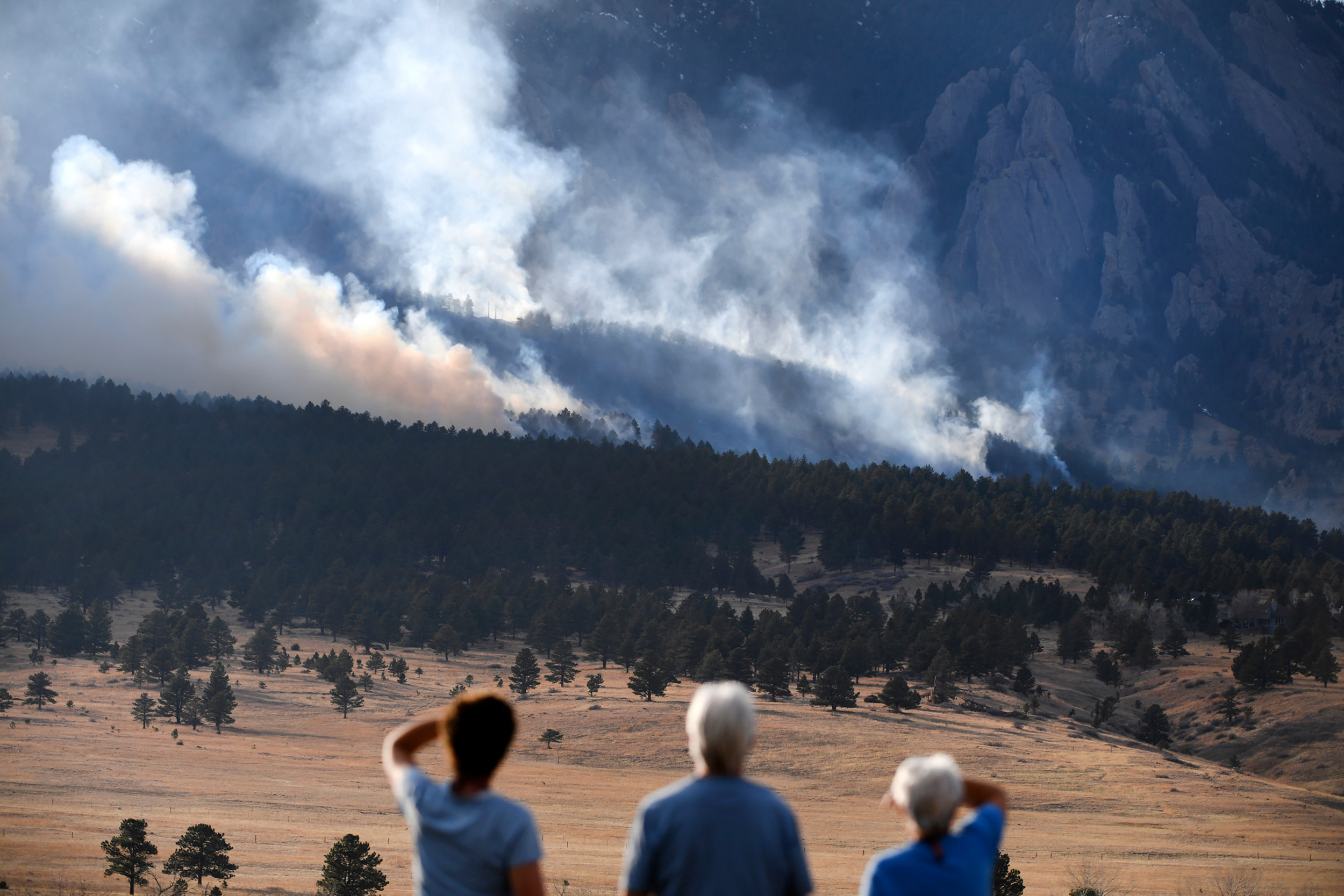
They also warn that the prospect of the companies facing a sizable damages payment, and the potential ripple effect that a liability judgment may create on the oil industry, should give the justices pause.
“Giving even a single jury the power to impose ruinous liability on selected members of the energy industry is a recipe for chaos. Unleashing juries nationwide is a recipe for disaster,” their brief contends. “This misuse of the legal system cannot stand. State tort law is not the solution to global climate change.”
Boulder counters that its lawsuit is not about solving global climate change or regulating greenhouse gas emissions. Rather, it is about alleged corporate deception and the harms to local residents that resulted from that wrongdoing.
In its brief, the municipality argues first that the Supreme Court lacks jurisdiction to hear the case, which is still in the early stages. Second, Boulder argues that its claims are entirely within its authority to bring and are not preempted by the structure of the Constitution nor by the Clean Air Act. “Petitioners have come to the wrong forum at the wrong time with the wrong arguments,” the brief asserts.
Dozens of Backers on Both Sides
A flood of amicus briefs was filed in May backing the oil companies’ position. These briefs, 40 in total, were submitted by parties such as right-wing think tanks and dark money organizations, industry lobby groups, conservative legal scholars, Republican members of Congress and Republican-led states, the U.S. Department of Justice and a group of Colorado counties. They broadly echo the oil companies’ contentions that federal law bars Boulder’s state law claims, arguing that one municipality should not be allowed to dictate climate or energy policy for the entire country.
Many of the amicus briefs also amplify the oil companies’ warnings that the fossil fuel industry could face “ruinous liability” if cases like Boulder’s are allowed to proceed. “The multi-billion-dollar judgments that may flow from these claims could cause major economic disruption,” the American Petroleum Institute argues. A brief from Alabama and more than two dozen other red states claims that Boulder’s case and others like it “threaten the availability of affordable energy and the sovereignty of States.”
This story is funded by readers like you.
Our nonprofit newsroom provides award-winning climate coverage free of charge and advertising. We rely on donations from readers like you to keep going. Please donate now to support our work.
On the other side, briefs filed in support of Boulder push back against such “dire warnings” and “transparently alarmist” assertions. Boulder’s case “will not result in ruinous liability for the fossil fuel industry,” the American Association for Justice argues.
The nonprofit organization of plaintiffs’ lawyers suggests that the parties backing the oil companies are mischaracterizing Boulder’s claims, writing: “They expend a great deal of ink and energy to construct and attack a straw man.” A brief filed by climate and environmental economists also rejects the assertion that Boulder’s claims threaten to impose “ruinous” costs on energy companies and the larger economy. “Industry trends and economic modeling do not support the conclusion that disruption of that magnitude would occur,” they write.
Municipal governments, Democrat-led states and Democratic members of Congress, a bipartisan group of former U.S. government and former EPA officials, law professors, climate disinformation scholars and progressive advocacy organizations are among the parties that submitted more than two dozen briefs earlier this month backing Boulder.
An “Industry-Driven Project to Evade Accountability”
Some of the briefs in support of Boulder make the point that what the oil companies are essentially seeking, both in court and in Congress, is legal immunity from any liability for the climate harms of their products. “What Petitioners advocate for is nothing less than a judicially crafted liability shield for the fossil fuel industry,” says an amicus brief filed by Colorado and 18 other states.
Ninety members of Congress led by Sen. Sheldon Whitehouse and Rep. Pramila Jayapal contend in their brief that the Clean Air Act does not provide the kind of sweeping preemption of state law that oil companies claim it does. Accepting such a claim, they say, “would turn any regulatory regime for a national industry into a default liability shield.”
The lawmakers’ brief also notes that legislation is currently pending in Congress that would explicitly preempt state law climate actions and immunize fossil fuel companies from any climate liability. That bill, called the Stop Climate Shakedowns Act, was introduced in April by Republican Sen. Ted Cruz and Republican Rep. Harriet Hageman. Both Hageman and Cruz joined amicus briefs backing Exxon and Suncor.
“The proposed bill and many of the amicus briefs filed in this case are part of an industry-driven project to evade accountability for all conduct related to their businesses,” the brief from congressional Democrats says in a footnote. “At least 17 amici in support of petitioners have received financial support from fossil fuel-linked donors. These amicus briefs present as an outpouring of support for a legal position, but publicly available information shows them to be funded by a small and powerful phalanx of self-interested entities.”
According to a new analysis from the public interest group Consumer Watchdog, nearly two-thirds of the organizations that filed amicus briefs supporting Exxon and Suncor have documented funding ties to fossil fuel interests or to the billionaire-backed climate denial apparatus.
Kathy Mulvey, accountability campaign director at the Union of Concerned Scientists’ climate and energy program, said that big oil companies are mounting a full-court press, through Supreme Court petitions and lobbying federal and state lawmakers, in an attempt to shut down any prospects of climate accountability. “Petitioning to have this case heard by the U.S. Supreme Court represents a last-ditch effort to block evidence of the fossil fuel industry’s decades of deceit from being heard in courtrooms across the country,” she said in a statement.
Sweeping Decision or a Narrower Judgment?
Alejandro Camacho, an environmental law professor at the UCLA School of Law, told Inside Climate News that there is a very strong case for the court to reject the broad preemption arguments offered by the oil companies. But he said the fact that the court even granted their petition in the first place makes him nervous. “We aren’t living in normal times, and this is a court that is still figuring out the full parameters of how judicially active it wants to be,” he said.
While the claims in Boulder’s case before the court are strictly tort-based like nuisance and trespass, there is a possibility that the court’s ruling could implicate other state law claims like consumer fraud that are at issue in some of the other climate accountability lawsuits pending against oil companies, Gerrard said.
If the court decides to rule in the broadest terms or endorses the proposition that federal law bars all state law claims pertaining to climate change, it could doom not just the suits against the fossil fuel industry but any climate cases brought under state law, including youth constitutional climate suits filed against state governments. Our Children’s Trust, a nonprofit law firm that brings those types of cases on behalf of children, warns of this scenario in an amicus brief supporting Boulder.
The oil companies “request a staggeringly broad preemption holding: one that preempts not only state law tort claims against private tortfeasors, but also all state-law claims involving GHG pollution, including types of claims not before this Court,” the brief notes. “Such a holding would obliterate children’s state-law rights.”
Nate Bellinger, a senior staff attorney with Our Children’s Trust, told Inside Climate News that he doesn’t think the court will go for such a sweeping ruling. “I hope and trust that [the justices] will be thoughtful in whatever decision they come out with and keep it limited to the real issues before the court, which are the tort claims, not all climate cases,” he said.
If the court does side with the oil companies and issues a broad ruling, Parenteau warned it could effectively strip away the authority of state and local governments to protect their residents from widespread damage. “It would be a full-frontal attack on state sovereignty, the rights of states to protect their citizens from damage caused by sources outside the state,” he said.
Also at stake is the question of who pays for the mounting costs of worsening climate change harms. “The stakes in this case could not be higher,” Exxon and Suncor write in their Supreme Court petition. They argue that “the energy industry is facing the threat of damages awards that could run into the billions of dollars.”
Foreclosing climate lawsuits against these companies would send a message that local communities will bear rising climate costs, said Robert Glicksman, an environmental law professor at George Washington University. “If the oil companies are not held accountable, then the potentially massive costs of adapting to climate change are shifted onto the backs of state and local taxpayers,” he said, “and the oil companies basically get off scot-free.”
About This Story
Perhaps you noticed: This story, like all the news we publish, is free to read. That’s because Inside Climate News is a 501c3 nonprofit organization. We do not charge a subscription fee, lock our news behind a paywall, or clutter our website with ads. We make our news on climate and the environment freely available to you and anyone who wants it.
That’s not all. We also share our news for free with scores of other media organizations around the country. Many of them can’t afford to do environmental journalism of their own. We’ve built bureaus from coast to coast to report local stories, collaborate with local newsrooms and co-publish articles so that this vital work is shared as widely as possible.
Two of us launched ICN in 2007. Six years later we earned a Pulitzer Prize for National Reporting, and now we run the oldest and largest dedicated climate newsroom in the nation. We tell the story in all its complexity. We hold polluters accountable. We expose environmental injustice. We debunk misinformation. We scrutinize solutions and inspire action.
Donations from readers like you fund every aspect of what we do. If you don’t already, will you support our ongoing work, our reporting on the biggest crisis facing our planet, and help us reach even more readers in more places?
Please take a moment to make a tax-deductible donation. Every one of them makes a difference.
Thank you,
