


Nicknamed the “Amazon of the Seas,” the Coral Triangle is the world’s most biologically diverse marine ecosystem. Sink below the surface and you’ll encounter the sound of a vibrant symphony of snapping shrimp, crunching crustaceans and feeding fish.
But then the rhythmic music of life will dissolve into eerie silence, punctured only by the plosive boom of detonating bombs.
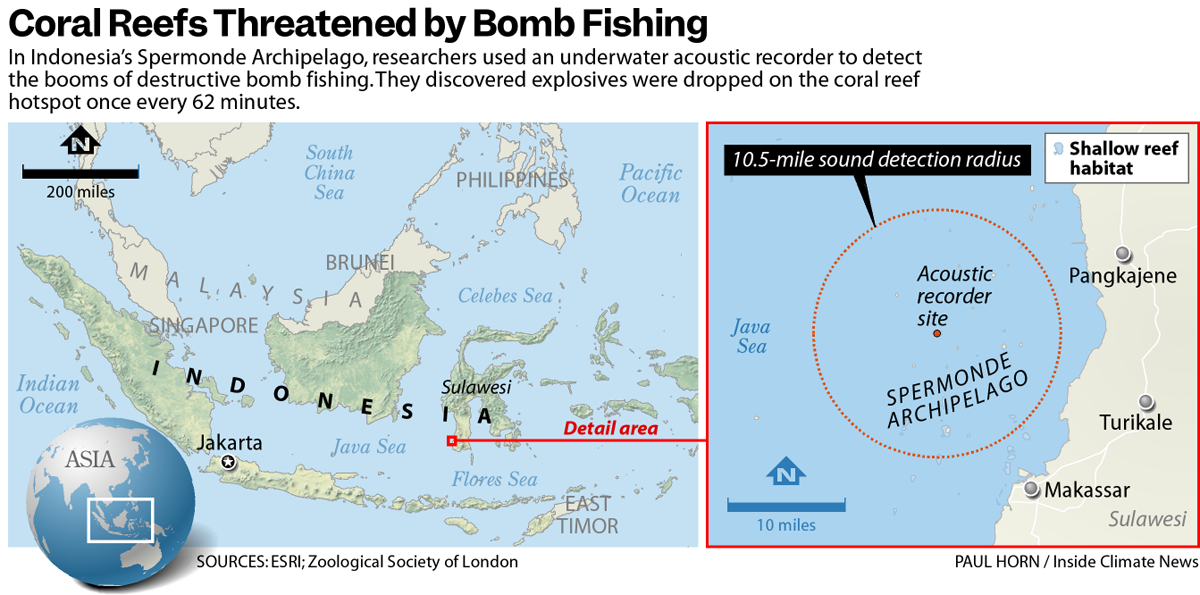
Off the coast of Indonesia’s Spermonde Archipelago, underwater microphones captured over 3,500 explosions in just 3,600 hours of recording, according to researchers from the Zoological Society of London.
The source? Blast fishing—a globally banned technique that uses plastic bottles packed with explosives to stun and kill everything in a 90-foot radius. The highly destructive practice has been documented in at least 34 countries, from Lebanon and Libya to Brazil and Ecuador.
While fishers predominantly use the method to catch fish for sale at local markets—identifiable by their ruptured internal organs and burst swim bladders—it’s also a grave threat to colorful coral reef habitats.
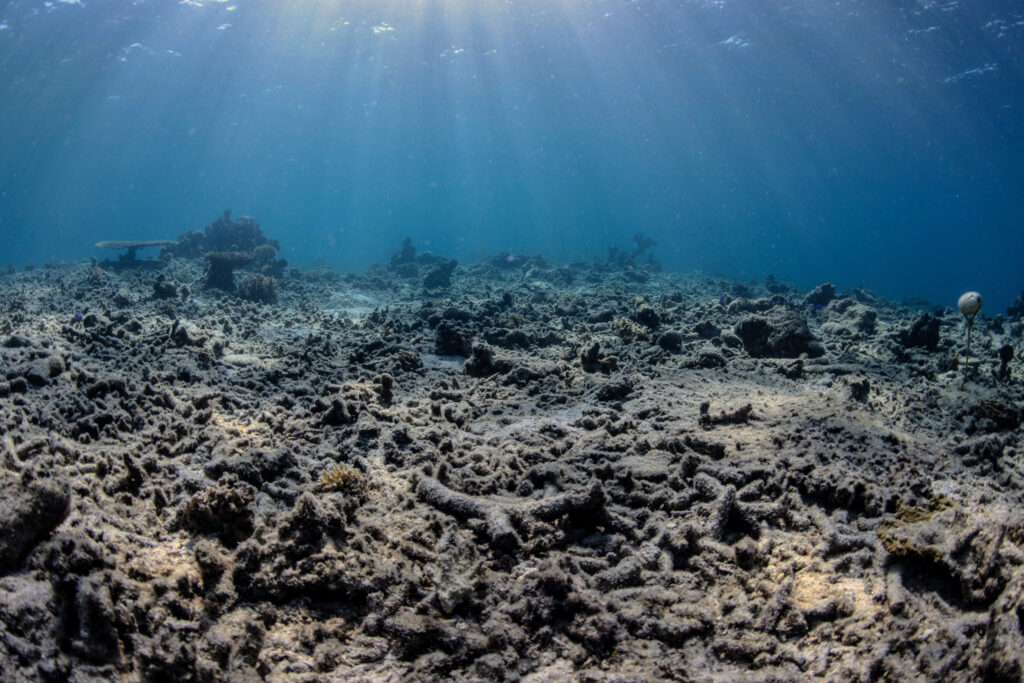
“Bomb fishing is quite likely the leading cause of reef loss in this area,” said Ben Williams, the paper’s lead author, noting that a single bomb can wreak 200 square feet of destruction. “These picturesque reefs get converted into a landscape that looks like the moon. It’s just rubble and dead coral with very little sign of life.”
In 2023, researchers from Britain and Indonesia snorkelled down and anchored $150 audio recorders to short stakes in the sea floor. Using AI software—which the team has now made open-source—they scoured 16 months of audio in just a few hours to identify possible detonations.
A researcher deploys an audio recorder on a coral reef in Sulawesi, Indonesia. Credits: Rizky Madjid and Tim Lamont
While the AI filtered suspected cases, each suggested sound wave was then manually verified to assess if it stemmed from a bomb or a misfiring boat engine.
With sound traveling over four times faster through water than air, the team of marine scientists were able to detect detonations from over 10 miles away.
“When [the bombs] are close, it’s so loud that it can shake you out of your skin,” said Williams. “But if you put your head up on the surface, you probably can’t even see the boat that did it.”
Accounting for stormy-season setbacks and spearfishermen who tampered with the recorders, the team calculated that there were likely more than 8,500 blasts each year—all within an area of just 350 square miles.
With a bomb dropped once every 62 minutes, the equivalent of three football fields of reef are destroyed each year, according to Williams.
Indeed, an estimated 75 percent of coral has been lost in the Spermonde Archipelago since 1990 as a result of human activities, bleaching and warming waters.
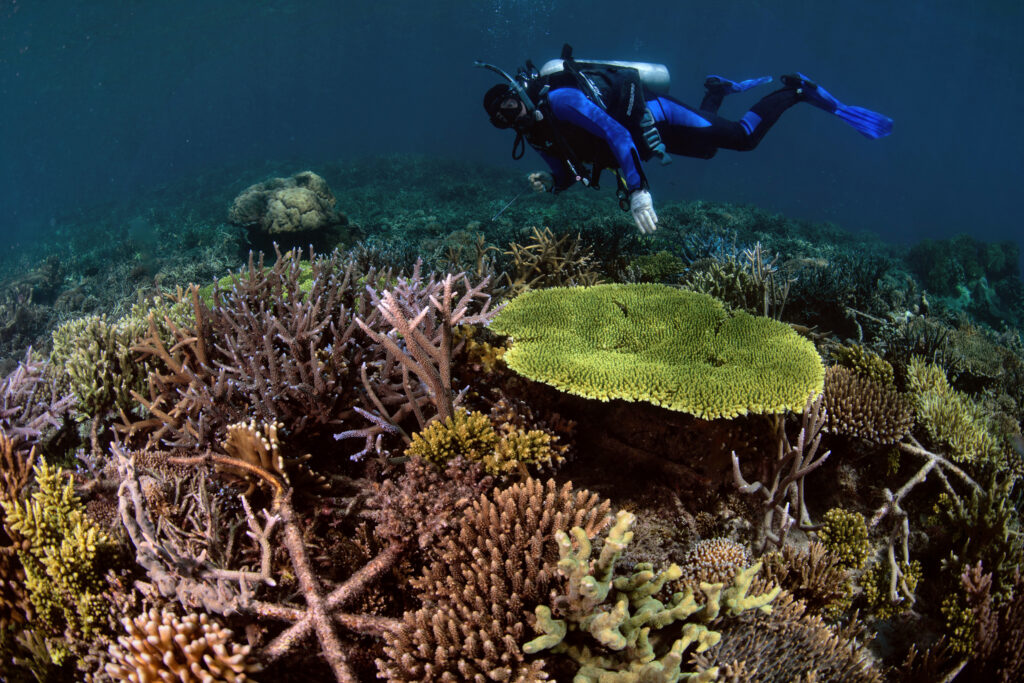
“Repeated blasts create shifting fields of rubble that prevent hard coral recruits from settling and growing, making natural regeneration and recovery of the reefs a difficult or impossible task,” said Melissa Hampton-Smith, a postdoctoral researcher at James Cook University in Australia, in an email to Inside Climate News.
The data revealed for the first time that bomb fishing takes place year-round, peaks during the mornings and significantly reduces on Fridays, the local day of prayer.
While understudied, the incentives for the use of dangerous dynamite fishing are often falsely attributed solely to poverty and desperation. The cost barrier to buying boats, bombs and detonators means it’s more likely a practice for middle-income fishers, according to experts.
This story is funded by readers like you.
Our nonprofit newsroom provides award-winning climate coverage free of charge and advertising. We rely on donations from readers like you to keep going. Please donate now to support our work.
“A combination of factors drives blast fishing, including ineffective enforcement and management,” said Hampton-Smith, highlighting how indiscriminate the explosions are, killing all manner of species, regardless of age, size or intent.
“Managing all illegal fishing, including blast fishing, is complex and varies from place to place, but in general equitable, consistent and legitimate enforcement is key,” said Hampton-Smith, who first studied the phenomenon while living and working in East Africa’s bomb fishing hot spot, Tanzania.
Despite the widespread harm, intercepting blast fishers in the act remains an elusive goal in a nation encompassing over 70 million acres of marine protected areas—a region larger than the entire United Kingdom.
Though authorities in neighboring Malaysia successfully confiscated 1,250 pounds of ammonia fertilizer suspected of being used to construct homemade fish bombs this May, patrols currently fail to effectively pinpoint the detonations in real time.
“Restoration efforts struggle to keep up with such rapid rates of destruction caused by bombing,” said Jamaluddin Jompa, co-author of the paper and a research professor at Hasanuddin University in Indonesia, in a press release. “Immediate work to tackle bomb fishing is needed.”
Williams is hopeful the new research could be used to construct a network of audio sensors with GPS syncs to provide real-time detection and localization for marine authorities.
And not just in Indonesia. From the Philippines to Turkey to Zanzibar, Williams hopes the now publicly available code will be rolled out across the globe to keep biodiverse habitats from being reduced to “rubble.”
Crucially, unlike bleaching events or warming waters, bomb fishing represents a rare form of coral crisis where a local fix exists.
“Because bomb fishing is an acute stressor, you can restore your way out of it,” said Williams. “If bomb fishing stopped, and you went and restored the reefs, they should be healthy and thrive for quite some time to come.”
Audio recordings courtesy of Tim Lamont.
About This Story
Perhaps you noticed: This story, like all the news we publish, is free to read. That’s because Inside Climate News is a 501c3 nonprofit organization. We do not charge a subscription fee, lock our news behind a paywall, or clutter our website with ads. We make our news on climate and the environment freely available to you and anyone who wants it.
That’s not all. We also share our news for free with scores of other media organizations around the country. Many of them can’t afford to do environmental journalism of their own. We’ve built bureaus from coast to coast to report local stories, collaborate with local newsrooms and co-publish articles so that this vital work is shared as widely as possible.
Two of us launched ICN in 2007. Six years later we earned a Pulitzer Prize for National Reporting, and now we run the oldest and largest dedicated climate newsroom in the nation. We tell the story in all its complexity. We hold polluters accountable. We expose environmental injustice. We debunk misinformation. We scrutinize solutions and inspire action.
Donations from readers like you fund every aspect of what we do. If you don’t already, will you support our ongoing work, our reporting on the biggest crisis facing our planet, and help us reach even more readers in more places?
Please take a moment to make a tax-deductible donation. Every one of them makes a difference.
Thank you,
Fisheries Reporter
Johnny Sturgeon is a London-based reporter covering fisheries and aquaculture. Joining us from the Outlaw Ocean Project, he has experience producing in-depth maritime investigations for nonprofit newsrooms. A former boatbuilder, he holds a B.A. in History & Politics from the University of Oxford, and an M.S. from Columbia Journalism School.
