


U.S. Undersecretary of Defense Elbridge Colby just wrapped up a weeklong tour of Southeast Asia. His aim was to reassure allies and partners in the Philippines, Indonesia, Thailand, and Cambodia that the United States will continue to prioritize the region. But the Trump administration’s actions continue to contradict top officials’ strategic messaging and fuel regional concerns of U.S. withdrawal.
In the Philippines, Colby gave a speech to the Stratbase Institute, where he laid out the case for Washington’s tough-love approach to the region. Colby derided the liberal commentariat for painting a picture of U.S. disengagement from the region, insisting that the United States was “digging in.”
U.S. Undersecretary of Defense Elbridge Colby just wrapped up a weeklong tour of Southeast Asia. His aim was to reassure allies and partners in the Philippines, Indonesia, Thailand, and Cambodia that the United States will continue to prioritize the region. But the Trump administration’s actions continue to contradict top officials’ strategic messaging and fuel regional concerns of U.S. withdrawal.
In the Philippines, Colby gave a speech to the Stratbase Institute, where he laid out the case for Washington’s tough-love approach to the region. Colby derided the liberal commentariat for painting a picture of U.S. disengagement from the region, insisting that the United States was “digging in.”
At the same time, though, the administration redirected a U.S. aircraft carrier, the USS George Washington, from the Pacific to the Middle East to support operations against Iran. Washington has also shifted THAAD missile defense systems from South Korea to the region, which is to defend U.S. bases in Gulf states that are now more vulnerable to Iranian strikes.
The same week, Trump ordered the U.S. Defense Department to draw down U.S. military exercises with South Korea, which he said were “hostile” to North Korea, and cited his “very good relationship” with Kim Jong-un. The decision caused shock across the analytical community and will further undermine perceptions of the United States’ commitment to the Pacific—not least in Beijing, where the move will be seen as confirmation that the United States is pulling back from Asia.
In his speech, Colby also characterized U.S. alliances as based on “mutual respect” and asserted that the United States wanted “partners, not protectorates.” But reality—and the pejoratives the U.S. President Donald Trump continues to direct toward U.S. partners such as Greenland—belies Colby’s more charitable characterization.
In practice, Trump’s policies have been a mix of economic and political coercion alongside increasingly hollow claims that the United States is not abandoning the region. As such, they have offered regional leaders all the downsides of traditional U.S. policy with none of the benefits.
The administration’s transactional approach is less new than it insists. In seeking to extract the maximum concessions from junior partners and allies while dismissing the notion that its actions are fueling widespread resentment, Trump has replicated the worst aspects of U.S. colonial-era and Cold War policies. During its global struggle against the Soviet Union, Washington often treated the autonomy of small states as a secondary concern. As a result, it ignored declarations of neutrality in Cambodia and Laos, and it supported rightwing dictators in Indonesia, the Philippines, and Thailand who supported their cause.
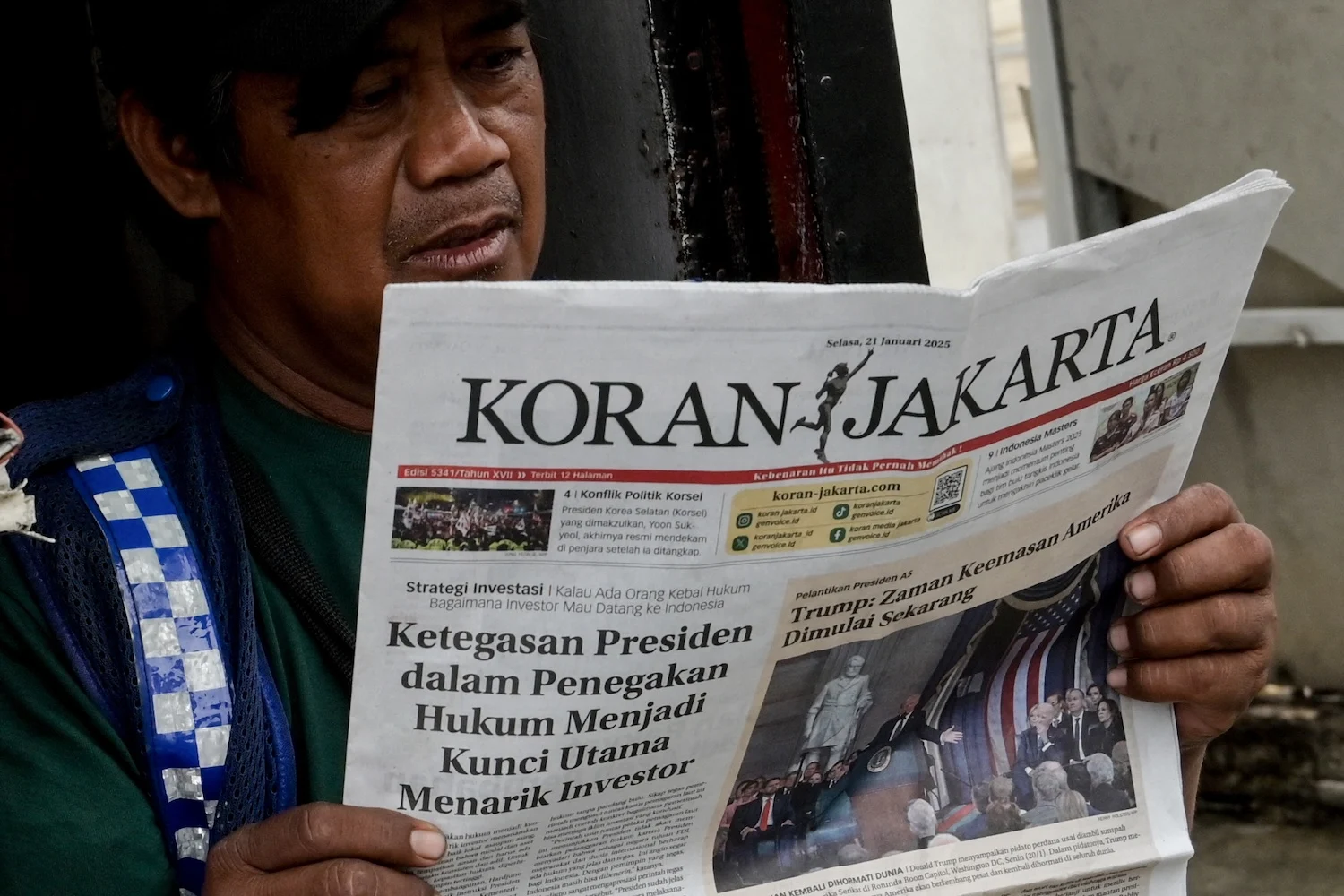
In Jakarta, Colby met with Indonesian President Prabowo Subianto and other senior officials, including Defense Minister Sjafrie Sjamsoeddin, “to advance a defense relationship grounded in respect for Indonesia’s sovereignty, traditions, and history.” This created a nice public relations moment for social media, but Washington’s respect for Indonesian sovereignty was less apparent as it pressured Jakarta to grant it overflight access for military aircraft. The administration also proposed making Indonesia a hub for C-130 Hercules aircraft maintenance, potentially inviting further U.S. rotational presence.
Colby also characterized the Trump administration’s foreign policy as “practical and pragmatic” and slammed “past administrations, which were hidebound by outdated convention or rigid adherence to liberal dogma.” But Colby’s frequent references to “pragmatism,” “realism,” and “common sense” are a rhetorical sleight of hand.
Trump officials like to depict the administration’s policies as guided by some overarching strategic coherence, in contrast to past administrations’ values-based approach. However, Colby’s remarks obscure the fact that the Trump administration has blinders of its own. They are simply of a different type. Under Trump 2.0, Washington has imposed sweeping and unilateral tariffs. These harken back to a more protectionist and inward-looking period of history, namely the 19th and early 20th century before the creation of the World Trade Organization.
The Trump administration’s emphasis on burden-sharing, which entails pressuring allies to spend more on their own defense, is another side of the protectionist coin. Like tariffs, this is intended to reduce the financial burden on the United States, giving the administration more revenue while allies and partners look after their own defense.
But such a worldview is not value-free. It rests on several outdated assumptions about how the global economy functions, how deterrence works, and what keeps adversaries at bay in an anarchic world. In reality, a world in which countries are less economically interdependent, where there is less immigration, and in which states spend more on their own military power, trust breaks down and the chances of war increase.
Colby and other senior Trump officials who espouse this false promise of “flexible realism” ignore the fact that trust and credibility do not rest on military might alone. They are forged by consistency and demonstrating strategic coherence between what you say and what you do.
Colby can say all he wants that the United States is deepening engagement in the region and blame the liberal commentariat and its negative spin for misrepresenting the administration’s policies. But Washington only has itself to blame for growing regional anxieties. If regional leaders see a less reliable and increasingly distracted United States, it is because Washington has played a strong hand poorly in Southeast Asia while launching a costly and strategically misguided war in the Middle East.
