


New research suggests a “massive and untapped” opportunity for conservation within commercial concessions in Southeast Asia, reports Mongabay’s Carolyn Cowan.
Using satellite data, researchers identified roughly 42 million hectares (104 million acres) of intact forest still standing inside logging, timber, rubber and oil palm concessions across Cambodia, Indonesia, Malaysia and Myanmar. The study suggests that clearing these forests — an area larger than the whole of Malaysia — could release 1.2 gigatons of carbon dioxide emissions over the next 30 years.
Incentivizing concession holders to protect these forests instead of converting them for commodity production presents a big opportunity for conservation, the study says.
“A substantial portion of Southeast Asia’s remaining forest lies within concession landscapes,” study lead author Annabel Lim, a Ph.D. student at the National University of Singapore, said in an interview with Mongabay. “Meeting climate and biodiversity goals will, therefore, require engaging the concession owners as potential conservation partners”.
However, the study notes that relying strictly on carbon markets to incentivize concession holders to choose conservation is economically unviable at current carbon prices.
Currently, carbon credits issued for avoided deforestation in Southeast Asia, trade at just $5 to $12 per metric ton, according to the World Bank’s 2026 State and Trends of Carbon Pricing report. To make conservation financially competitive with agricultural or logging, the researchers calculated that carbon prices would need to reach between $33 and $1,677 per metric ton of carbon dioxide.
Yiwen Zeng, a conservation scientist at Nanyang Technological University in Singapore and senior author of the study, said in an email to Mongabay that while carbon finance has an important role to play, “it will not be sufficient on its own to protect all remaining forests in concessions”.
Instead, the study highlights the need for a broader mix of green finance, including blended finance, green bonds, payments for ecosystems services and biodiversity credits.
Matthew Struebig, a conservation scientist at the University of Kent in the U.K., who was not involved in the research, said several regulatory barriers must be overcome to achieve conservation. Many regional governments in Southeast Asia require concession holders to develop land to retain their licenses and they might hesitate to protect forests if it could trigger land forfeiture.
“Without regulatory reform that allows companies to re-categorise their land, even the highest carbon price in the world won’t convince a company to risk their underlying land tenure,” Struebig told Mongabay.
For conservation to succeed, the authors said that governments, banks and corporations must reform concession policies and redirect harmful financial flows, such as agricultural subsidies and industrial logging loans, toward forest preservation.
Read the full story by Carolyn Cowan here.
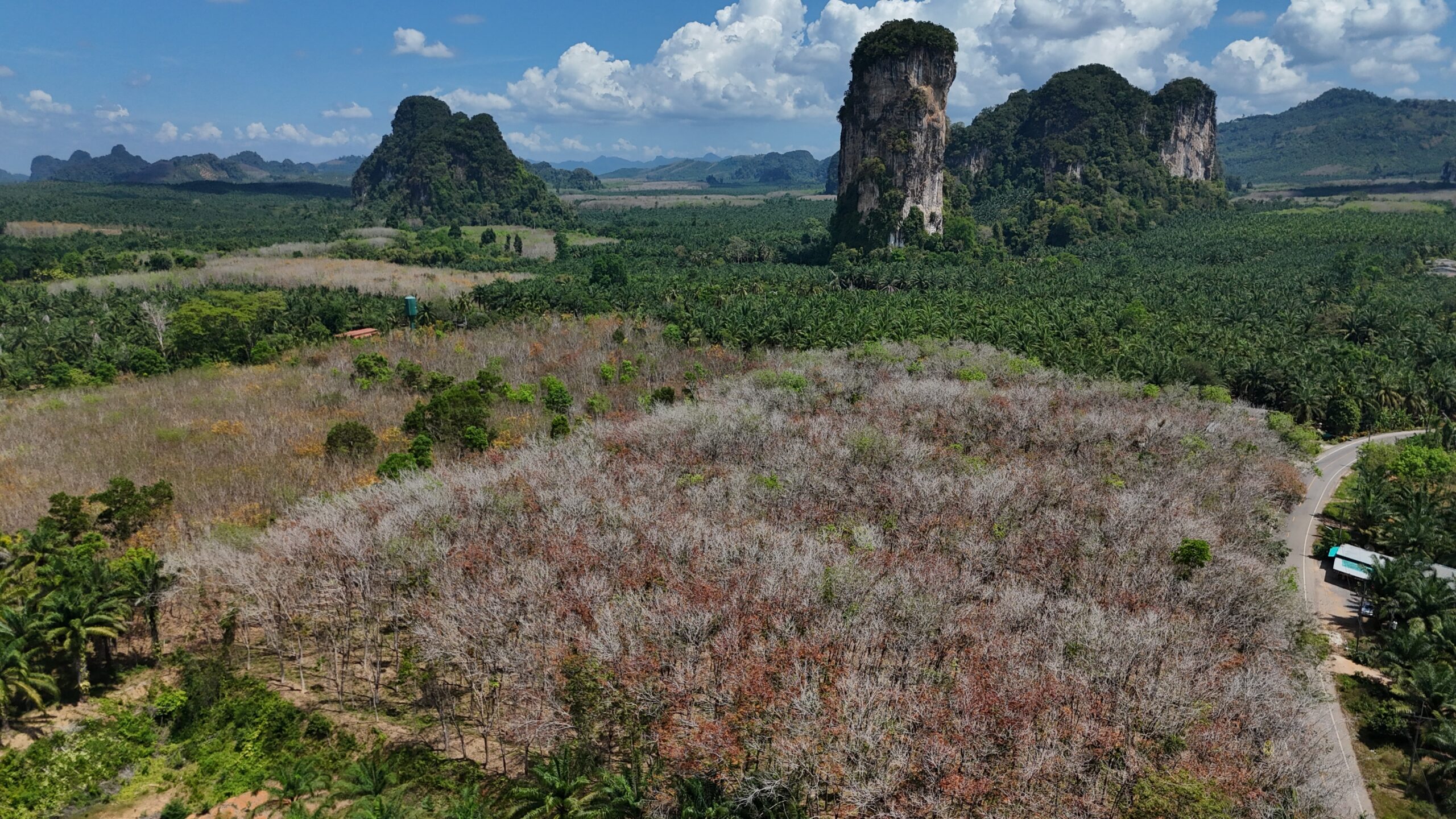
Banner image: Oil palm and rubber plantations dominate landscapes across many parts of Southeast Asia as photographed here in Thailand. Image by Carolyn Cowan/Mongabay.
